From Semiconductor Expertise to AI-Driven Leadership in Horticulture: ScottsMiracle-Gro’s Digital Transformation
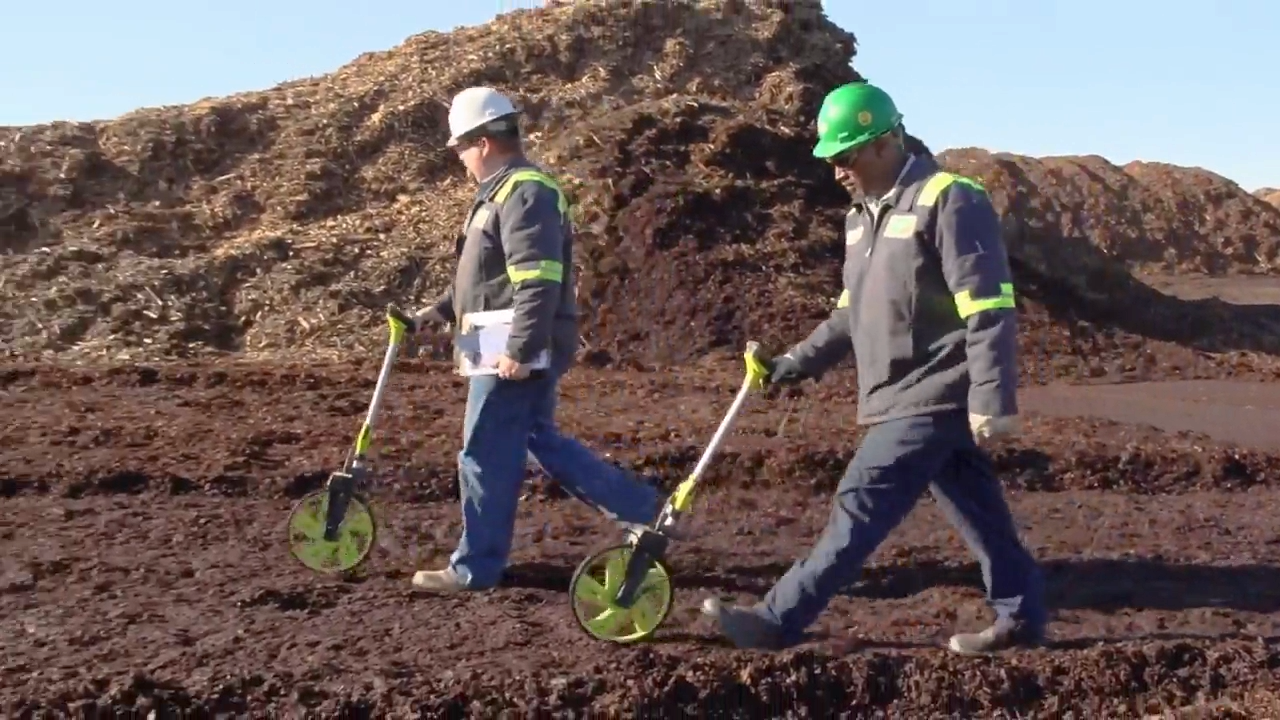
For years, ScottsMiracle-Gro’s media operations involved a hands-on, manual process: employees would traverse vast compost and wood chip piles armed only with measuring sticks. They’d wrap rulers around these mounds, estimate their height, and apply what company President Nate Baxter calls “basic middle school geometry” to calculate volume.
Today, this labor-intensive method has been replaced by drones equipped with advanced vision systems that measure volumes instantly and with pinpoint accuracy. This shift from manual tools to artificial intelligence not only streamlines operations but also exemplifies one of the most surprising tech success stories in corporate America.
Unexpected Trailblazers in Enterprise AI
When it comes to enterprise AI adoption, the usual frontrunners are cloud-native software firms, financial institutions with massive data repositories, or retailers leveraging extensive digital customer interactions. Consumer packaged goods companies-especially those dealing with physical products like fertilizers and soil-rarely top the list.
Yet, ScottsMiracle-Gro has defied expectations by achieving over 50% of its ambitious $150 million supply chain cost-saving target. The company has also slashed customer service response times by 90%, while its AI-driven predictive analytics enable dynamic weekly marketing budget reallocations across different regions.
A Strategic Shift: A Tech Veteran Embraces Soil Science
Nate Baxter’s journey to ScottsMiracle-Gro was less a rescue mission and more a deliberate career pivot. After 20 years in semiconductor manufacturing with Intel and Tokyo Electron, he brought a deep understanding of applying cutting-edge technology to intricate operational challenges.
“Initially, I wondered why I’d leave a tech company in an industry I’d known for 25 years,” Baxter recalls. When approached by SMG’s CEO Jim Hagedorn in 2023, the company was grappling with the fallout from a failed $1.2 billion hydroponics venture and financial pressures.
Encouraged by his wife to seek growth through discomfort, Baxter recognized striking similarities between semiconductor fabrication and SMG’s horticultural operations-both demand precision, rigorous quality control, and system optimization. Moreover, he saw untapped value in SMG’s 150 years of horticultural expertise, regulatory knowledge, and customer insights, which had yet to be digitized.
“It became clear that from backend data analytics to business process transformation, and now AI-driven consumer experiences, there were vast opportunities to unlock,” he explains.
Reimagining the Organization: From Silos to Synergy
The transformation began with a bold declaration at an all-hands meeting: “We’re a tech company-you just don’t realize it yet,” Baxter told employees. This mindset shift was crucial to unlocking the company’s potential.
SMG’s structure had long been fragmented, with IT, supply chain, and brand teams operating in isolation. Drawing on his semiconductor industry experience, Baxter reorganized the consumer business into three integrated units. Each general manager was held accountable not only for financial outcomes but also for technology adoption within their areas.
“I made it clear: the buck stops with you. You’re responsible for business results, marketing quality, and technology implementation,” Baxter states.
To bolster this new framework, SMG established centers of excellence focused on digital capabilities, analytics, and creative services-centralized expertise supporting decentralized accountability.
Unearthing Corporate Knowledge for AI Integration
Converting decades of institutional knowledge into AI-ready data was a painstaking process, described by Fausto Fleites, VP of Data Intelligence, as “corporate archaeology.” The team sifted through legacy SAP systems and physical research archives, extracting and digitizing business logic accumulated over many years.
“The most challenging part was migrating the business reporting layer in SAP Business Warehouse, where decades of embedded logic reside,” Fleites explains.
SMG selected Databricks as its unified data platform, leveraging its Apache Spark expertise and strong SAP integration, while favoring open-source tools to avoid vendor lock-in.
A breakthrough came with the deployment of an AI bot powered by Google’s Gemini large language model, which cataloged and cleansed internal documents. This system identified duplicates, grouped related content, and restructured data for AI consumption-reducing knowledge articles by 30% while enhancing their relevance.
“Using Gemini LLMs, we categorized documents by topic and found similar content through a hybrid approach combining AI and cosine similarity techniques,” Fleites notes. This foundation enabled subsequent AI applications.
Developing AI That Truly Understands Fertilizer
Initial experiments with generic AI models revealed a critical flaw: they often confused products meant to kill weeds with those designed to prevent weed growth-a mistake that could devastate lawns.
“In certain contexts, these products are treated as synonyms by general LLMs, leading to incorrect recommendations,” Fleites says.
To address this, SMG engineered a “hierarchy of agents” architecture. A supervisory agent directs queries to specialized worker agents, each focused on a specific brand. These agents draw on detailed product knowledge encoded from a comprehensive 400-page internal manual.
The system also transforms user interactions by asking targeted questions about location, objectives, and lawn conditions before offering tailored advice. It integrates APIs to check product availability and ensure compliance with state-specific regulations.
AI-Powered Innovations Across the Enterprise
SMG’s AI transformation extends beyond product recommendations. Drones now monitor inventory piles, while demand forecasting models analyze over 60 variables-including weather trends, consumer sentiment, and economic indicators-to optimize marketing and sales strategies.
For example, during a Texas drought, these models enabled the company to redirect promotional budgets to regions with favorable weather, contributing to strong quarterly performance.
“We can dynamically shift marketing dollars and even redeploy field sales teams to high-demand areas, like the Northeast during peak weekends,” Baxter explains.
Customer service has also been revolutionized. AI agents process incoming emails via Salesforce, draft responses based on the knowledge base, and flag them for quick human review. This has cut response times from ten minutes to mere seconds while improving quality.
Transparency is key. Using SHAP (SHapley Additive exPlanations), SMG developed dashboards that break down forecasts, showing how factors like weather, promotions, and media spend influence predictions.
“Without explaining the ‘why’ behind predictions, business users tend to distrust the results,” Fleites says. This clarity enabled SMG to move from quarterly to weekly resource allocation cycles.
Competing with Agility: A Startup Mindset in a Legacy Industry
SMG’s success challenges the notion that traditional companies can’t lead in AI. Their edge lies not in owning the most advanced models but in fusing general AI with exclusive, structured domain knowledge.
“Large language models will become commodities,” Fleites observes. “The real competitive advantage is how much proprietary knowledge we embed into them.”
Strategic partnerships play a vital role. SMG collaborates with Google Vertex AI for foundational models, Sierra.ai for conversational agents, and Kindwise for computer vision. This ecosystem approach allows a lean internal team-drawn from Meta, Google, and AI startups-to deliver outsized results without reinventing the wheel.
Unlike tech giants, SMG attracts talent by offering immediate, tangible impact. Engineers see their work directly influencing business outcomes, a contrast to incremental improvements in ad algorithms common in big tech.
“We offer the chance to create transformative AI applications with real-world effects,” Fleites says. “That motivates many to join us.”
The team structure reflects this philosophy. Leaders are both technically proficient and people managers, balancing development, strategy, and team oversight. Fleites himself codes weekly. The core team of 15-20 AI and engineering experts remains lean by outsourcing implementation while retaining control over knowledge, direction, and architecture.
Learning from Setbacks: Innovation Meets Reality
Not all initiatives have succeeded. SMG piloted semi-autonomous forklifts in a massive 1.3 million square foot distribution center, remotely operated by drivers in the Philippines managing up to five vehicles simultaneously with strong safety records.
“The technology was impressive,” Baxter admits, “but the forklifts couldn’t handle the heavy loads typical of our products.” The project was paused.
“Failures are part of the journey,” Baxter reflects. “The key is focusing on critical projects and knowing when to pivot.”
This pragmatic approach mirrors semiconductor industry discipline, where investments must yield measurable returns within defined timelines. Regulatory complexity adds another layer of challenge, as products must comply with EPA standards and a patchwork of state laws-requirements AI systems must navigate flawlessly.
Looking Ahead: The Future of AI in Gardening
SMG’s roadmap includes a “gardening sommelier” app slated for 2026, which will identify plants, weeds, and lawn issues from photos and offer instant, tailored advice. A beta version already assists field sales teams by querying the extensive internal knowledge base.
The company is also exploring agent-to-agent communication, enabling its specialized AI to interact with retail partners’ systems. For instance, a Walmart chatbot could trigger an SMG query to provide accurate, regulation-compliant lawn care recommendations.
Additionally, SMG has launched AI-powered conversational search on its website, replacing traditional keyword searches. The vision is to combine predictive analytics with conversational agents that proactively reach out to customers when conditions suggest they may need assistance.
Key Takeaways for Traditional Industries Embracing AI
ScottsMiracle-Gro’s journey offers a blueprint for legacy enterprises aiming to harness AI. Success hinges not on the sophistication of AI models alone but on integrating proprietary domain expertise that competitors cannot easily replicate.
By holding general managers accountable for both business outcomes and technology adoption, SMG embedded AI into the core of its operations rather than relegating it to an IT project. Their 150 years of horticultural knowledge became a powerful asset only after being digitized and structured for AI use.
While traditional companies may struggle to match Silicon Valley’s compensation, they can offer something equally compelling: the opportunity to create AI solutions with immediate, measurable business impact. When engineers see their models directly influencing quarterly results or preventing costly customer mistakes, the work gains significance beyond incremental tech improvements.
“We have a right to win,” Baxter affirms. “Our century-and-a-half of experience is now data-and data is our competitive advantage.” Rather than outspending rivals or chasing the latest AI hype, ScottsMiracle-Gro has transformed its deep knowledge into a growth-driving operating system. For a company rooted in soil, its greatest innovation may well be cultivating data itself.