From Theoretical Chemistry to AI-Driven Protein Folding
In 2017, fresh from earning a PhD in theoretical chemistry, John Jumper learned about an ambitious, confidential initiative at Google DeepMind aimed at predicting protein structures using artificial intelligence. Intrigued by the challenge, he applied to join the team.
Fast forward three years, Jumper, alongside DeepMind CEO Demis Hassabis, unveiled AlphaFold 2-a groundbreaking AI system capable of determining protein structures with atomic-level precision. This achievement matched the accuracy of traditional laboratory methods but accomplished in mere hours rather than months, marking a monumental leap in biological research.
Solving a Half-Century Puzzle in Biology
AlphaFold 2 addressed a longstanding enigma in molecular biology: accurately predicting the three-dimensional shapes of proteins. Hassabis has expressed that this breakthrough epitomizes the core mission behind DeepMind and his lifelong dedication to AI.
Since its debut five years ago, AlphaFold has reshaped scientific approaches worldwide. Jumper reflects on this period as “extraordinary,” highlighting subsequent releases such as AlphaFold Multimer, which predicts complexes of multiple proteins, and AlphaFold 3, the fastest iteration yet. The technology has been integrated into UniProt, a vast protein database accessed by millions, and has generated structural predictions for over 200 million proteins-covering nearly all proteins known to science.
Despite these successes, Jumper remains cautious, emphasizing that AlphaFold’s predictions come with inherent uncertainties and should be interpreted with care.
Understanding the Complexity of Protein Folding
Proteins serve as the essential machinery of life, forming everything from muscle fibers to cellular messengers. Their function is intimately tied to their three-dimensional form, which arises from intricate folding of amino acid chains driven by chemical interactions.
Predicting a protein’s shape is notoriously difficult because the linear amino acid sequence can theoretically fold into countless configurations. The challenge lies in identifying the biologically relevant conformation.
Jumper’s team harnessed Transformer neural networks-technology also foundational to advanced language models-to tackle this problem. These networks excel at discerning relationships within complex data, enabling AlphaFold to focus on critical structural features.
By rapidly iterating on prototypes that initially produced incorrect predictions, the team refined their approach, fostering innovation through quick feedback loops.
Leveraging Evolutionary Insights and Data-Driven Learning
The researchers enriched AlphaFold’s training with extensive data on protein structures and evolutionary patterns, recognizing that proteins from diverse species often share structural similarities despite sequence differences. This evolutionary perspective enhanced the model’s predictive power beyond initial expectations.
Jumper recalls the moment they realized the breakthrough’s significance: “We knew we had achieved something remarkable.” Yet, he was surprised by how quickly the scientific community adopted the tool for diverse applications, using it responsibly to complement experimental work.
Unexpected Applications: From Honeybee Health to Synthetic Biology
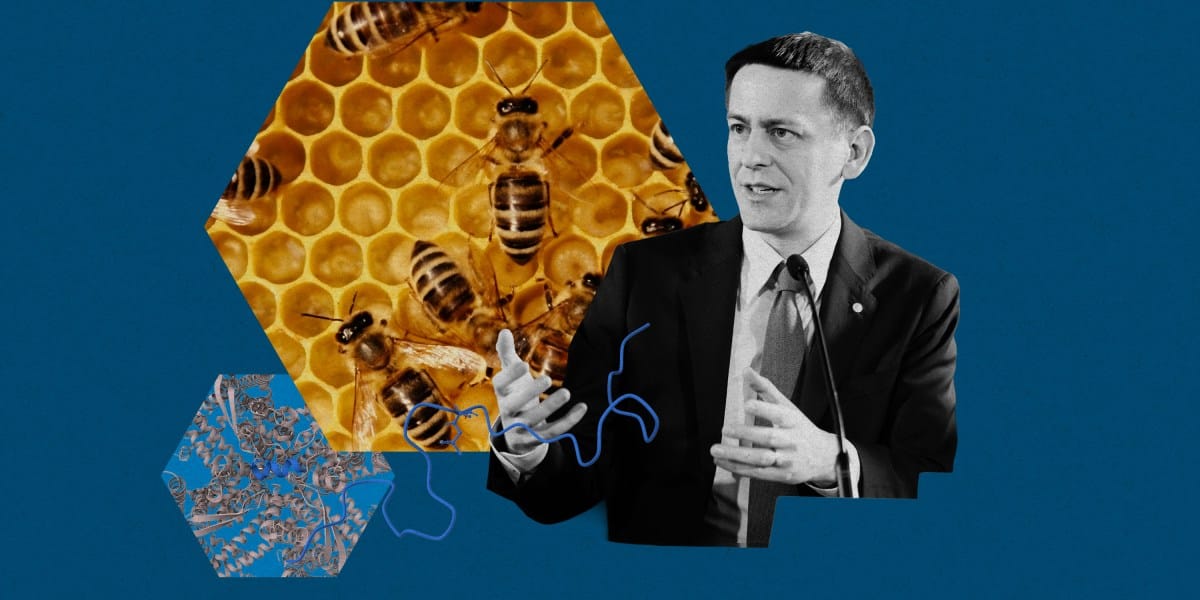
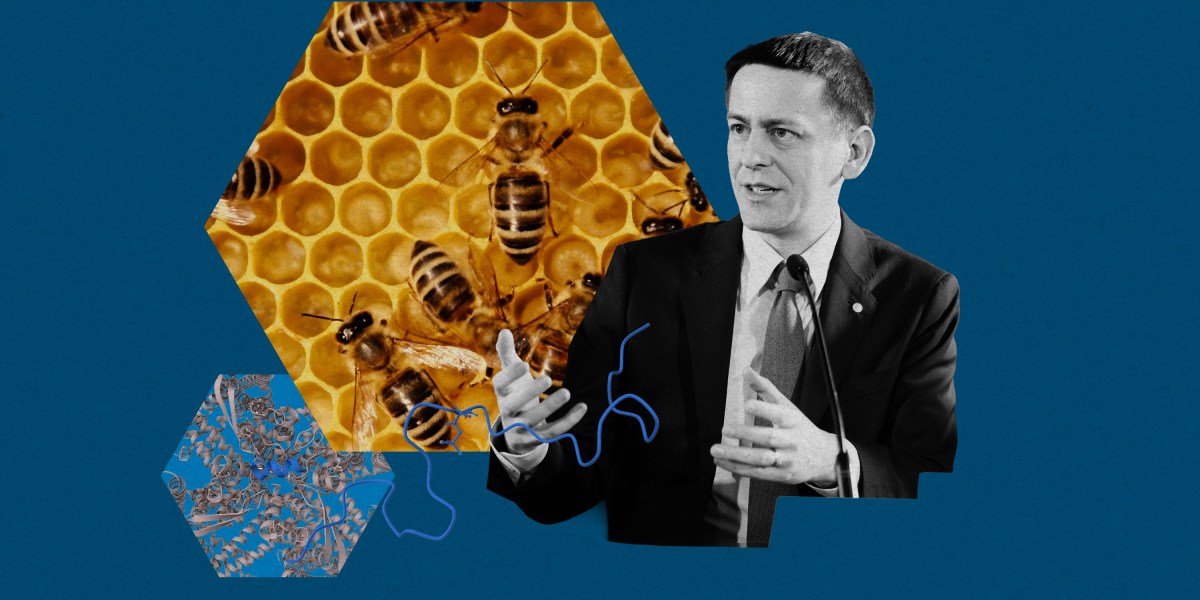
AlphaFold’s impact extends beyond traditional protein research. For instance, scientists investigating honeybee colony collapse disorder have employed AlphaFold to study proteins linked to disease resistance-an application Jumper hadn’t anticipated.
Moreover, AlphaFold has catalyzed advances in protein engineering. David Baker, a computational biologist and recent Nobel laureate, has integrated AlphaFold into his work designing synthetic proteins with enhanced functions, such as novel therapeutics and environmental solutions like plastic degradation.
Baker’s team developed RoseTTAFold, a complementary tool inspired by AlphaFold, and uses AlphaFold Multimer to validate their synthetic protein designs. Jumper notes that AlphaFold’s ability to confirm design accuracy accelerates the development process by an order of magnitude.
Another innovative use involves transforming AlphaFold into a search engine for protein interactions. Researchers exploring fertilization mechanisms screened thousands of sperm surface proteins, identifying a previously unknown protein that binds to the egg-validated experimentally-demonstrating AlphaFold’s power to guide discovery efficiently.
Five Years On: Practical Insights and Limitations
Early adopters like Kliment Verba, a molecular biologist at the University of California, San Francisco, attest to AlphaFold’s daily utility in their labs. While invaluable, the tool is not infallible, especially when predicting dynamic interactions between multiple proteins or protein-ligand complexes.
Verba compares AlphaFold’s occasional inaccuracies to those of AI language models like ChatGPT, which can confidently present incorrect information. Scientists use AlphaFold to prioritize experiments, saving time and resources, but it has not replaced empirical validation.
Emerging Innovations Inspired by AlphaFold
Building on AlphaFold’s foundation, startups and academic groups are developing specialized AI models tailored for drug discovery. For example, a collaboration involving MIT and the AI drug company Recursion introduced Boltz-2, which predicts both protein structures and drug binding affinities.
Genesis Molecular AI recently launched Pearlla, a structure prediction tool claiming superior accuracy to AlphaFold 3 in drug-relevant scenarios. Pearlla’s interactive design allows researchers to input additional data to refine predictions, enhancing its utility in pharmaceutical development.
These advancements have pushed the margin of error from AlphaFold’s industry-standard two angstroms to under one angstrom-equivalent to ten-millionths of a millimeter-crucial for accurately modeling drug-target interactions where minute differences can determine therapeutic success.
Looking Ahead: Integrating AI Technologies for Scientific Discovery
Despite AlphaFold’s transformative impact, Jumper emphasizes that protein structure prediction is just one piece of the biological puzzle. The path from structure to new medicines involves many complex steps beyond folding.
His vision for the future involves merging AlphaFold’s specialized capabilities with the broad contextual understanding of large language models (LLMs). These AI systems can interpret scientific literature and perform reasoning, potentially creating powerful hybrid tools for accelerating discovery.
Projects like Google DeepMind’s AlphaEvolve, which uses LLMs to generate and validate solutions iteratively, exemplify this direction. Jumper anticipates that LLMs will increasingly influence scientific research, though details remain speculative.
Reflections from a Young Nobel Laureate
At 39, John Jumper became one of the youngest recipients of the Nobel Prize in Chemistry in 2024. Despite this accolade, he approaches his career with humility and pragmatism, focusing on incremental progress rather than chasing monumental breakthroughs.
“I’m roughly at the midpoint of my career,” he says, emphasizing the value of pursuing small, persistent ideas. Jumper cautions against the pressure to immediately replicate such high-profile success, advocating for steady, thoughtful scientific advancement.