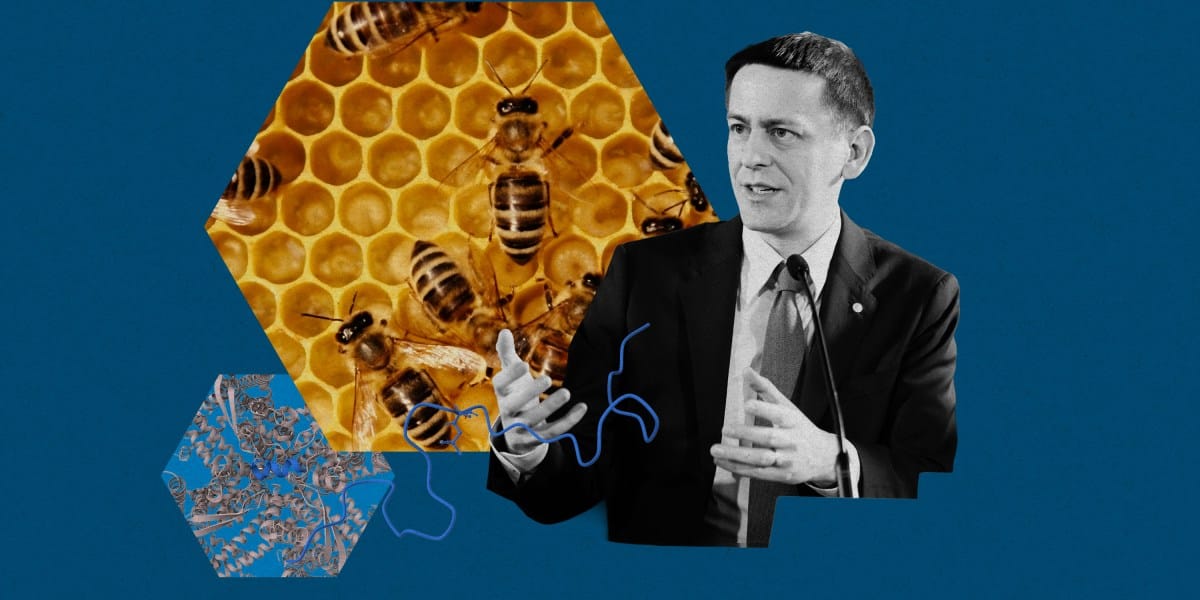
Advancing AlphaFold and Navigating Privacy in AI Companions
Plus: U.S. government directives to accelerate AI development.
AlphaFold’s Next Chapter: Insights from a Nobel Laureate at Google DeepMind
In 2017, shortly after earning his doctorate in theoretical chemistry, John Jumper caught wind of a groundbreaking initiative at Google DeepMind. The company was shifting focus from mastering games with AI to tackling one of biology’s toughest puzzles: predicting protein structures. Intrigued, Jumper applied to join the team.
Fast forward three years, Jumper and DeepMind CEO Demis Hassabis unveiled AlphaFold 2, an AI system capable of determining protein structures with atomic-level precision. This innovation revolutionized the field by delivering results in mere hours-a process that traditionally took months in laboratory settings.
Last year, their pioneering work earned them the Nobel Prize in Chemistry. Now, with the initial excitement settling, researchers are exploring how AlphaFold is reshaping scientific discovery. From accelerating drug development to understanding diseases at a molecular level, AlphaFold’s impact is profound and expanding. Experts anticipate further enhancements that will integrate AI-driven protein folding into personalized medicine and synthetic biology.
Privacy in the Age of AI Companions: Challenges and Emerging Regulations
AI-powered chatbots have become increasingly popular as personalized companions, offering users tailored interactions ranging from friendship to therapeutic support. Platforms like Character.AI, Replika, and Meta AI enable users to create virtual personas that fulfill emotional and social needs.
However, as these AI companions grow in popularity, concerns about user privacy have intensified. While some U.S. states have begun enacting laws to regulate companion AI, many privacy issues remain unaddressed, particularly regarding data security and consent. Experts warn that without robust safeguards, sensitive personal information shared with AI chatbots could be vulnerable to misuse.
As the technology evolves, balancing innovation with ethical data practices will be critical to maintaining user trust and protecting privacy rights.
Government Initiatives and Industry Developments in AI
U.S. Executive Order Spurs AI Innovation
Recently, former President Donald Trump signed an executive order aimed at accelerating AI research within federal scientific agencies. The initiative, dubbed the “Genesis Mission,” seeks to fast-track breakthroughs in various scientific fields by leveraging AI technologies. This directive encourages government bodies to adopt AI tools aggressively, with the added goal of reducing energy costs nationwide.
Anthropic’s Claude Opus 4.5: A Leap Forward in AI-Assisted Coding
Anthropic has introduced Claude Opus 4.5, an AI model designed to enhance software development efficiency. Early internal tests reportedly show the model outperforming human engineers in coding tasks. This advancement highlights the growing role of AI in automating complex programming functions such as debugging and prototyping, potentially transforming developers’ workflows.
India’s AI Boom and Environmental Challenges
Despite rapid growth in AI infrastructure, India continues to rely heavily on coal, exacerbating pollution issues in cities like Mumbai and New Delhi. The expansion of data centers in arid regions adds complexity to environmental management, underscoring the need for sustainable AI deployment strategies.
AI and Society: Emerging Trends and Concerns
Restrictions on AI Chatbot Use Among Minors
Platforms such as Character.AI have implemented limits on the duration that users under 18 can interact with AI companions. This move responds to growing concerns about the psychological effects of prolonged AI engagement on young users, most of whom are female. Meanwhile, OpenAI has experienced turnover in key safety leadership roles, signaling ongoing challenges in AI governance.
Health Risks Linked to Weight-Loss Medications During Pregnancy
Recent studies indicate that certain weight-loss drugs may increase the risk of premature birth when taken during pregnancy. Additionally, clinical trials have shown that some medications, like Ozempic pills, do not halt Alzheimer’s progression, prompting further investigation into their broader health impacts.
OpenAI’s New Tool for Consumer Shopping Research
OpenAI has launched a novel AI-powered shopping assistant designed to streamline price comparisons and generate buyer’s guides. This tool aims to compete with major e-commerce platforms by enhancing consumer decision-making through AI-driven insights.
Innovations in Disaster Relief and Urban Challenges
Prefabricated Housing Offers Relief to Wildfire Victims in Los Angeles
Following devastating wildfires, seven displaced residents in Los Angeles have moved into prefabricated homes that are both cost-effective and quick to assemble. This approach exemplifies how modular construction can address urgent housing needs in disaster-stricken areas.
Meanwhile, AI technologies are increasingly employed to detect wildfires early, improving response times and potentially saving lives and property.
London’s “Knowledge” Test: The Ultimate Challenge for Drivers
Former Uber drivers often attempt “The Knowledge,” a notoriously difficult exam requiring mastery of London’s complex street network without GPS assistance. Passing this test is a prerequisite for becoming a licensed London taxi driver, highlighting the city’s unique transportation demands.
Spotting Counterfeit Batteries: A Growing Concern
With the proliferation of fake batteries in the market, consumers face increased risks of device damage and safety hazards. Experts recommend vigilance and provide guidelines to identify authentic products.
In the Spotlight: AI’s Cultural and Social Impact
As AI reshapes creative industries, filmmaker PJ Accetturo candidly remarks, “AI is going to wipe out everyone. I’m giving away surfboards.” He is now developing a newsletter to help artists adapt and thrive in an AI-driven world.
On a lighter note, visitors to Istanbul should prepare to encounter the city’s famous feline residents, a beloved cultural hallmark. Meanwhile, as Thanksgiving approaches in the U.S., thoughts turn to Astoria’s unique turkey traditions.
The New Wave of AI-Powered Coding Assistants
Generative AI is revolutionizing software development by offering tools that can write, debug, and test code autonomously. This shift is transforming programmers’ roles from hands-on coders to supervisors who refine AI-generated outputs. Many experts view these advancements as stepping stones toward artificial general intelligence (AGI), a future AI capable of human-level cognitive abilities.
Enjoying Life Amidst Technological Change
Despite rapid technological evolution, it’s important to find moments of joy and relaxation. Whether through cultural experiences, hobbies, or simple distractions, maintaining balance enriches our daily lives.
Have suggestions or stories to share? Feel free to reach out and contribute to this ongoing conversation.