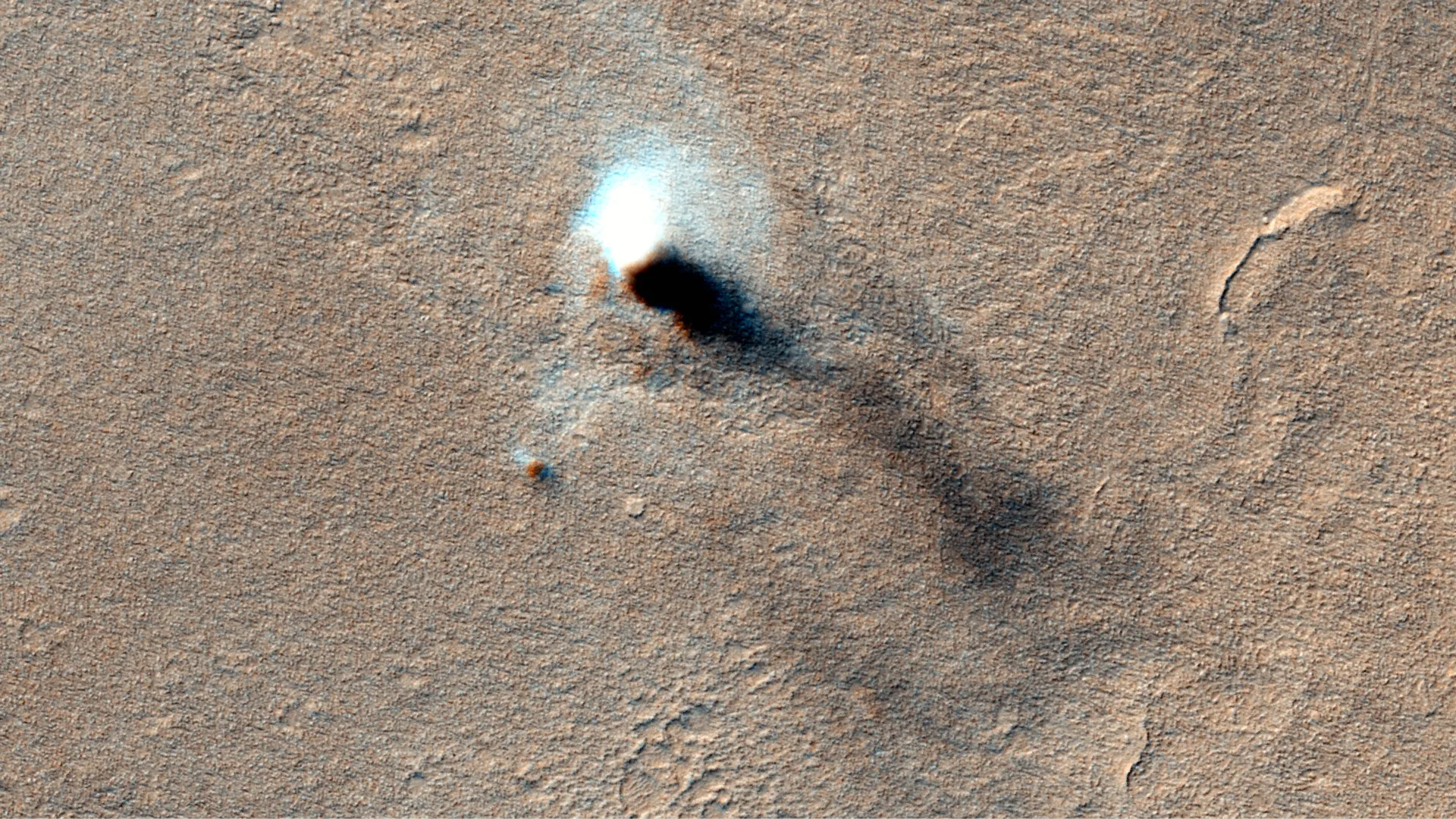
Although Mars possesses a notably thin atmosphere, it is subject to intense winds that significantly influence its climate and the distribution of surface dust. These winds give rise to dust devils-whirling columns of air laden with fine particles-that traverse the Martian terrain. While the winds themselves remain invisible, the dust devils they generate are clearly captured in images from orbiting spacecraft. Scientists leverage these visible dust plumes to analyze wind patterns that would otherwise be undetectable, as the dust acts as a natural tracer of airflow.
Revealing Mars’ Wind Dynamics Through Advanced AI Techniques
In a groundbreaking study led by Dr. Valentin Bickel from the Center for Space and Habitability at the University of Bern, researchers discovered that both Martian dust devils and the winds propelling them move at speeds far exceeding earlier estimates. These intensified winds likely contribute substantially to the amount of dust suspended in the Martian atmosphere, which plays a critical role in shaping the planet’s weather and climate systems. This collaborative research involved experts from the University of Bern’s Department of Space Research and Planetology, the Open University in the UK, and the German Aerospace Center, and was published in Science Advances.
Harnessing Deep Learning to Track Dust Devil Movements
“By applying cutting-edge deep learning algorithms, we successfully identified dust devils in over 50,000 satellite images,” explains lead author Valentin Bickel. The team utilized imagery from two European Mars missions: the CaSSIS (Color and Stereo Surface Imaging System) aboard ESA’s ExoMars Trace Gas Orbiter, and the HRSC (High Resolution Stereo Camera) on ESA’s Mars Express orbiter. “Our analysis is uniquely grounded in data exclusively sourced from European Mars exploration missions,” Bickel adds.
To quantify the velocity and trajectories of these dust devils, the researchers examined stereo image pairs of roughly 300 dust devils. Bickel notes, “When these stereo images are sequenced, they reveal the dynamic motion of dust devils sweeping across the Martian surface.” Thomas, a co-researcher, elaborates, “Stereo images capture the same location on Mars but are taken seconds apart, enabling precise measurement of dust devil displacement.”
Martian Winds Are More Intense Than Previously Recorded
The study’s findings indicate that dust devils and their associated winds can reach speeds up to 44 meters per second, averaging around 160 kilometers per hour across the planet. This is a significant increase compared to earlier surface-based measurements, which generally recorded winds below 50 km/h, occasionally peaking near 100 km/h.
These elevated wind speeds have profound implications for Mars’ dust cycle. “Such powerful, linear winds are likely responsible for injecting far more dust into the atmosphere than previously estimated,” Bickel states. “Our data pinpoint when and where winds are strong enough to lift dust from the surface, marking the first global-scale wind speed assessment over nearly two decades.”
Enhancing Future Mars Exploration Through Improved Wind Models
Understanding Martian wind behavior is vital for the success of upcoming missions. Daniela Tirsch, co-author and Director of the Institute of Space Research at the German Aerospace Center (DLR), emphasizes, “Accurate knowledge of wind conditions is essential for planning and safely operating landers and rovers on Mars.” She continues, “These new insights into wind dynamics enable us to refine atmospheric and surface process models, which are critical for evaluating mission risks and optimizing engineering designs.”
The research also advances scientific understanding in areas such as dune formation, slope streak development, and the creation of more precise weather and climate models for Mars.
Ongoing Monitoring and Mission Planning Benefits
Looking ahead, the team intends to expand their monitoring of Martian dust clouds, integrating targeted observations using CaSSIS to enrich the dataset. “Our long-term goal is to enhance the efficiency and safety of Mars mission planning through improved environmental awareness,” concludes Bickel.