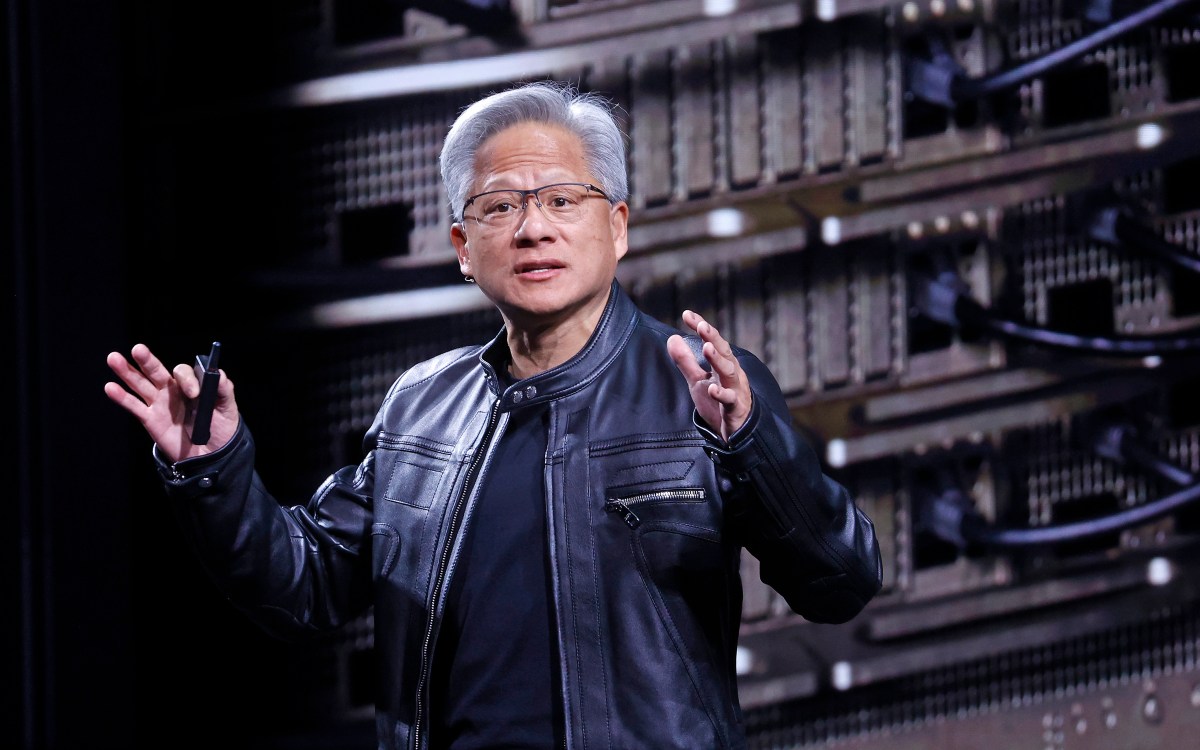
Nvidia announced on Monday that it is filing applications to resume sales of its H20 artificial-intelligence chips to China. This announcement caps a tumultuous few months, which saw the Trump Administration impose restrictions and then quickly reverse their course after a
high-profile dinner meeting.
According to a spokesperson, the company expects to begin deliveries soon after receiving U.S. government licensing.
blog post. Nvidia also introduces a new “RTX Pro”, chip designed specifically for China’s market. It is “fully compliant” and ideal for digital manufacturing apps like smart factories and logistic.
A broader U.S. – China tech standoff is centered around the H20 chip. The H20 is not Nvidia’s most advanced AI chip, but it is the most powerful Nvidia can legally sell in China under current export controls. It’s designed to perform “inference” tasks, which is running existing AI models in everyday applications rather than creating new AI systems.
Chinese technology giants such as ByteDance Alibaba and Tencent have been aggressively pursuing the development of new AI systems.
Stockpiling these chips in the first quarter of this year, in anticipation of stricter controls on exports. The appeal of the chip is partly due to its superior memory bandwidth when compared to Chinese competitors, as well as Nvidia’s widely-adopted software ecosystem which makes it easier to deploy.
In April, the Trump administration restricted the sale of H20, which could have cost Nvidia $15 to $16 billion, judging from how much Chinese firms spent on them in just the first quarter. The move targeted chips that exceeded specific performance thresholds. These included total memory bandwidths of 1,400 gigabytes/second or input/output bandwidths of 1,100 GB/second. But the restrictions were relatively short-lived. The ban was lifted soon after CEO Jensen Huang’s $1 million-per-head dinner in Trump’s Mar-a-Lago Resort, early April.
NPRreports that the White House changed their mind after Nvidia promised to invest in new U.S. Data Centers. Nvidia announced within a week after NPR’s report was published that it would build AI servers worth up to $1.5 billion in the U.S.
TSMC and other partners will help to raise $500 billion in the next four years.
The flip flopping has been criticized by U.S. legislators who claim it undermines their country’s efforts in limiting China’s AI capabilities. They point to DeepSeek as an example of why it is important. The Chinese startup dominated the AI world earlier this year with an impressive model built using Nvidia H800 chips. These are slightly more powerful predecessors of the H20. The U.S. banned those H800 chips in October 2023 but Chinese suppliers managed to figure it out.
Workarounds
October 27-29, 2025