Contents Overview
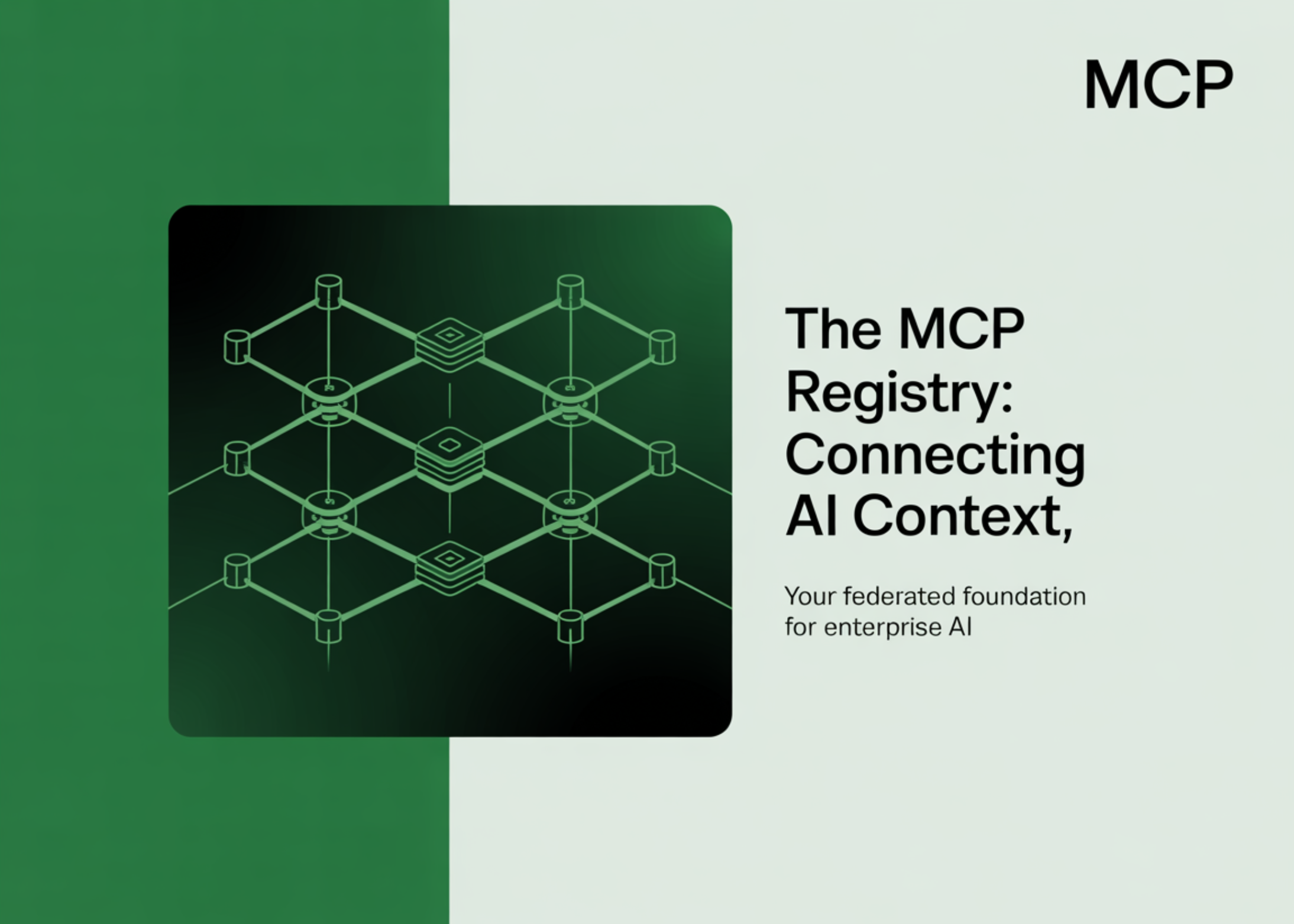
The Model Context Protocol (MCP) team has unveiled the preview release of the MCP Registry, a groundbreaking system poised to be the cornerstone for deploying enterprise AI at scale. Far beyond a simple directory, this Registry introduces a federated framework for locating MCP servers-whether public or private-drawing inspiration from the internet’s historic solution to addressability through DNS.
Reimagining AI Context Discovery: The Registry as a DNS Analog
Fundamentally, the MCP Registry serves as the DNS equivalent for AI context. It acts as a universal, publicly accessible index where organizations such as GitHub or Atlassian can list their MCP servers. Simultaneously, it empowers enterprises to operate private sub-registries, creating a layered system that balances openness with confidentiality. This architecture functions as a secure gateway into the expansive MCP ecosystem, safeguarding sensitive internal data.
Implementing a single, centralized registry would have introduced significant security vulnerabilities and compliance challenges. The federated design, however, offers a pragmatic compromise: a trusted, authoritative upstream source complemented by customizable extensions or restrictions tailored to organizational policies.
Advantages of a Federated Registry Model
Modern enterprises often navigate hybrid IT landscapes, integrating internal platforms with external services. The MCP Registry’s federated approach reflects this reality, enabling scenarios that were previously difficult to achieve:
- Confidential Internal Resource Discovery: Teams can securely locate and utilize internal MCP servers (e.g., “customer support knowledge bases”) without exposing infrastructure to external networks.
- Unified Governance and Compliance: Organizations maintain control over which external MCP servers are accessible, complete with audit logs to meet regulatory requirements.
- Mitigation of Context Fragmentation: By standardizing on a single protocol and governance framework, teams avoid the pitfalls of fragmented, custom-built integrations.
- Seamless Hybrid AI Agent Operations: AI agents can query both private datasets (via internal MCP servers) and public repositories (such as GitHub’s MCP server) within a unified environment.
This results in a scalable, governed infrastructure layer that harmonizes AI agent connectivity across organizational and network boundaries.
Technical Framework, Moderation, and Open Source Commitment
The MCP Registry is an open-source initiative governed by the MCP Registry Working Group and released under a permissive license. It provides a core API specification that sub-registries inherit to ensure seamless interoperability. Public “marketplaces” can enrich the upstream data to cater to specific client requirements, while private enterprise registries enforce internal policies and controls.
Key Takeaways
For organizations aiming to bridge private contextual data with public AI infrastructure, the MCP Registry offers a vital connective layer. It addresses the fragmentation and security risks associated with unmanaged integrations by standardizing discovery and governance processes. This federated architecture scales securely by distributing responsibility while preserving a single, authoritative source of truth.
The MCP Registry is currently available in preview. To begin:
- Register your server by following the detailed instructions provided for server administrators.
- Access server information by consulting the client-side integration guide.
Frequently Asked Questions
What exactly is the MCP Registry?
It is a global directory and API designed to facilitate the discovery of MCP servers, functioning similarly to DNS but for AI context. It supports both public listings and private enterprise sub-registries.
Why adopt a federated registry instead of a single global one?
A centralized registry poses significant security and compliance risks. The federated model enables enterprises to maintain private sub-registries while relying on a shared, authoritative upstream source.
What benefits does the MCP Registry offer enterprises?
It enables secure internal discovery, centralized governance of external MCP servers, reduces context fragmentation, and supports hybrid AI agents operating across private and public data sources.
Is the MCP Registry open source?
Yes, it is an official MCP project released under a permissive open-source license, with APIs and specifications available for developing sub-registries.
Is the MCP Registry fully released?
Currently, it is in preview mode, meaning features may evolve and durability is not guaranteed until the general availability release.