
Good morning, AI enthusiasts. Jony Ive, the former Apple design visionary, has openly acknowledged a truth many hesitate to voice: our interaction with technology has grown increasingly “uncomfortable.” He envisions crafting an OpenAI device aimed at transforming this uneasy dynamic.
Despite this ambitious goal, with 15 to 20 hardware prototypes currently underway and OpenAI CEO Sam Altman emphasizing that revolutionizing computer usage won’t happen instantly, the prospect of an AI-driven tech wellness revolution remains distant.
Today’s AI Highlights:
- Jony Ive shares insights on OpenAI’s hardware ambitions
- AI researcher departs Anthropic over company’s China policy
- Build a content ideation tool using Google’s Opal platform
- Samsung’s compact AI model outperforms larger competitors in reasoning
- New AI utilities, community workflows, and more updates
OPENAI INNOVATION


Overview: Jony Ive, renowned for his design leadership at Apple, recently unveiled aspects of his collaboration with OpenAI during a candid discussion with Sam Altman at Dev Day. Their joint vision centers on developing AI-powered hardware that aims to mend the fractured emotional connection users have with technology.
Key points:
- Ive described today’s tech relationship as “uncomfortable,” aspiring to create devices that foster happiness, fulfillment, tranquility, reduced anxiety, and stronger human connection.
- Following OpenAI’s $6.5 billion acquisition of Ive’s startup, io, in May, his team has been exploring 15 to 20 innovative hardware concepts designed as a cohesive “family of devices.”
- He criticized the notion that AI can be effectively integrated into existing legacy hardware, calling it “absurd,” while Altman stressed the importance of compelling reasons to introduce new devices.
- Altman emphasized in an interview that OpenAI’s hardware journey demands patience, as it involves pioneering an entirely new paradigm for computer interaction.
Significance: This focus on emotional well-being and mental health represents a potential paradigm shift away from the addictive tendencies of current technology. However, Altman’s call for patience suggests that these transformative products are still some time away from market release.
BOOST PRODUCTIVITY WITH WISPR FLOW
Introducing Wispr Flow: A voice-first productivity assistant designed to convert your spoken words into polished, formatted content instantly. Whether drafting emails, Slack messages, code, or AI prompts, Wispr Flow accelerates your workflow, enabling you to write up to three times faster while maintaining context.
Capabilities include:
- Voice dictation with intelligent auto-formatting across any text field
- Hands-free creation of documents, emails, and programming code
- Discreet whisper mode for use in shared or quiet environments
- Enhanced prompt generation for ChatGPT and Claude AI models
ANTHROPIC AND GOOGLE: TALENT MOVES
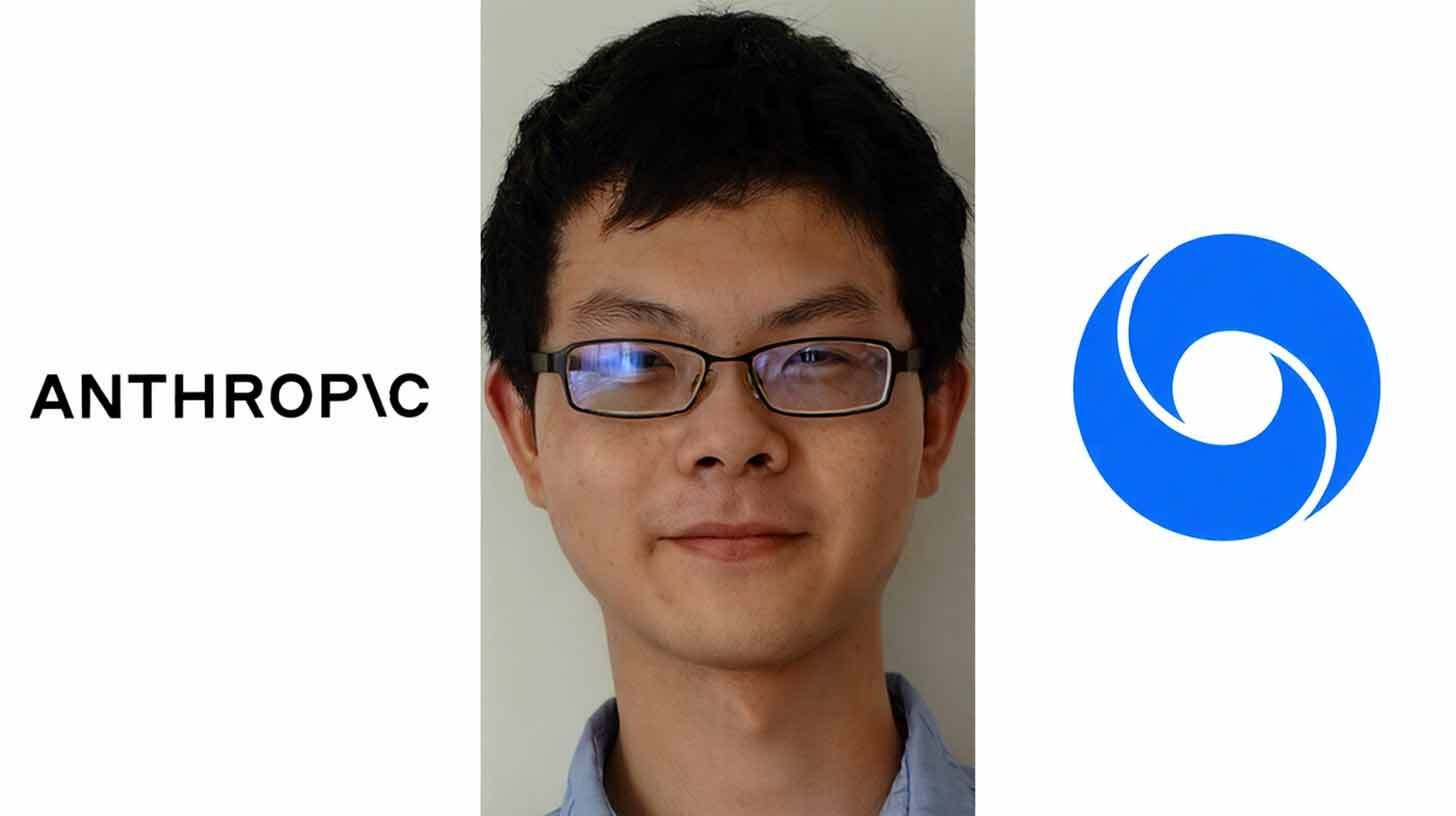
Summary: AI researcher Yao Shunyu has left Anthropic after less than a year, citing the company’s policy of restricting access to its services for subsidiaries in “adversarial nations” such as China as a significant factor. He has since joined Google’s DeepMind as a senior research scientist on the Gemini project.
Details:
- Yao contributed to Anthropic’s Claude 3.7 Sonnet and Claude 4 models before his departure in mid-September.
- Approximately 40% of his decision was influenced by Anthropic’s stance on limiting service access to entities in China.
- He also referenced undisclosed internal issues, expressing that while his time at Anthropic was valuable, moving on was the better choice.
- At DeepMind, Yao will focus on advancing foundational AI models within the Gemini team.
Implications: Geopolitical tensions are increasingly shaping AI research careers, with corporate policies on international collaboration becoming as critical as compensation and computational resources in attracting top talent.
BUILDING AI-POWERED CONTENT TOOLS WITH GOOGLE OPAL
Overview: This tutorial guides you through creating a content brainstorming application using Google’s Opal platform. Designed to combat writer’s block, the app generates social media post ideas complete with engaging hooks, structured outlines, and relevant hashtags-no programming skills required.
Step-by-step instructions:
- Visit the Opal platform, sign in with your Google account (free during beta), and start a new project using the visual canvas and prompt bar.
- Input the prompt: “Create a content idea generator. Input a topic and platform (LinkedIn or Twitter). Pull recent trends, then generate 5-10 post ideas with attention-grabbing hooks, 3-bullet outlines, and relevant hashtags. Output as a formatted table with thumbnail image suggestions.”
- Enhance your app by interacting with Opal to add features like exporting content to Google Docs, then test it with real topics such as “Best AI tools for productivity” and select your target platform.
- Refine the output by selecting nodes and requesting prompt edits to adjust tone or specificity. Share your app by setting permissions to “Anyone with the link.”
Pro tip: Customize versions for different social platforms, such as a LinkedIn thought leadership generator, a Twitter viral thread creator, or an Instagram caption assistant.
NOTION AGENT: YOUR AI WORK PARTNER
Introducing Notion Agent: An AI-powered assistant fully versed in Notion’s building blocks, capable of executing complex workflows, creating databases, editing pages, and automating tasks that traditionally took days.
Features include:
- Managing end-to-end workflows across multiple pages and databases
- Searching and analyzing data from Notion, Slack, Google Drive, and the web
- Adapting to your personal preferences and working style
- Building anything from project plans to editorial calendars within Notion
ADVANCES IN AI REASONING: SAMSUNG’S TINY RECURSION MODEL
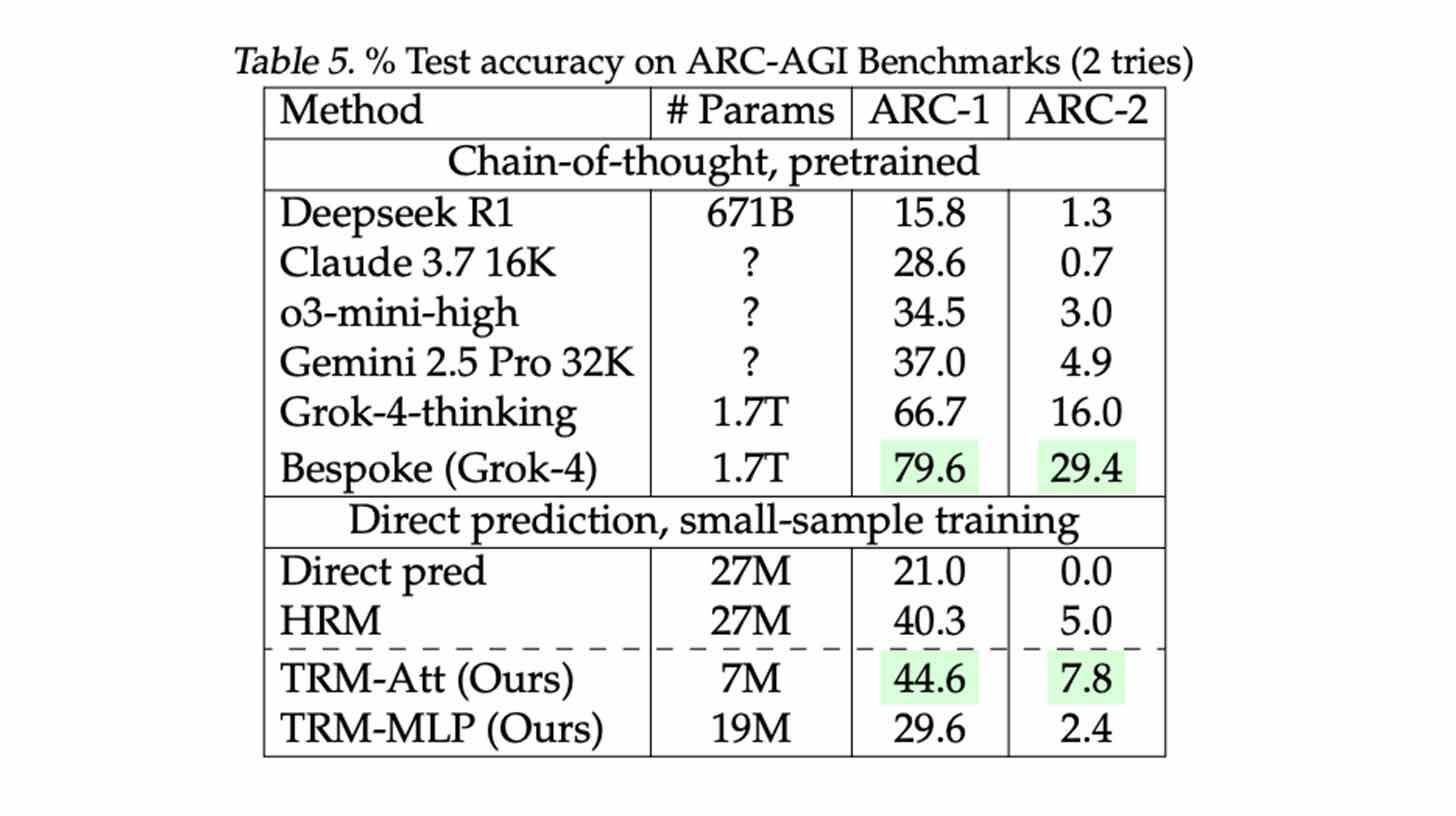
Summary: Samsung researcher Alexia Jolicoeur-Martineau introduced the Tiny Recursion Model (TRM), a compact AI with just 7 million parameters that outperforms much larger models like DeepSeek R1 and Gemini 2.5 Pro on complex reasoning tasks by employing iterative self-refinement.
Key insights:
- TRM achieved a 45% success rate on the challenging ARC-AGI-1 benchmark and 8% on ARC-AGI-2, surpassing models thousands of times its size.
- Unlike traditional token-by-token generation, TRM drafts solutions and iteratively revises them through up to 16 cycles of internal reasoning.
- The model uses a dedicated scratchpad to critique and enhance its logic multiple times per cycle before finalizing answers.
- While promising for specific puzzle-like problems, these results may not generalize across all reasoning domains.
Why it’s important: In an era dominated by massive AI models demanding enormous compute resources, innovations like TRM demonstrate that intelligent architectural design can enable smaller, more efficient models to compete effectively. This approach could democratize AI research for organizations with limited budgets.
QUICK UPDATES
- ⚡ MCP now enables real-time AI integration with your enterprise data sources, enhancing operational intelligence.*
- 💻 Google unveils AI agents capable of interacting directly with user interfaces.
- 🎥 xAI refreshes its image and video generation platform with new features.
- 🔮 New tools allow users to build, modify, and share AI mini-applications using natural language commands.
*Sponsored Listing
INDUSTRY NEWS
Appfigures reports: The app Sora amassed 627,000 downloads in its first week on the App Store, outpacing ChatGPT’s initial launch week figures.
Anthropic announces: Plans to open a new office in India by 2026, marking its second location in the Asia-Pacific region. Claude AI ranks as the second most used AI model in the country.
Google expands: Its AI-powered virtual try-on feature to additional markets, including a new shoe visualization tool that shows how footwear looks on individual users.
Zendesk launches: AI agents capable of resolving up to 80% of customer support tickets, complemented by co-pilot and voice assistant features.
Researchers from MIT, IBM, and University of Washington release: TOUCAN, the largest open dataset for training AI agents, featuring 1.5 million tool interactions across 495 multi-cloud platform servers.
COMMUNITY SPOTLIGHT
Reader Workflow: Raj S. from Toronto, Canada
“I collaborate with North American manufacturers specializing in plastic molding, injection molding, and powder metallurgy-fields where errors in Bills of Materials or CAD blueprints can cause production delays of weeks. We’re developing an AI-driven BOM system and Blueprint Classifier to automate these processes. Early results indicate a 60% reduction in blueprint review time and a 50% decrease in BOM preparation effort. This translates to lower costs, faster production cycles, and fewer mistakes for manufacturers.”
How are you leveraging AI? Share your story with us.
Additional Resources
Until next time,
Rowan, Joey, Zach, Shubham, and Jennifer – your team behind The Rundown