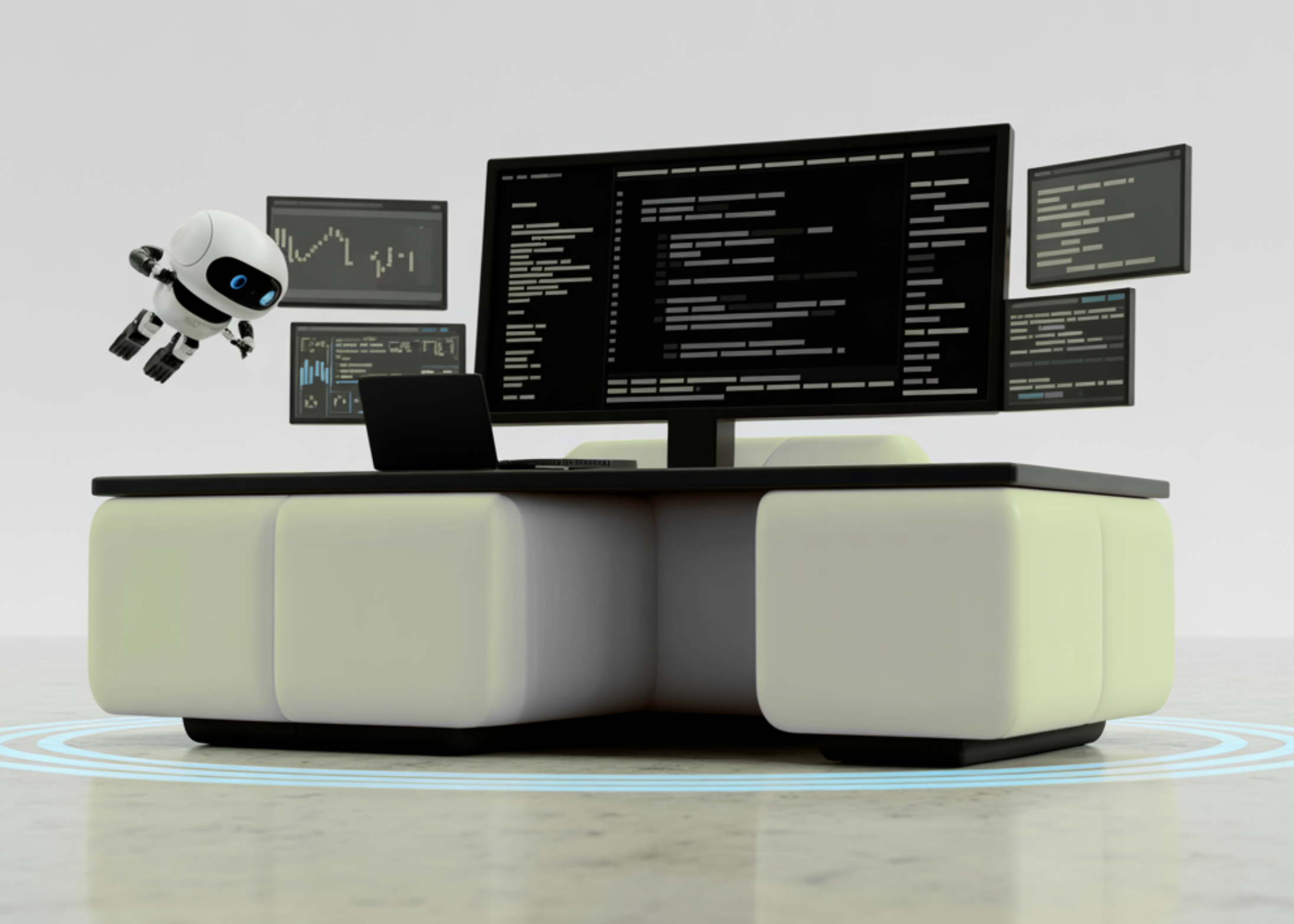
On November 18, 2025, Google unveiled Antigravity, a groundbreaking platform built atop Gemini 3 that redefines the traditional IDE experience. Far beyond a simple autocomplete tool, Antigravity functions as an intelligent environment where autonomous agents strategize, execute, and elucidate intricate software development tasks seamlessly across code editors, terminals, and web browsers. This launch marks a significant stride in Google’s vision for agent-centric developer tools.
Introducing Antigravity: A New Paradigm in Development
Google presents Antigravity as an innovative agent-driven development ecosystem centered around an AI-enhanced IDE. Its primary ambition is to transition the IDE into an agent-first platform, empowering autonomous agents with browser control and asynchronous workflows to independently plan and complete comprehensive software projects from start to finish.
Functionally, Antigravity resembles a contemporary AI-powered code editor but elevates agents to primary collaborators. These agents autonomously decompose complex tasks, coordinate with one another, modify source files, execute terminal commands, and navigate browser environments. Developers interact at a high-level task perspective, while the system manages intricate tool integrations behind the scenes.
Technically, Antigravity is an Electron-based application derived from Visual Studio Code, requiring users to sign in with a Google account. It is currently available as a free public preview across macOS, Linux, and Windows platforms.
Supported Models, Pricing Structure, and Execution Environment
Within its unified agent framework, Antigravity supports multiple foundational AI models. During this preview phase, developers can leverage Gemini 3, Anthropic’s Claude Sonnet 4.5, and OpenAI’s GPT OSS models interchangeably within the same IDE, offering flexibility and avoiding vendor lock-in.
For individual developers, Antigravity is accessible at no cost. Google has implemented generous rate limits for Gemini 3 Pro usage, refreshing every five hours, designed to accommodate most users without interruption.
Dual Work Modes: Editor and Manager Views
Antigravity introduces two distinct operational modes tailored to different neural model functionalities: Editor view and Manager view.
The Editor view serves as the default interface, mirroring a standard IDE with an integrated agent sidebar. Here, agents can read and modify code, propose inline edits, and utilize terminal and browser capabilities as necessary.
Conversely, the Manager view elevates the focus from individual files to overseeing multiple agents and workspaces. This mode acts as a command center, enabling developers to orchestrate numerous agent-driven workflows asynchronously rather than engaging in line-by-line code editing.
From Raw Logs to Meaningful Artifacts
A cornerstone of Antigravity’s design is its Artifact system, which transcends traditional raw tool logs by generating clear, human-readable summaries of agent activities and rationales.
Artifacts are structured data objects encompassing task lists, detailed implementation plans, explanatory walkthroughs, screenshots, and browser session recordings. These artifacts encapsulate work at a conceptual task level rather than mere API call sequences, facilitating easier verification and comprehension by developers.
This approach addresses a prevalent trust issue in existing agent frameworks, which either inundate users with overwhelming internal process details or obscure them entirely, showing only final code changes. Antigravity strikes a balance by providing task-level artifacts enriched with sufficient verification cues, enabling developers to audit agent actions effectively.
Core Principles and Interactive Feedback Mechanisms
Antigravity is architected around four foundational principles: trust, autonomy, feedback, and continuous improvement.
Trust is cultivated through transparent artifacts and verification processes. Autonomy is achieved by granting agents access to multiple interfaces-editor, terminal, and browser-allowing them to execute complex workflows with minimal human intervention. Feedback is facilitated via inline comments on artifacts, while self-improvement stems from agents learning from prior tasks and reapplying successful strategies.
Developers can annotate specific artifacts with comments, including textual notes and screenshots. Agents then integrate this feedback dynamically into ongoing tasks without needing to restart, enabling real-time corrections and refinements.
Additionally, Antigravity features a knowledge retention system where agents store reusable code snippets and procedural sequences from previous projects. Over time, this builds a comprehensive internal playbook, reducing redundancy and accelerating future development cycles.
Summary of Key Features
- Antigravity transforms the IDE into a centralized control hub where autonomous agents operate across code editors, terminals, and browsers, moving beyond traditional inline assistance.
- Built as a Visual Studio Code derivative, it is freely available in public preview on Windows, macOS, and Linux, supporting Gemini 3 Pro with generous usage limits, alongside Claude Sonnet 4.5 and GPT OSS models.
- Two primary modes-Editor view for direct coding with agent support, and Manager view for coordinating multiple agents and asynchronous workflows-cater to diverse development needs.
- Agents generate rich Artifacts such as task breakdowns, implementation blueprints, screenshots, and browser recordings, providing verifiable evidence of their work instead of opaque logs.
- Integrated feedback loops allow developers to comment on artifacts, with agents adapting in real-time and leveraging a growing knowledge base to enhance efficiency without task restarts.
Final Thoughts
Google’s Antigravity represents a pragmatic evolution toward agent-driven software development. By embedding Gemini 3 Pro within a robust IDE workflow, offering distinct views for hands-on coding and high-level management, and emphasizing transparent, task-focused artifacts, it addresses critical challenges in trust and usability. The platform’s commitment to autonomy, feedback, and continuous learning positions it as a pioneering environment where autonomous agents are not mere assistants but governed collaborators within the development lifecycle.