Amazon re:Invent 2023: Pioneering Practical AI Solutions for Businesses
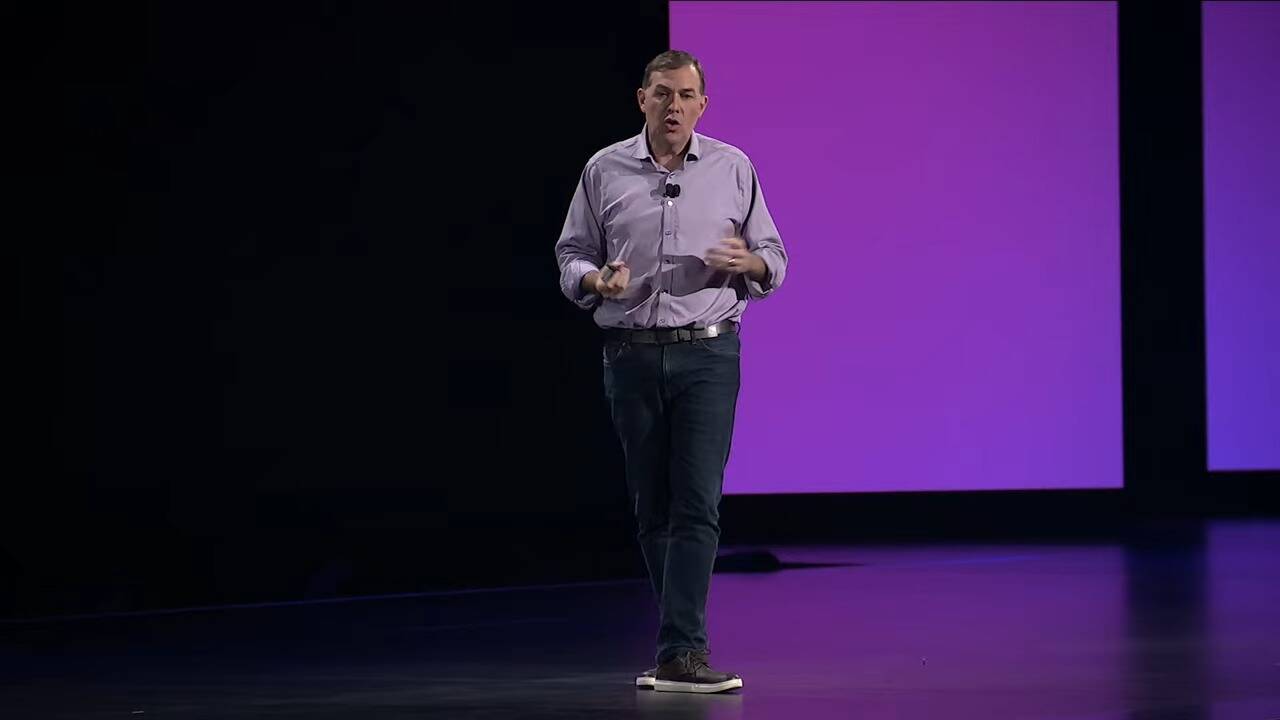
At this year’s Amazon Web Services (AWS) re:Invent conference, CEO Matt Garman unveiled a comprehensive strategy aimed at making artificial intelligence genuinely impactful for enterprises. The approach centers on simplifying AI adoption through a combination of tailored infrastructure, customizable models, and ready-to-deploy AI agents, all designed to lower the barriers that have so far hindered widespread business integration.
Bridging the Gap Between AI Promise and Enterprise Reality
Despite massive investments in AI technologies, many organizations have yet to realize significant returns. According to a recent MIT study, companies have poured between $35 billion and $40 billion into generative AI projects, but tangible benefits remain elusive. Garman echoed this sentiment, emphasizing that the full potential of AI is still untapped and that AWS aims to unlock this latent value by delivering practical, enterprise-ready solutions.
Building on Proven Cloud Strategies: From Hardware to AI Abstraction
AWS is leveraging a familiar playbook reminiscent of its early cloud computing days: start with robust hardware and progressively add layers of abstraction to simplify user experience. This method has historically lowered entry barriers, but it also creates a dependency on AWS’s proprietary ecosystem, limiting portability. The trade-off is clear-ease of use comes at the cost of vendor lock-in.
Introducing Nova Forge: Custom AI Models Tailored to Your Data
One of the standout announcements was Nova Forge, a new AWS platform designed to help businesses build custom generative AI models with greater ease. Garman explained that many enterprises struggle to find AI models that deeply understand their unique data and domain. Nova Forge addresses this by providing a partially pre-trained model checkpoint that customers can fine-tune using their proprietary datasets alongside AWS-curated data.
This hybrid approach strikes a balance between training a model from scratch-which demands vast data and compute resources-and simply fine-tuning existing open-source models. Garman likened this to language acquisition: learning a new language is easier when you have a foundational understanding, much like how Nova Forge builds on a pre-trained base to incorporate domain-specific knowledge without sacrificing core reasoning capabilities.
Novellas and Nova 2: AWS’s Proprietary AI Models in Bedrock
Amazon’s proprietary models, branded as Novellas, are integrated into the AWS Bedrock platform, which abstracts away the complexities of managing hardware and software stacks. Bedrock supports a range of underlying hardware, including Nvidia GPUs and AWS’s own accelerators, enabling seamless scalability and performance optimization.
Recently, AWS introduced Nova 2, a new suite of large language models (LLMs) and conversational AI variants available exclusively through Bedrock. The lineup includes:
- Nova 2 Lite and Pro: Reasoning models designed to rival closed-weight models from competitors like OpenAI and Anthropic.
- Sonic: A speech-to-speech conversational AI model.
- Omni: A multimodal model capable of processing both images and text inputs.
While Bedrock also supports open-weight models such as Mistral AI’s latest releases, these cannot be fine-tuned with Nova Forge, reinforcing AWS’s strategy of keeping custom models within its ecosystem.
Balancing Flexibility and Lock-In: The AWS AI Ecosystem
By offering proprietary models and fine-tuning tools that are tightly integrated with AWS infrastructure, Amazon addresses a common challenge in AI deployment: API switching. Customers often swap AI providers for cost or performance reasons, but AWS’s approach encourages deeper integration, making migration more complex. This strategy benefits AWS by fostering customer retention, though it may limit enterprises’ flexibility.
Enhancing Trust with Intelligent AI Agents
Beyond custom models, AWS is investing in AI agents capable of autonomously executing complex, multi-step workflows. During the keynote, Garman introduced two new features for Bedrock Agent Core designed to build confidence in these autonomous systems:
- Policy Extensions: Allow organizations to define strict rules governing which tools and data an AI agent can access and how it can use them. For example, a customer service agent might be restricted from approving returns over a certain value without human oversight.
- Evaluation Suite: Provides continuous real-time monitoring and testing of agent behavior to ensure compliance with expected performance and to quickly identify and address any deviations.
These capabilities aim to mitigate risks associated with autonomous AI, such as unintended actions following model updates, and to foster enterprise trust in deploying AI agents at scale.
Selective Agent Integration: Flexibility Without Overreach
Amazon’s marketplace now features an expanding catalog of pre-built AI agents, though the company deliberately avoids offering an all-encompassing solution. Instead, AWS encourages customers to pick and choose the components that best fit their needs, promoting modularity over a one-size-fits-all approach.
Garman emphasized this philosophy: “We don’t force builders down a fixed path. You select the services that align with your unique requirements.” However, while this flexibility is appealing, the agents and models created within AWS’s environment remain largely non-portable, reinforcing the company’s ecosystem lock-in.
Looking Ahead: AWS’s Role in the Enterprise AI Landscape
As enterprises continue to navigate the complexities of AI adoption, AWS’s strategy of combining custom model development, proprietary hardware acceleration, and trustworthy autonomous agents positions it as a formidable player. By addressing both the technical and operational challenges of AI deployment, AWS aims to transform AI from a speculative investment into a practical business asset.
With ongoing advancements and a growing portfolio of AI tools, AWS is set to influence how organizations harness AI in the coming years, balancing innovation with the realities of enterprise needs and constraints.