Artificial Intelligence companions have traditionally been confined to virtual assistants on screens or voice-activated devices, often lacking a tangible presence. Razer’s Project AVA challenges this norm by introducing an AI that not only interacts but also physically shares your workspace, signaling a new era where AI becomes a true desk partner.
Evolution from Gaming Coach to Multifaceted AI Partner
Initially launched as an esports-centric AI coach, Project AVA has since transformed into a comprehensive AI companion designed to assist across various facets of daily life. Beyond offering gaming strategies and performance analytics, AVA now supports productivity, entertainment, and personal interaction, making it a versatile digital ally.
Bringing AI to Life: The Animated Avatar Experience
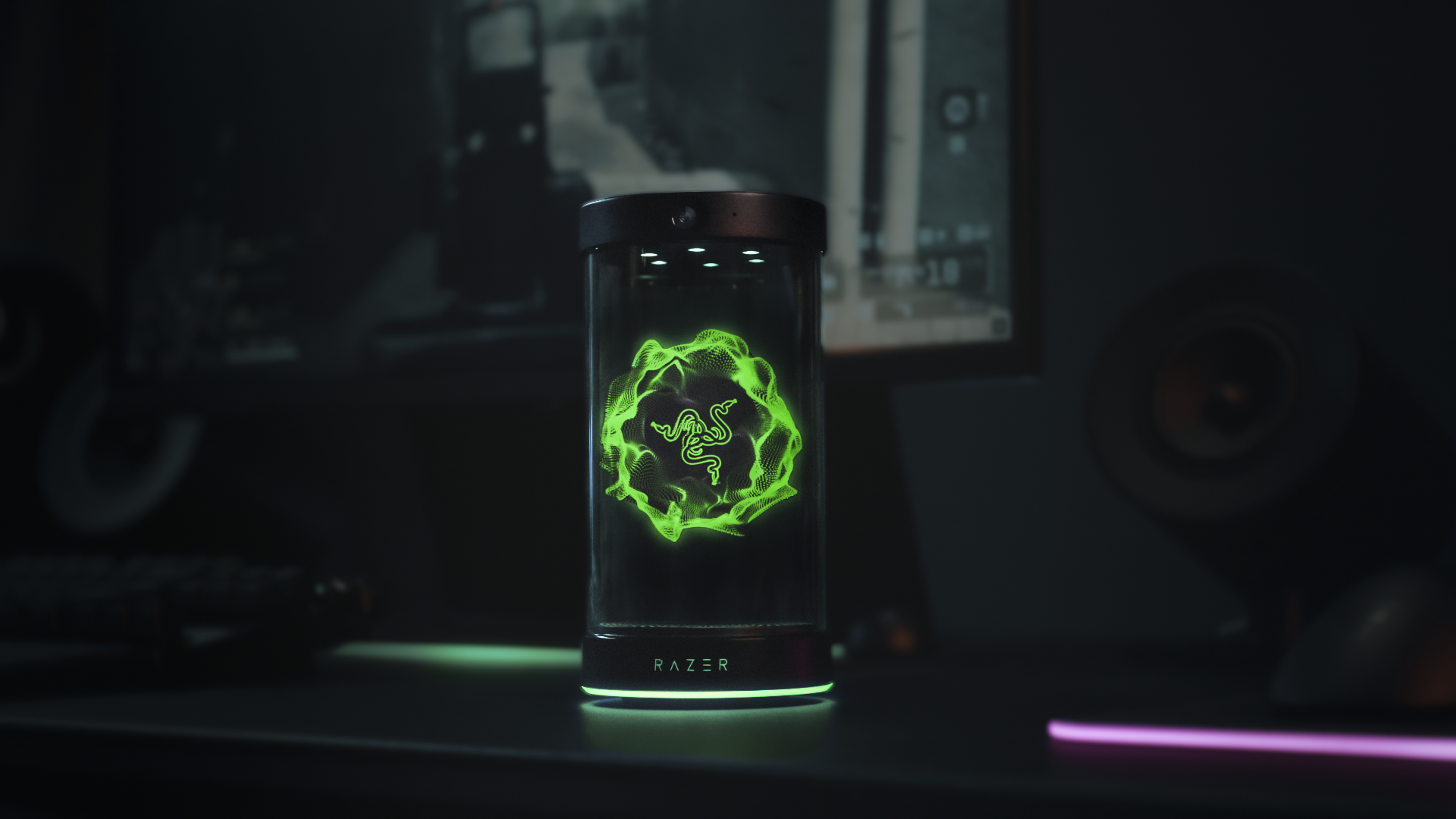
Central to AVA’s innovation is its 5.5-inch animated avatar, which provides a physical and visual representation of the AI on your desk. This embodiment goes beyond aesthetics, fostering a sense of personality and continuity. AVA’s adaptive AI personality evolves by learning your routines, preferences, and context, enabling more natural and personalized interactions over time.
Contextual Intelligence with PC Vision Mode
A standout feature of Project AVA is its PC Vision Mode, which empowers the AI to observe and interpret on-screen activity without explicit commands. This capability allows AVA to proactively assist by analyzing gameplay, managing tasks, or surfacing pertinent information relevant to your current workflow. This proactive approach marks a significant shift from traditional reactive AI assistants to collaborative partners.
Technical Highlights of Project AVA
- Dual far-field microphone arrays for precise voice capture
- High-definition camera paired with ambient light sensors
- Customizable showcase LEDs integrated with Razer Chroma RGB
- Interchangeable 5.5-inch 3D holographic avatars
- Down-firing full-range speaker for rich audio output
- USB Type-C port supporting data transfer and power delivery
- Intuitive controls including volume adjustment and mute functions
Blending Human Interaction with Machine Intelligence
Project AVA occupies a unique space where AI transcends software boundaries to become a persistent, interactive presence. Unlike conventional assistants designed to fade into the background, AVA embraces visibility and engagement, inviting users to rethink how humans and AI coexist in shared physical and cognitive environments.
This approach raises compelling questions about customization options, the balance between augmentation and dependency, and the evolving definition of humanity in an AI-integrated world.
Expanding AI Horizons with Razer AIKit
Complementing Project AVA, Razer has introduced AIKit, an open-source platform aimed at simplifying AI development. AIKit enables developers to efficiently run and optimize large language models locally, achieving performance on par with cloud-based systems. Features such as automatic GPU detection, cluster management, and seamless integration with Razer’s AI hardware facilitate low-latency, privacy-conscious AI workflows.
Mobile AI Acceleration Powered by Tenstorrent
In partnership with Tenstorrent, Razer offers a portable AI accelerator designed for developers requiring high-performance AI capabilities on the go. Utilizing Tenstorrent’s Wormhole™ technology and Thunderbolt™ 5 connectivity, this compact device delivers desktop-level generative AI processing power. It supports chaining up to four units, enabling scalable experimentation with large language models, image synthesis, and advanced machine learning tasks.
Envisioning the Future of AI Integration
Collectively, Project AVA, AIKit, and the Tenstorrent collaboration illustrate a clear trajectory toward AI systems that are locally hosted, physically embodied, and seamlessly woven into everyday activities. Moving away from remote, cloud-dependent AI, these innovations emphasize presence, contextual understanding, and personalization.
What began as a specialized esports tool now hints at a broader transformation-where the boundary between human and machine interaction is thoughtfully and gradually redefined.