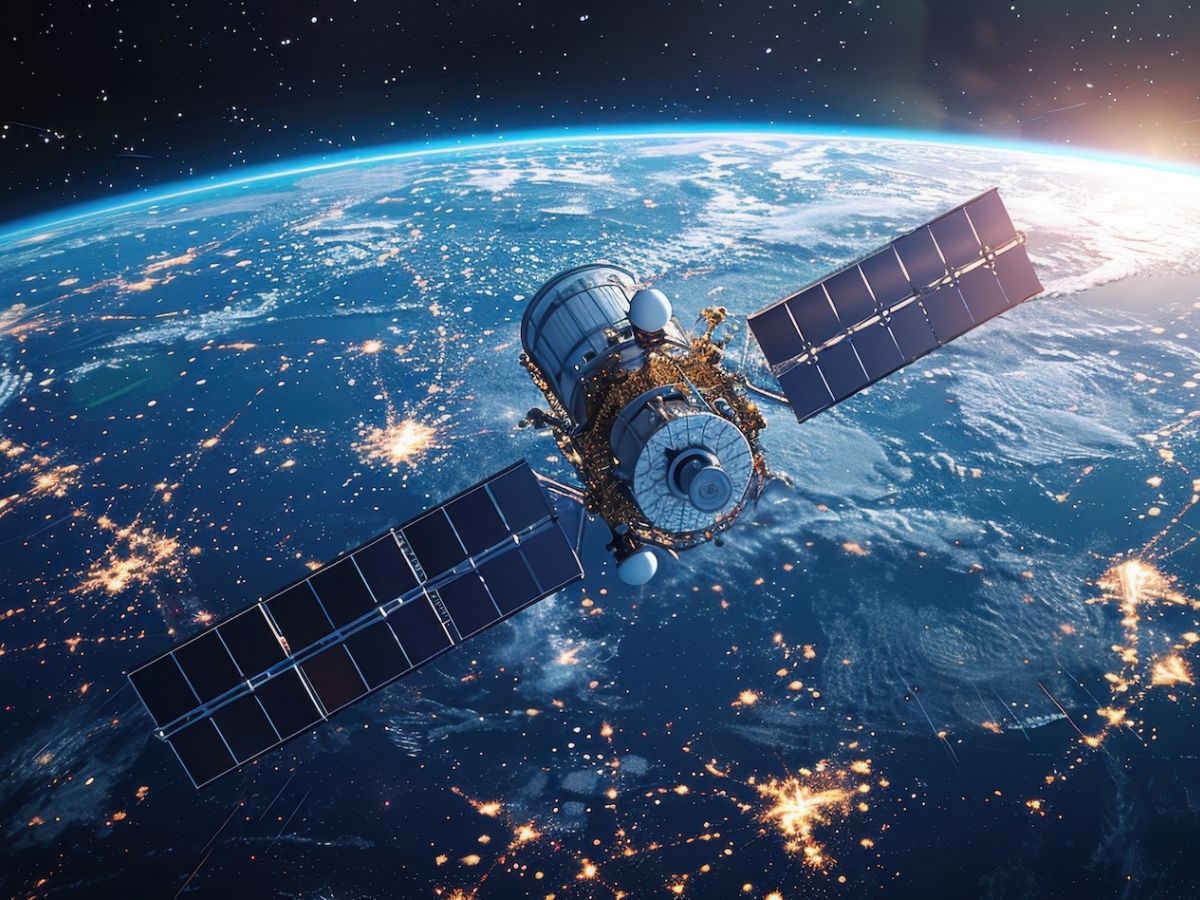
A satellite used AI for a mission in the space without human intervention. – NotebookCheck.net News (19459000)
Recently, a satellite successfully completed a mission autonomously in just 90 seconds, without human assistance. This is a major breakthrough thanks to artificial intelligence, which could help scientists in the near future.
Artificial Intelligence continues to progress exponentially and has already been present in many areas of daily life. But that’s just the beginning, because artificial intelligence is also present in outer space. A NASA-led satellite completed a mission without human assistance recently, which is an impressive technological achievement.
Called
Dynamic Targetingwas a technology used by
NASA’s Jet Propulsion Laboratory (JPL) in early July. It was integrated into a satellite that was no bigger than a briefcase made by
Open Cosmos containing a machine-learning processor developed by
Ubotica.
In this quite amazing mission, the satellite tilted in order to scan 500 km before its initial orbit. It then captured an image. Ubotica’s artificial-intelligence took over after this to analyze the image.
Two options were available depending on the results. If the sky was clear the satellite would tilt forward to take a detailed image of Earth’s surface. In the other case, a cloudy sky, for example, the satellite would have not taken any photos to save bandwidth, time, and storage.
But even though we’re still a ways off from having spacecraft that can navigate alone in space at incredible speeds, it’s important to understand that scientists are making a big advance. Ben Smith from JPL explains this: “If you can be smart about what you’re taking pictures of, then you only image the ground and skip the clouds. This technology will help scientists get a much higher proportion of usable data.”
At the moment, scientists must sort through all of the images they receive from satellites. It is because satellites are programmed to take many shots, even when they are not useful. This major advancement with artificial intelligence could help
Satellites allow scientists to observe natural disasterssuch as fires and eruptions much faster than they can with current satellite technology.
Alexis Stegmann – Tech Writer
– 145 articles have been published on Notebookcheck since 2025
– I’ve worked in the field of webwriting for several years and I love to keep readers up to speed with the latest news about astronomy, technology and the world of videogames, among other exciting topics. I’ve worked on several websites, which allowed me to cover many different topics. In my personal life I am passionate about many subjects, such as astronomy and video games. I also love history and science. I’m also attracted to psychology, a subject which deserves more documentation and recognition.
Alexis Stegmann – Tech Writer
– 145 articles have been published on Notebookcheck since 2025
– I’ve worked in the field of webwriting for several years and I love to keep readers up to speed with the latest news about astronomy, technology and the world of videogames, among other exciting topics. I’ve worked on several websites, which allowed me to cover many different topics. In my personal life I am passionate about many subjects, such as astronomy and video games. I also love history and science. I’m also attracted to psychology, a subject which deserves more documentation and recognition.
Alexis Stegmann (Update: 202508-7)