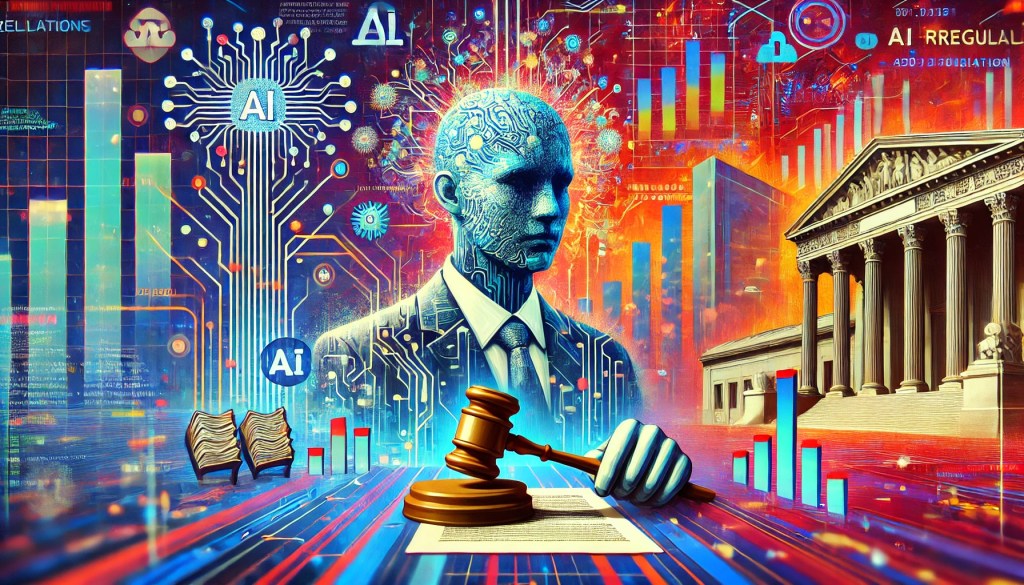
Subscribe to our weekly newsletters and get only the information that matters to enterprise AI, security, and data leaders. Subscribe NowU.S. president Donald Trump signed the Ai Action Planwhich outlines the path for the U.S.A. to lead the AI race. The rules are a clear indication to enterprises that have already deployed AI systems of how the administration will treat AI in the future. They could also be a signal for providers on how they will approach AI development.
Like the AI executive orders signed by Joe Biden and in 2023, Trump’s order is primarily aimed at government offices. It outlines how they can contract with AI model and application providers. Analysts noted that while the AI plan may have no immediate impact on enterprises, it is important to note that the ecosystem changes whenever the government takes a stance on AI.
This plan will likely shape our ecosystem — one that rewards those with the ability to move quickly, stay aligned, and deliver real-world results,” Matt Wood, Commercial Technology and Innovation Officer at PwCtold VentureBeat via email. “For enterprises, it is clear that the pace of AI adoption has accelerated, and the costs of lagging are increasing. Even if this plan is centered on federal agencies, its ripple effects will be felt far beyond them in terms of procurement, infrastructure and norms. We’ll see new government-backed testing, procurement, and funding programs emerge. Enterprises that can partner, test, or productize will be well-positioned.”
AI Impact Series Returns To San Francisco – 5 August
Are you ready for the next phase of AI? Join leaders from Block GSK and SAP to get an exclusive look at the ways autonomous agents are reshaping workflows in enterprise – from end-to-end automated workflows to real-time decision making.
He added that the Action Plan “is not a blueprint for enterprise AI.” Still, enterprises should expect an AI development environment that prioritizes speed, scale, experimentation and less reliance on regulatory shelters. Companies that work with the government will also face additional scrutiny of the models and applications used to ensure alignment with government values.
This Action Plan outlines ways government agencies can work with AI companies. It also outlines recommended tasks for infrastructure investment and AI development, and sets guidelines for exporting or importing AI tools.
Charleyne Biondi is assistant vice president and analyst for Moody’s Ratingssaid that the plan “highlights AI’s increasing strategic role and core driver of economic transforma-tion.” She noted that, however, this plan does not address regulatory fragmentation.
However, the current regulatory fragmentation in the United States could create uncertainty for businesses and developers. She said that finding the right balance between safety and innovation, and between national ambitions and regulatory clarity, will be crucial to ensuring continued enterprise adoption and avoiding unintended delays.
What’s in the AI Action Plan?
It is divided into three pillars.
Accelerating AI Innovation
Creating American AI Infrastructure
Leading international AI diplomacy.
A major headline of the AI Action Plan focuses on “ensuring freedom of speech and American values”a key talking point for this Administration. The National Institute of Standards and Technology is instructed to remove all references to diversity, equity and inclusivity and misinformation. It prohibits agencies from working on foundation models with “top-down” agendas.
However, it’s unclear what kind of AI this would be. As the Grok controversy has shown, enterprises are particularly concerned about AI systems making controversial statements.
The order also directs NIST to conduct research and publish findings in order to ensure that models such as those from China, like DeepSeek (19459053) – Qwen As is not aligned to the Chinese Communist Party.
The most important positions are to support open-source systems, create a new testing ecosystem, and streamline the process of building data centers.
The plan directs the Department of Energy to create “AI testbeds to pilot AI systems in real-world, secure settings,” which will allow researchers to prototype their systems. This plan also reduces the amount of red tape that is associated with safety testing models.
The explicit support for open-source AI models and open-weight models has excited many in industry.
We need to ensure America has open models that are based on American values. Open-source models and open-weighted models could become standards in certain areas of academic and business research around the world. They also have geostrategic importance. The Federal government should support open models, even though the developer is ultimately responsible for deciding whether or not to release a model.
Understandably, open-source proponents like Clement Delangue, a Hugging Faceemployee, praised the decision on social media. He said: “It is time for the American AI Community to wake up and drop the “open-is-not-safe” bullshit and return to the roots: open-source AI and open-science, powered by a community of unmatched frontier labs, big technology, startups, universities and non-profits.”
It’s time to wake up the American AI community, stop the “open is not safe” nonsense, and get back to its roots. Open science and open-source AI powered by a community of unmatched frontier labs, startups, big tech, universities, non-profits and more.
— clem ? (@ClementDelangue) July 23, 2025 (19659030) BCGX North America Chair Sesh Iyer said to VentureBeat that this would give enterprises greater confidence in adopting LLMs open-source and could also encourage other closed-source providers to “rethink proprietary strategies” and possibly consider releasing modelweights.
However, the plan does mention cloud providers should prioritise the Department of Defense which could push some enterprises further down an already crowded list of waiting enterprises.
Clarity on rules
AI Action Plan is similar to an executive order, and can only be used by government agencies that fall under the Executive branch. Congress is the only way to achieve a full AI regulation that will endure through multiple administrations.
Enterprises were aware that a change in administration could mean less emphasis on AI regulation, and prepared themselves for this impact. The Trump administration revoked Biden’s EO and halted many of the projects that were already underway.
By signing the Action Plan, Trump’s administration at least lays its priorities and stance regarding AI development. This would help increase enterprise trust in the technology.
The White House AI Action Plan is right on the money when it comes to infrastructure, federal adoption and safety coordination. It reflects many of the policy goals core to Anthropic.
Despite the lack of a EO or Congressional regulation, businesses were already expanding and building the AI ecosystem. While there are concerns about the lack of regulations and the uncertainty that comes along with them, it will never stop businesses from being excited by a technology that promises their work to be easier. The plan at least makes it easier to expand.
It lowers some friction externally, such as faster permits, increased data center capacity and potential funding. But the real acceleration occurs within the enterprise. This is where skills, governance and the ability of deploying responsibly are. PwC’s Wood stated that those who have already built this muscle will be the best positioned for capitalizing on the momentum generated by the plan.
Daily insights into business use cases from VB Daily
Want to impress your boss? VB Daily can help. We provide you with the inside scoop on what companies do with generative AI. From regulatory shifts to practical implementations, we give you the insights you need to maximize ROI.
Read our privacy policy
Thank you for subscribing. Click here to view more VB Newsletters.