The market for entry-level graphics cards is shrinking rapidly, primarily due to inflation. Even basic cards, like the Nvidia RTX5050, start at $250. AMD’s RX9060XT 8 GB costs $299. A solid mid-range GPU like the RX 480 was available for $199 just a few short years ago. As discrete GPUs get more expensive, APUs and integrated graphics are becoming more popular. AMD’s Ryzen 8600G and Ryzen 8700G offer 1080p gaming at a decent quality without the need for a separate GPU. This makes them a great choice for budget builds.
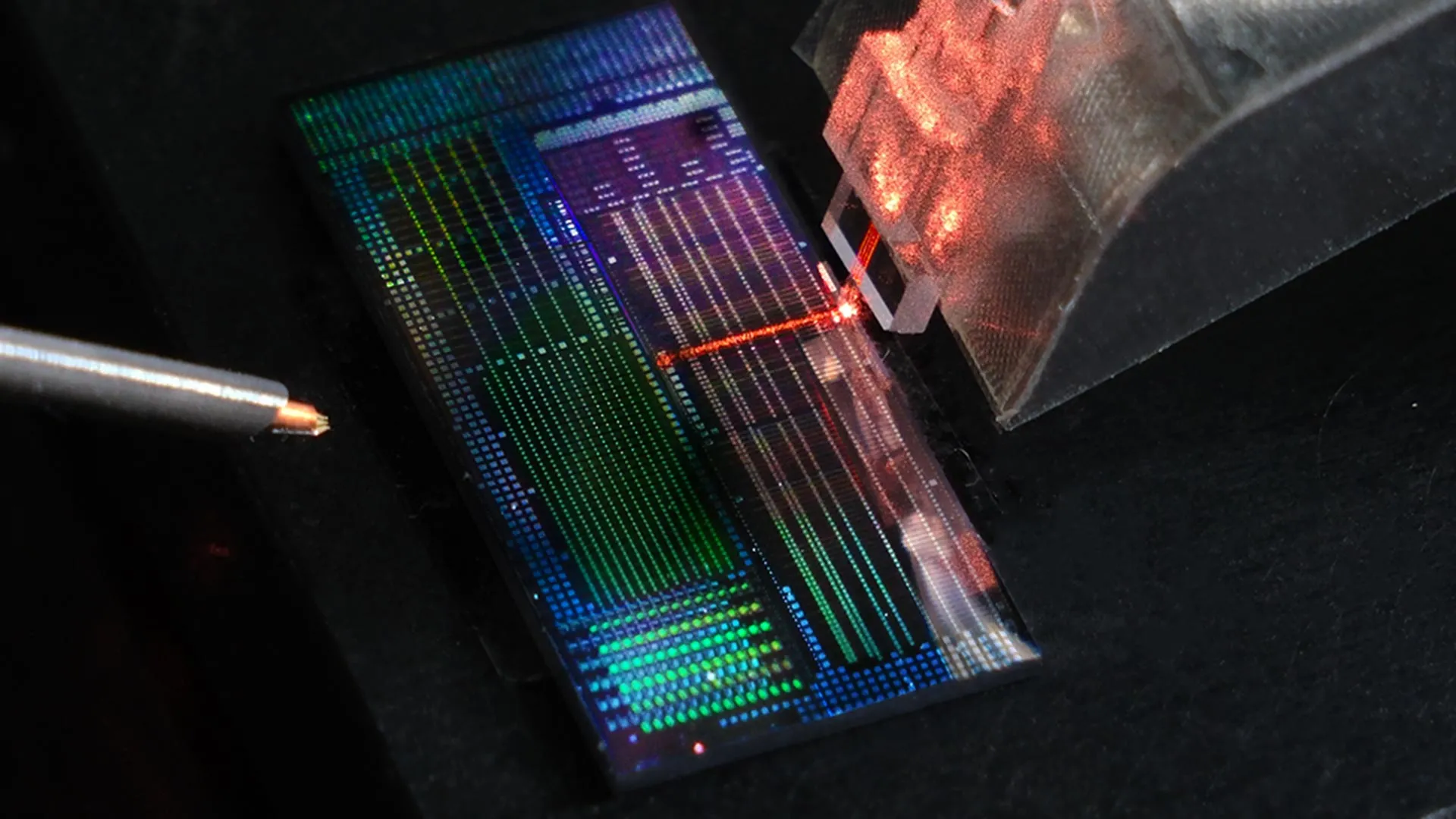
AMD isn’t done yet: The Strix Halo, formerly Ryzen AI max+ 395, is the top-end model in AMD’s new Ryzen AI 300 Series. It shows just how far integrated chips are progressing. It has a powerful 16 core x86 CPU that runs at 3.0 GHz and can be boosted up to 5.1 GHz, as well as the Radeon 8060S, an integrated GPU based upon the RDNA 3.5 Architecture. It can handle both CPU and GPU tasks at speeds up to 2.9GHz within a 120 watt power limit. It’s not cheap but it delivers serious performance, especially for laptops and compact computers.
AMD’s chip, which is built on x86 architecture, has a major advantage over Apple’s M4 or Qualcomm’s Snapdragon XElite, both of which are based on ARM architecture. Apple and Qualcomm excel at creative work and battery life but struggle when it comes to PC gaming because of software emulation. The Ryzen AI max+ 395 runs games natively and is a great choice for users looking for performance and compatibility. How does it perform?
The Radeon 8060S performs well on synthetic benchmarks such as 3DMark Fire Strike. It has a graphics score of 25,940in average, which is on par with a desktop Radeon RX7600 and just slightly lower than a desktop Nvidia RTX4060. Mobile GPUs suffer from strict power limits, low core counts, and are tuned to maximize efficiency. This makes them significantly worse than desktop counterparts.
Hardware Canucks tested an ROG Flow Z13 with a Ryzen AI Max+395 chip running at 70-watt TDP against laptops equipped discrete Nvidia RTX mobile GPUs 4060 and 4070, as well as a MacBook M4 Pro. In real-world productivity tests like Blender and Houdini the Ryzen AI Max+395 beats its predecessor (Ryzen AI HX370) and Apple’s M4 Pro. AMD is unable to compete with Apple’s native chip in Adobe Photoshop. The new Max+ 395 is faster than any x86 chip tested for productivity, AI workloads and more.
The Radeon 8060S was able to compete with laptops that had a powerful RTX-4070 in some games, and even outperformed them in others. In “Cyberpunk 2077,” for example, the 8060S averaged a 39 fps in 1600p compared to the RTX’s 37 fps. In “Baldur’s Gate 3” “Doom Eternal,” and”https://www.slashgear.com/1921860/gpu-integrated-most-powerful-which-cpu/” the 8060S managed 57 fps averaging at 1600p while the RTX 4070 did slightly better at 62 fps averaging at 153 fps. How does it compare with Intel’s most powerful iGPU (#19659003)?
Intel
Intel’s Lunar Lake Core Ultra 8 288V APU is the closest competitor to the RyzenAI Max+ 395. It is equipped with the Intel ARC 140V – an 8-core Xe2-based iGPU clocked at up to 2050 MHz. AMD’s Strix Halo is the clear winner in gaming. In tests conducted by Eta prime– “Forza Horizon 5” averaged 63 fps using Intel XeSS at 1080p, while the AMD APU managed a staggering 82 fps with 1200p at extreme settings without any upscaling. In “Cyberpunk 2077,” AMD scored an average of 73 fps at 1200p on high settings, with FSR set on auto, while Intel’s ARC140 V only managed 67 fps at low settings, even with XeSS in performance mode.
The Strix Halo, a major victory for AMD, brings discrete graphics performance almost to the iGPU. APUs also consume less power than traditional CPU+GPU configurations, allowing laptop makers to create smaller, lighter devices, without compromising gaming performance or battery life. The Radeon 8060S is currently only available with flagship CPUs. This means it’s only available on high-end machines.
Mini PCs, such as the GMKtec EVO X2 (19459061), will cost at least $1 499, and laptops can cost over $2,000. The Asus ROG Flow Z13 starts at a steep price of $2,100. It’s only a question of time before AMD brings the Radeon 8060S down to midrange systems, pairing it with affordable Ryzen CPUs.