The Downloadis our weekly newsletterthat gives you a daily dose on what’s happening in the worlds of technology. Researchers announce the birth of babies from a three-person IVF trial
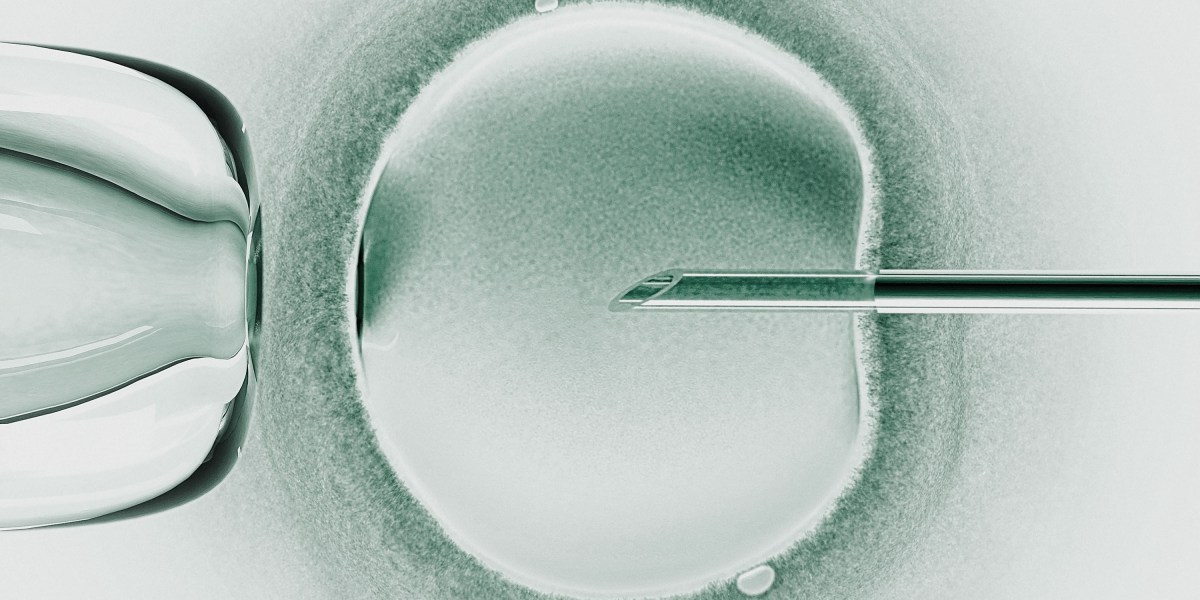
In the UK, eight babies were born thanks to a technique that uses DNA from two biological parents and a third person with healthy mitochondrial DNA. The babies were born from mothers who carried genes for mitochondrial disease and ran the risk of passing on severe disorders.
The team’s method involves fertilizing the eggs of patients with sperm and then transferring the DNA-containing nuclei from those cells into donated fertilized egg that has had its own nuclei removed. The new embryos have the DNA of their intended parents, as well as a small fraction of mitochondrial donor DNA floating in their cytoplasm.
The research, which uses a technology known as mitochondrial donation, was described by others in the field as a “tour-de-force” and “a notable accomplishment”. Not everyone, however, sees this trial as a success. Read the complete story.
— Jessica Hamzelou
This four chart shows where AI companies may go next in the US.
Nobody knows how AI will transform communities, workplaces and society. It’s difficult to predict how AI will affect jobs. Many workers and local governments have to read tea leaves in order to prepare and adapt.
The Brookings Institution has released a new interactive report that attempts to map the embeddedness of AI companies and jobs in different regions in the United States. This will allow policymakers to prescribe treatments to those who are struggling to keep pace. Here are four charts that will help you understand the issues.
– Peter Hall
In defence of air-conditioning.
– Casey Crownhart.
Admit it, I’ve never hesitated to accuse air-conditioning. In many articles and newsletters, I have stated that AC is a major contributor to global energy demand. It will only continue to increase as temperatures rise.
I’m the first to admit, however, that AC can be a lifesaving technology. It may even become more necessary as climate changes intensify. In the wake of Europe’s recent deadly summer heat wave, this technology has been oddly vilified. Learn more by reading our story. This article is taken from The Spark, MIT Technology Review’s weekly climate newsletter. Sign up to receive it every Wednesday by clicking orhere.
The must-reads
I’ve combed the internet to find you today’s most fun/important/scary/fascinating stories about technology.
Donald Trump cracks down on “dangerous” science
Yet the scientists affected say their work is crucial to developing new treatments. (WP $)
+ MAHA’s infiltration of states across the US. The Atlantic ($)
Trump’s request for the US Senate to cancel foreign aid has been approved
White House is determined that they will reclaim $8 billion in overseas aid. (NYT $)
+ Around $1.1 billion will also be allocated to public broadcasting. HIV could infect 1,400 babies every day due to US aid disruptions. MIT Technology Review
3 American air strikes destroyed only one Iranian nuclear site. (NBC News ]
]4 The US is set to ban Chinese technology for submarine cables
These cables are crucial to internet connectivity around the world. (FT$)
+ Cables are increasingly at risk of sabotage. The US measles epidemic is getting worse
Health officials are not succeeding in containing it. (Wired $)
+ Vaccine hesitation is also on the rise. Why childhood vaccinations are a success story for public health. MIT Technology Review
Six A new supercomputer will be coming
Nexus machine is searching for new cures to diseases. (Semafor, )
Elon Musk teased a Grok AI partner inspired by Twilight.
You shouldn’t really have… (The verge, )
+ The Wild West of AI Companionship. MIT Technology Review
Eight Future farms could be completely autonomous
Featuring AI powered tractors and drones surveillance. (WSJ $)
+ African Farmers are using private satellite data for crop yield improvement. MIT Technology Review
9 Granola, Silicon Valley’s favorite tool
It’s not the tasty breakfast treat. The Information$
(BBC)
Today’s Quote
He’s doing exactly the opposite of everything I’ve voted for.
–Andrew Schulz explains to Wired why he is losing faith in Donald Trump.
Another thing
Open-source AI boom built on Big Tech handouts. How long will this last?A leaked memo in May 2023, written by Luke Sernau – a senior Google engineer – said what many in Silicon Valley had been whispering for several weeks: an open source free-for-all threatens Big Tech’s grip over AI.
This is a good thing in many ways. AI will not thrive if only a few mega rich companies decide how to use it or gatekeep the technology. This open-source boom, however, is fragile, and if Big Tech decides it’s time to close up shop, this boomtown could turn into a backwater. Read the full article.
Deep Dive.
Download.
Stay Connected.
Illustrations by Rose Wong.
Get all the latest updates on
MIT Technology Review.
Discover top stories, special offers, upcoming events and more.