Between the years 2018 and 2022 Silverbacks Holdings – an Africa-focused Private Equity firm – made a series investments in multiple tech startup companies, primarily in fintech and ecommerce sectors.
These investments are paying off. The firm has made two exits in the last month by selling a portion of its shares at Lemfi. Lemfi returned 29x, while Omniretail was tempered and still delivered a 5x return.
Silverbacks Holdings, though not structured as a venture capital firm, invests with a VC style risk appetite and its portfolio reflects this. The firm supports some of Africa’s most valuable startup companies, including Flutterwave, Wave, as well as high-growth startups such as Moove Sabi Kuda Shuttlers and Reliance. It also supports nine venture capital companies like Launch Africa and LoftyInc. Fintech was its best performer, with a MOIC of 13.7x. E-commerce investments returned a 4x MOIC. The firm also invests into Africa’s media and sport sectors, supporting creator platform AMAKA as well as the Cape Town Tigers and the African Warriors Fighting Championship.
“We see sports and entertainment as defensive assets,” Ibrahim Sagna told TechCabal. While the multiples may be lower than in tech, these businesses are recurring revenue-driven, especially because they are tied to platforms such as Netflix or leagues such as the NBA. The firm’s African investments returned nearly four-times the capital invested on the continent. This performance is far superior to its global performance. Silverbacks’ exits outside Africa have produced a modest 1.3x MOIC.
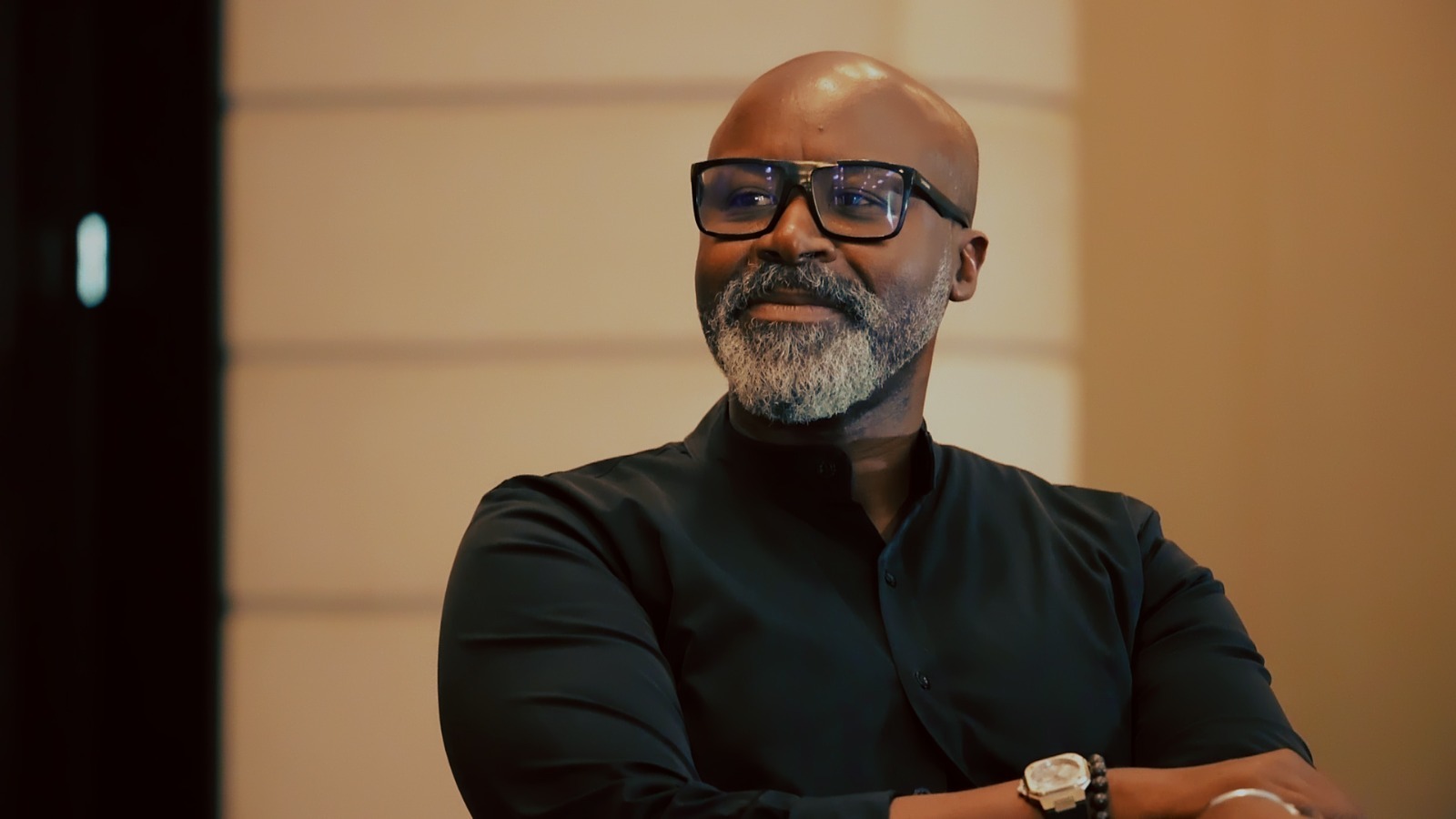
Sagna was interviewed to learn how the firm views investing in Africa, their strategy of partial exits and why they prefer family offices as LPs. I also wanted to know why they invest in VC firms such as Launch Africa and LoftyInc.
Firstly, these exits are indicators of follow-on rounds and liquid events across multiple sectors. The majority of exits we are seeing are linked to investments made between 2018-2022. This period, pre-and post-COVID coincided with a rapid increase in technology adoption, both on the African Continent and globally.
Today’s value is a reflection on that time period. It shows the power of timing in many ways: Most of these gains date back to that COVID period, and we are now three or four years removed. These exits show us that timing is not the only factor. They also show how well-positioned startups can provide liquidity in a relatively short time frame.
Instead of fully exiting, you’ve made partial exits from LemFi and OmniRetail. Why does Silverbacks think this strategy makes sense?
Silverbacks is different from most traditional fund managers. We use a model that can be best described as permanent capital. Most managers that you follow work within fund cycles – raising capital, deploying, and exiting before raising a new one. Silverbacks, however, is more structured like a continuation fund.
The purpose of a continuation fund is to allow existing limited partnerships (LPs) to exit and give new LPs an opportunity to replace them. When we do partial exits it’s not always about taking chips off of the table. It’s about allowing an LP to exit while bringing in a new one. In many cases, we can increase our position by allowing partial exits if we have faith in the company.
This has been the case with names like Flutterwave or Moove. We made partial exits, but then re-entered the market and even increased our exposure once we believed in its long-term potential.
What is the process for deciding how much you want to sell and how many shares to keep?
Firstly, the majority of our LPs (the private wealth-management firm of a family with high net-worth) are based in Europe, the Middle East and the U.S., while we have a small number of African family offices.
Our internal process is to hold a meeting every year to identify which exposures may lead to divestments, and which LPs request liquidity. It’s a custom-made process. We don’t have one rule that fits all. We look at the preferences of our LPs and then decide which portfolios could provide liquidity to meet their needs. It’s not only about valuation. It’s about matching LP preferences. We’ve still been able to return more than 4x our initial investment, and we’re in many cases still involved in these businesses. We’ve done partial exits and later repurchased the same shares for a different LP.
What makes this firm different from a typical VC?
The general partners you know are usually in charge of one or more funds, each with a different vintage. We are a holding company and we have nine venture capital firms as LPs, including well-known ones such as LoftyInc or Launch Africa.
With our GPs, we do three things. As limited partners, we provide them capital. We deploy additional capital when we see a company that is strong in their portfolio. We also purchase companies directly from them through direct secondary.
We’ve actually sold portfolio companies back to the GPs that we backed in some cases. This creates an ecosystem. We work with our GPs on the ground. We do a lot with them, and even angels. Many of our partial exits were not opportunistic, but engineered. We provide DPI to our GPs, their LPs, and use these secondary exposures to give our LPs exits or exposure. It’s an active, intentional model.
Imagine that the GPs are like high school, and Silverbacks the university. We select the “best students” from their “graduating class”.
Flutterwave Wave and Moove were discovered by people like Idris Belo and Lexi Novitske. These GPs invested in over 200 companies. We’ve invested in at least 10 of them.
Think of our model as a way to graduate companies from our VC Partners, then scale them further within our holding. From this “graduated pool”we are able to engineer partial liquidity for our family offices LPs.
Your LPs are mostly family offices. Why did you choose this structure?
They’re faster, faster, and more efficient. Family offices are typically run by CEOs, individual decision makers, or business groups. Many of them have been clients or partners for 20-30 years. They wrote the majority of the initial checks alongside my capital and that of our partners.
Speed and trust are the key factors here. They make decisions faster, and there is no long bureaucratic process. Our model does not require them to take part in a blind fund where they do not know what they are getting.
They can choose at the beginning whether they want to be exposed to Flutterwave or Moove or Wave. This bespoke approach is more efficient. It worked: We’ve returned capital every year to them for the last three years. Some of them have seen gains between 5x and 29x. It’s more pragmatistic, faster, and tailored.
Your internal rate of returns (IRR) was north of 80% in Nigeria and more than 300% in Egypt. Are your portfolio companies’ returns getting compressed as they mature?
Receive the best African tech news in your inbox.
Absolutely. Our initial goal was to return 3x-5x to our investors on a holistic level. Right now, we are exceeding that goal by hitting 13x for fintech. We know that this will normalize over time.
Our focus is on companies that can scale rapidly beyond Africa, bring in export-oriented revenue, and bring industrial actors onto their cap table. Fintech companies, particularly those that handle remittances and global operations, are the most common.
Our investments began in 2018 (Silverbacks was incorporated in 2019) and we caught a lot of companies early with revenues under $10 million. Today, some of these companies make over $100 million. Moove for example, has a $300 million revenue.
We expect our MOIC will fall from 13x to 5-6x as we increase our exposure to later-stage companies. It’s the classic J-curve: steep returns early on; over time, it flattens.
Your portfolio includes several non-tech companies like AWFC, Cape Town Tigers and others. How do you balance these investments with your tech investments?
To clarify, we remain heavily invested in technology, both numerically and proportionally. You’ll find more tech companies on our website than in sports, entertainment or fashion. We have 3 sports companies, 4 entertainment companies and 1 fashion firm.
However, tech, and especially fintech, still dominates our portfolio, directly as well as indirectly through our VC partners. Let’s talk about performance: fintech generates 13x realized gains, ecommerce is at 4x and entertainment and media, like movie production and gaming, are doing 2x. Sports has not yet exited. This hierarchy guides our capital allocation. Fintech will remain our top priority because we see the greatest medium- and long-term upside. We still view sports and entertainment assets as defensive assets. These businesses, even though they have lower multiples, can become permanent fixtures if they are tied to platforms such as Netflix or leagues such as the NBA.
Our sports teams, for example, are affiliated with NBA and our entertainment companies, with major streamers. These global relationships allow the businesses to be stable and earn USD. They may not scale as fintech does, but they are resilient.
How do you measure success when underwriting deals in Africa? What makes you decide that a deal is worth backing, given your diverse portfolio, which includes fintech, ecommerce, sports and gaming?
It all boils down to one thing: We invest in businesses which are able capture growing pools of U.S. dollars revenue. You’ll find a variety of brands in our portfolio. After five years on the market, we have noticed that companies that consistently outperform tends to meet two criteria.
They are often founded by serial entrepreneurs. This is not their first rodeo. Founders with previous experience tend to perform better than those who haven’t. This pattern is prevalent in the companies that we directly back.
Secondly, and more importantly, the businesses that stand out are those that can generate recurring and sizable revenues in U.S. dollars, even though they are African-led and headquartered.
This is the advantage behind many of our best fintech bets, including companies like Moove Wave Flutterwave and LemFi. Their strength lies in the fact that they can build in Africa, but earn revenue globally, and most importantly in USD. This gives them a solid foundation, especially during the depreciation. This logic is not exclusive to technology. Netflix buys our movies in USD. Our basketball team earns USD by playing in the NBA and China Basketball Association. Even African Warriors, a fight sports investment we made in Nigeria, was sponsored by groups from Dubai and London who paid in GBP and USD.
Again, our main investment question is: How much U.S. Dollar revenue can this business produce on a regular basis? This one line is how we define risk, return, selection, and everything else.
From an Africa-focused investment perspective, your returns have been impressive. How do your returns compare with what your LPs were expecting? Are you seeing similar returns elsewhere in emerging markets or has Africa outperformed them?
You’re absolutely right. Geographically, our coverage is centered around Africa and Middle East. Our portfolio companies are located in Europe and the U.S. but, fundamentally, Africa has been our main investment tunnel.
To be clear, Africa has outperformed the rest of the world by a wide margin. These numbers are superior in the vintage we’re talking about, roughly 2019-2025. We can’t compare the performance of our investments to those in Asia or Latin America because we don’t have any there. Africa has performed well based on both our operational focus and our thesis.
It’s not only about geography. I think that our returns are a mixture of timing and method. We were fortunate to have momentum, especially during COVID when capital flooded into startup companies on the continent and tech consumption surged. We were also very deliberate about who we partnered up wit h.
I mentioned that we work closely with nine GP companies, and this collaboration is a cornerstone to our model. We’ve done well, but it’s all because we partnered up with the right people and at the right time. I want to make it clear that we do not take all the credit for this. It’s a result of a collaborative and data-informed, intentional approach.
Is there any significant presence of local capital in your funds?
Very sadly, the answer is no. The vast majority of our LP base is international, from the Middle East, Europe, and the U.S. We do have a few investors from Nigeria, South Africa, and Egypt, but they’re the exception, not the rule. The capital base is still overwhelmingly external.
Are there any sectors you’re avoiding right now?
Yes, but not in a blanket way. We don’t wake up saying, “Let’s avoid the XYZ sector.” Instead, it’s a function of our core investment thesis: how much recurring USD-denominated revenue can this business generate?
That’s the core prompt we interrogate every opportunity with. If the business can’t generate FX-protected or dollar-denominated revenue, we see higher risk, especially in African markets where local currency devaluation is a persistent issue.
So sectors like fintech tend to pass this filter easily. But e-commerce, for instance, often collects in local currency and is still very domestically rooted across the continent. That said, some e-commerce players are starting to adapt. Sabi, one of our portfolio companies, is pivoting toward mechanisms that allow it to earn more USD.
We’ve seen healthtech and edtech struggle more in this area, as their revenue is still largely local. And because most of our capital is FX-denominated, we have a responsibility to protect it from local currency exposure.
So, in summary, our avoidance isn’t based on sentiment; it’s driven by our risk management framework.
Looking back, what’s one investment you exited too early or a deal you passed on that later became a breakout?
I think we’ve been very happy with our “horses”, so to speak. But if I had to name a couple we missed, it would be Moniepoint; we had opportunities to get in a couple of times and didn’t.
We also missed out on Paymob, Nala, and TymeBank. We’ve had a few that slipped through. It happens.
Get all the best African tech news delivered to your inbox.
Earlier, you mentioned that many of your LPs were international. What is the biggest misconception that investors have about investing in high-growth companies?
We’ve been lucky with our LPs. Our family offices have all done business in Africa. This makes a huge difference.
We have built a deep personal relationship with them over the past 20-30 years. Silverbacks is a company of Africans, from Cairo to Mauritius. These personal ties were what attracted these LPs in the first instance.
Yes, we did have to educate the few U.S. Family Offices who had never worked in Africa. Even there, however, our goal remained the same: to provide them with liquidity as soon as possible. This is what brought us together.
Thanks to our partial exits, and returns, today they are as excited as we. We have always been clear about our strategy; we wanted to be different from other fund managers. We’ve proved that it works now, thanks to our performance.
What changes would be needed to attract more African capital into venture, such as from HNIs and pension funds?
Nothing is absolute. There are some encouraging signs. The Government of Nigeria is, for example, experimenting with new vehicles that are aimed at technology. While we don’t work directly with them, the Nigeria Sovereign Investment Authority has done a lot by supporting local fund managers.
Egypt is ahead of its time. They’ve developed platforms and policies to involve local banks in funding startups. One of the GPs that we backed is even partnered with a similar structure. South Africa has a fairly active ecosystem in this respect.
The truth is that we need more track record and more liquidity events in order to really shift things. Even though regulations allow for pension funds to allocate up to 10% to PE or Venture Capital, these are individual savings and they will always view venture as risky.
What is needed? Demonstration results. It’s our responsibility to demonstrate that this asset class can generate liquidity and returns. This is the only way to earn their trust.
OmniRetail CEO has invested in your portfolio company. Was this intentional?
Very deliberate. The short answer is yes.
We’ve been building an ecosystem closed-loop since day one. We don’t have an investor relations department. Our community is extremely collaborative, and word-of-mouth is the main source of capital. Here’s the process. LPs usually start out by investing in one company. Over time, LPs often double down and support five or more companies in our portfolio. Some CEOs of our tech companies invest in our sports portfolio. Even some of the GPs that we support have invested in entertainment or sports companies.
It’s deliberate. It’s not an accident. The strength of the companies is what keeps this ecosystem healthy. Our formula is straightforward: combine privileged insight (from our GP partners), with privileged access (via GP partners), with our team’s 200+ years collective experience in PE. Combining these two elements creates a flywheel effect of trust and collaboration.
Your investments span multiple sectors. How do the lessons you learn shape your investment thesis?
Absolutely. Data-driven was our approach even before AI hype cycles. We rely heavily upon the GPs that we back, their data and metrics to guide our selection.
Yes, we are always learning. Our team is made up of people aged 30 to 65, who bring maturity and perspective. Most of our GPs range from 20 to 40 years old, are highly tech-savvy, and work on the ground. This mix is powerful. We’re applying the technology we’ve learned to traditional sectors, such as media, entertainment, and sport, that are treated more like SMEs. The tech layer is what allows these businesses scale and go international.
Our learning loop is strong and bi-directional. Both our GPs and ourselves are learning from each other. The magic happens when youth and experience work together.
You’ve had multiple exits. What kind of exits do you expect in the next 2-5 year?
Our bet is on secondary. This is our main liquidity engine.
IPOs are going to happen. Globally, IPOs have become rarer and more difficult to pull off. We do not recommend African startups listing in the U.S. The track record of African startups is poor. Look at Jumia (which we have invested in), Swvl and Anghami, all in the Middle East. All three are listed in the U.S. and have struggled due to short-selling. This is a huge risk for young companies. Even if a company is performing well, short sellers may drag it down.
Fawry is a local Egyptian company that is listed. It is a good counterexample. It may have had the same fate if it was listed in the U.S.
We believe IPOs should only be held on local markets if the local government supports them with policy safeguards and liquidity from sovereign funds, as well as protection from short-selling. In the Middle East, they do this. If a startup wants to go public, they will be backed by the government, sovereign funds, and banks. This is the level of coordination needed.
The entire liquidity strategy of our company is based on secondaries. We know what works and we think it will continue to work. Mark your calendars
Moonshot by TechCabal will be back in Lagos, October 15-16. Join Africa’s leading founders, tech leaders, and creatives for 2 days of keynotes. Early bird tickets are now 20% off! Don’t sleep on it! moonshot.techcabal.com