Contents
Defining Physical AI: Intelligence Beyond Software
In robotics, intelligence transcends mere algorithms; it arises from the seamless fusion of a robot’s physical form and its computational brain. This concept, known as Physical AI, highlights how the interplay of materials, actuation mechanisms, sensory inputs, and computational strategies collectively shape robotic behavior. Originating from recent scholarly discourse, Physical AI underscores that a robot’s body itself embodies a form of intelligence, complementing its software-driven cognition.
The Role of Advanced Materials in Robotic Intelligence
The choice of materials fundamentally influences a robot’s capabilities and interactions. For instance, dielectric elastomer actuators (DEAs) function as artificial muscles, offering remarkable flexibility and power density, with scalable 3D-printable multilayer configurations suitable for mass production. Similarly, liquid crystal elastomers (LCEs) enable programmable shape changes through fiber orientation, facilitating innovative soft robotic designs. Researchers are also investigating impulsive actuation techniques, where mechanisms like latching and snap-through generate rapid, forceful movements such as dynamic jumps or swift grasping. Beyond actuation, the emergence of computing metamaterials-structures embedded with logic and memory-suggests a future where physical components contribute directly to computational processes.
Innovations in Sensing: Enhancing Robotic Perception
Perception is a cornerstone of embodied intelligence. Cutting-edge sensors like event cameras capture visual information asynchronously with microsecond responsiveness and exceptional dynamic range, ideal for fast-paced and variable lighting conditions. Vision-based tactile skins, inspired by technologies such as GelSight, detect subtle slip events and provide detailed contact surface mapping. Additionally, flexible electronic skins (e-skins) distribute tactile sensing across extensive robot surfaces, granting comprehensive somatosensory feedback. Collectively, these advancements empower robots to perceive their surroundings with unprecedented fidelity and immediacy.
Neuromorphic Computing: A Paradigm Shift in Robotic Processing
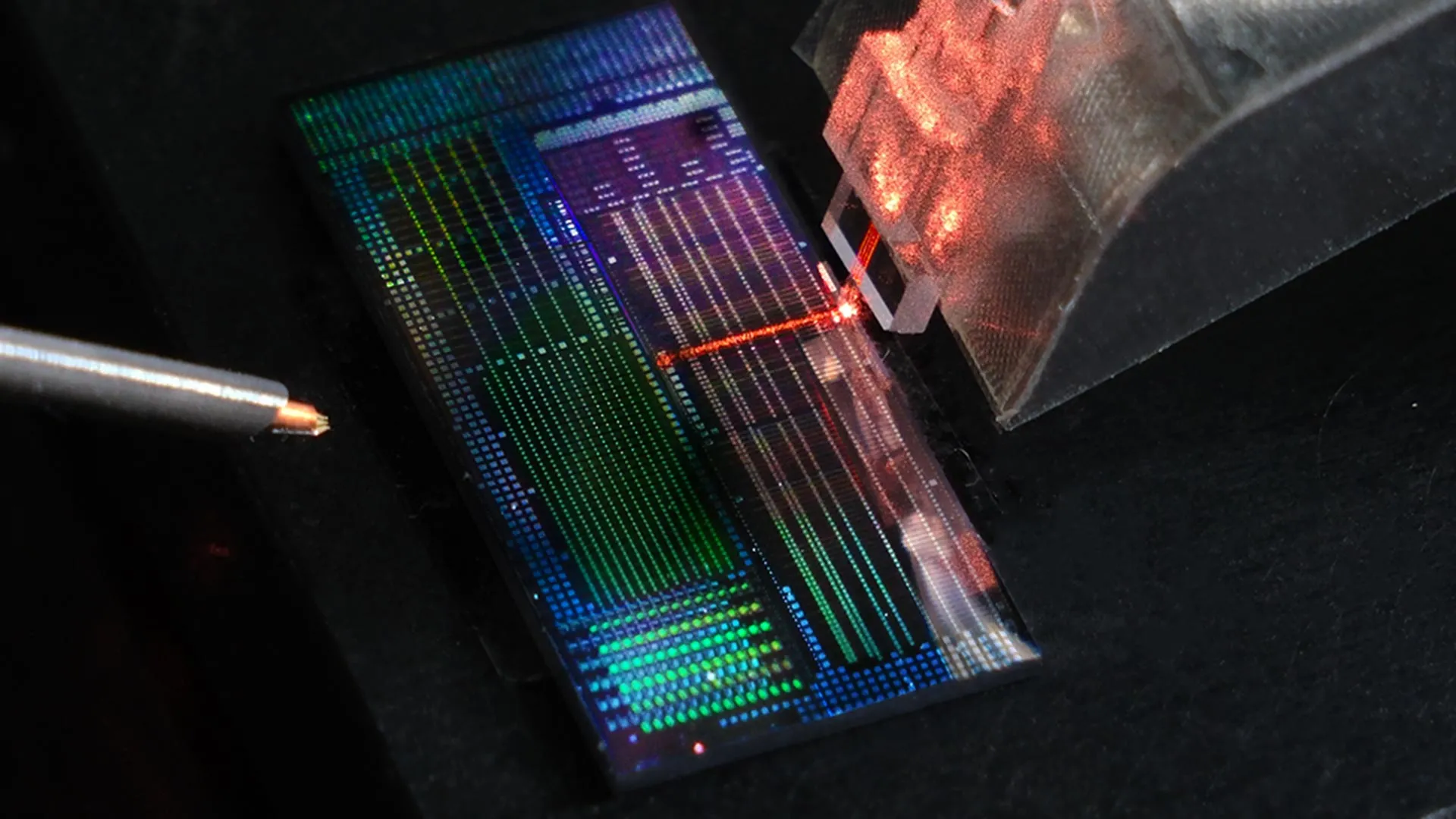
Traditional reliance on power-intensive GPUs is impractical for many robotic applications. Neuromorphic processors, exemplified by Intel’s Loihi 2 and the expansive Hala Point system (featuring over a billion neurons and 140,000+ neuromorphic cores), execute spiking neural networks with remarkable energy efficiency. These event-driven architectures naturally complement sensors like event cameras, enabling low-power, continuous perception and rapid reflexive responses. This division of labor allows GPUs and neural processing units (NPUs) to focus on complex model inference, while neuromorphic hardware manages real-time control and safety-critical functions.
Transforming Robot Learning with Foundation Policies
The traditional approach of programming robots for isolated tasks is evolving into training generalist robot policies capable of versatile performance across diverse platforms. Large-scale datasets such as Open X-Embodiment (OXE), which contains over one million trajectories spanning 22 different robot embodiments, serve as foundational training resources. Building on OXE, policies like Octo (trained on approximately 800,000 episodes) and OpenVLA 7B (with nearly 970,000 episodes) demonstrate transferable skills across various robots. Google’s RT-2 further exemplifies how integrating web-scale vision-language data enables robots to generalize to unfamiliar tasks. This marks a significant shift toward shared foundational controllers, paralleling the impact of foundation models in natural language processing.
Co-Design Through Differentiable Physics Simulations
Historically, robotic hardware was designed independently of control algorithms. The advent of differentiable physics engines such as DiffTaichi and Brax allows simultaneous optimization of robot morphology, material properties, and control policies by computing gradients through simulations of both deformable and rigid bodies. This integrated approach narrows the “sim-to-real” gap, particularly in soft robotics, accelerating development cycles and ensuring that physical design and learned behaviors evolve in harmony from the outset.
Ensuring Safety in Physical AI Systems
Given the unpredictability of learned policies, safety remains paramount. Control Barrier Functions (CBFs) impose rigorous mathematical constraints during operation, maintaining robots within safe state boundaries. Complementing this, shielded reinforcement learning proactively filters out unsafe actions before execution. Embedding these safety mechanisms beneath complex vision-language-action or diffusion-based policies ensures that robots can adapt dynamically while operating securely in environments shared with humans.
Benchmarking Physical AI: Measuring Real-World Competence
Evaluation frameworks are increasingly focused on embodied intelligence and long-term task execution. The BEHAVIOR benchmark assesses robots on extended household activities requiring both mobility and manipulation skills. The Ego4D dataset offers approximately 3,670 hours of egocentric video from numerous participants, while Ego-Exo4D supplements this with around 1,286 hours of synchronized egocentric and exocentric footage enriched with detailed 3D annotations. These benchmarks prioritize adaptability, perceptual acuity, and sustained reasoning in authentic, unstructured settings over short scripted tests.
The Future Trajectory of Physical AI
An integrated Physical AI ecosystem is materializing, combining advanced actuators like DEAs and LCEs, sophisticated tactile and event-driven sensors, hybrid computational architectures blending GPU inference with neuromorphic reflex cores, and versatile policies trained on multi-embodiment datasets. Safety is reinforced through CBFs and shielded learning, while differentiable physics informs iterative co-design. Although many components remain in developmental stages, their convergence signals a transformative era where robots transcend narrow automation.
By distributing intelligence across both body and brain, Physical AI heralds a revolutionary shift in robotics, comparable in impact to how deep learning reshaped artificial intelligence software.
Key Takeaways
Physical AI integrates intelligence through materials, morphology, sensing, computation, and adaptive learning policies. Progress in soft actuators, tactile and event-based sensors, neuromorphic processors, and generalist robot policies is enabling machines that flexibly adapt across tasks and platforms. Robust safety frameworks, including control barrier functions and shielded reinforcement learning, ensure dependable operation in complex, real-world environments.
Frequently Asked Questions
1. What defines Physical AI?
Physical AI is embodied intelligence arising from the integrated design of a robot’s materials, actuation, sensing, computation, and learning algorithms-not solely its software.
2. How do materials like DEAs and LCEs enhance robotic function?
Dielectric elastomer actuators and liquid crystal elastomers serve as artificial muscles, enabling high flexibility, programmable deformation, and dynamic soft robotic movements.
3. Why are event cameras critical in Physical AI?
Event cameras offer ultra-fast, asynchronous visual sensing with high dynamic range, supporting energy-efficient, real-time perception essential for responsive robotic control.
4. What advantages does neuromorphic hardware provide?
Neuromorphic chips such as Intel Loihi 2 deliver low-power, event-driven processing that complements GPUs by managing reflexive actions and continuous safety monitoring.
5. How is safety maintained in Physical AI implementations?
Safety is ensured through Control Barrier Functions that enforce operational constraints and shielded reinforcement learning that prevents unsafe actions during robot operation.