Key takeaways
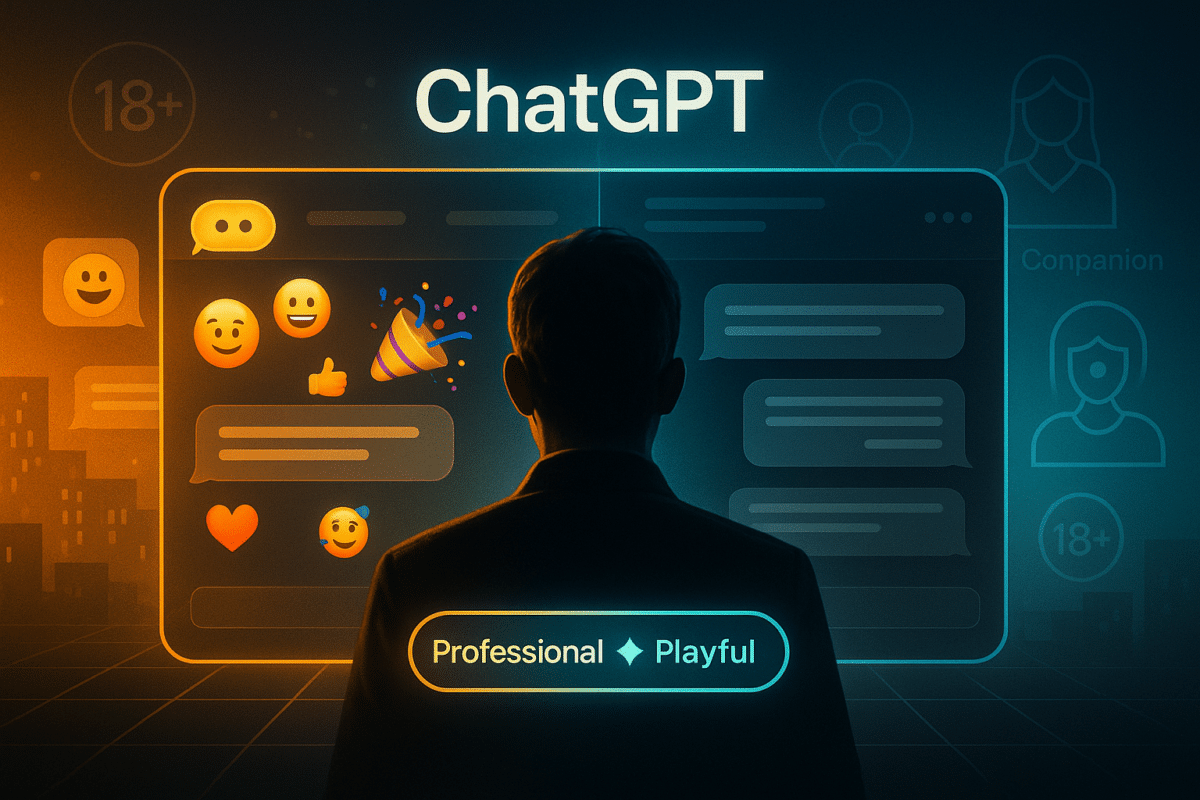
- ChatGPT’s next release revives warmth and spontaneity: OpenAI’s next update restores the warmth and spontaneity that was present in GPT-4o. This includes customizable tone, emoji usage, and conversational styles.
- “Mature Mode”incoming: Verified adult users will have access to age-gated material, including erotica. This is a major change from OpenAI’s previous content restrictions. From assistant to companion – The update marks a change from productivity to personalization. ChatGPT is now positioned as a flexible digital companion rather than a simple output tool.
- OpenAI’s new method tests whether freedom and safety can coexist.
OpenAI CEO Sam Altman has announced that a new version of ChatGPT is on the way: one that promises to be more like its original version in personality, with a few added extras.
The upcoming update will introduce looser filters, customizable tones, more emoji-filled and colorful personalities, and even an optional “adult mode” for verified users.
This plan marks a clear philosophical shift from OpenAI: from rigid professionalism to more flexibility and choice for users.
For months, since the introduction of GPT-5, Users have complained about the chatbot sounding more corporate than a conversational companion. OpenAI appears to be taking on board this feedback and is preparing to loosen up the reins.
As Sam Altman reopens a more expressive, freer ChatGPT, one question arises. Is this a return of creativity or a new arena for controversy?
Return of GPT-4o’s Personality
GPT-4o was launched earlier this year and users praised the humor, natural rhythm and other aspects of its personality. Sometimes, even its empathyis lacking. This was a stark difference to the more formal and restrained feel that GPT-5 had. Many missed the charm, spontaneity, and wit that made GPT-4o “human.” Sam Altman announced on X that users will be able customize tone, emoji usage, and conversational styles to match their preferences.
In response to a commenter on X, Altman agreed that the goal was to make ChatGPT seem less like “a compliance robot” and more like “a person you could actually speak to.”
This move was made in response to users who were tired of bland AI. This allows OpenAI to compete against more expressive rivals such as Anthropic Claude or Meta’s AI avatars that emphasize personality and charm.
ChatGPT: The “Mature Mode’ Controversy.
OpenAI’s ChatGPT update will introduce a new feature called “mature mode” that allows verified users to access content such as erotica and other age-restricted material.
The Guardianreported that this mode would allow explicit storytelling, romance writing, and adult topics, all within the ethical boundaries defined by OpenAI’s revised content policy.
The company has made a significant change, as it had previously banned sexual or violent content except when used in education or history.
The launch will also include age-gating features, ID verification and parental controls for young users. All of these are designed to compartmentalize the new features.
The introduction of age-gating has been met by controversy. Critics warn it could lead to misuse, consent problems, and mental health issues, while supporters hail this as a much needed recognition of adult autonomy and creative freedom.
Bigger Picture: From Productivity Tool To Digital Companion
OpenAI’s latest ChatGPT update marks an important shift in philosophy, transforming it from a productivity assistant to a personal companion who adapts to the user’s tone and context.
The AI chatbot industry is undergoing a trend that includes this move. Platforms such as Meta’s Emu and Google’s Gemini personas are all working towards a similar goal. Altman’s decision suggests that OpenAI does not see ChatGPT just as a tool to increase productivity and output. It’s now starting to see it as something more like a real conversation partner capable of being serious and playful, or even intimate. This shift blurs some boundaries. As ChatGPT becomes expressive and even adult oriented, the line between utility, companionship, and emotional attachment becomes increasingly blurred. This raises questions about emotional attachment, confidentiality, and authenticity of AI interactions.
This is a balance between freedom, safety and expression for OpenAI. The new ChatGPT demonstrates a maturing philosophical approach: trust users to make choices, but ensure they don’t compromise their integrity.
Monica is a tech journalist and content writer with over a decade of professional experience and more than 3,000 published articles. Her work spans PC hardware, gaming, cybersecurity, consumer tech, fintech, SaaS, and digital entrepreneurship, blending deep technical insight with an accessible, reader-first approach. Her writing has appeared in Digital Trends, TechRadar, PC Gamer, Laptop Mag, SlashGear, Tom’s Hardware, The Escapist, WePC, and other major tech publications. Outside of tech, she’s also covered digital marketing and fintech for brands like Whop and Pay.com. Whether she’s explaining the intricacies of GPU architecture, warning readers about phishing scams, or testing a liquid-cooled gaming PC, Monica focuses on making complex topics engaging, clear, and useful. She’s written everything from deep-dive explainers and product reviews to privacy guides and e-commerce strategy breakdowns. Monica holds a BA in English Language and Linguistics and a Master’s in Global Media Industries from King’s College London. Her background in language and storytelling helps her craft content that’s not just informative, but genuinely helpful—and a little bit fun, too. When she’s not elbow-deep in her PC case or neck-deep in a Google Doc file, she’s probably gaming until the early hours or spending time with her spoiled-rotten dog.
Our editorial policy at Tech Report is to provide helpful, accurate content which offers real value to readers. We only work with writers who are experienced and have a specific knowledge of the topics they cover. This includes the latest technology, online privacy issues, cryptocurrencies, software and more. Our editorial policy ensures each topic is researched by our in-house editors. We adhere to strict journalistic standards and all articles are written by real writers.