
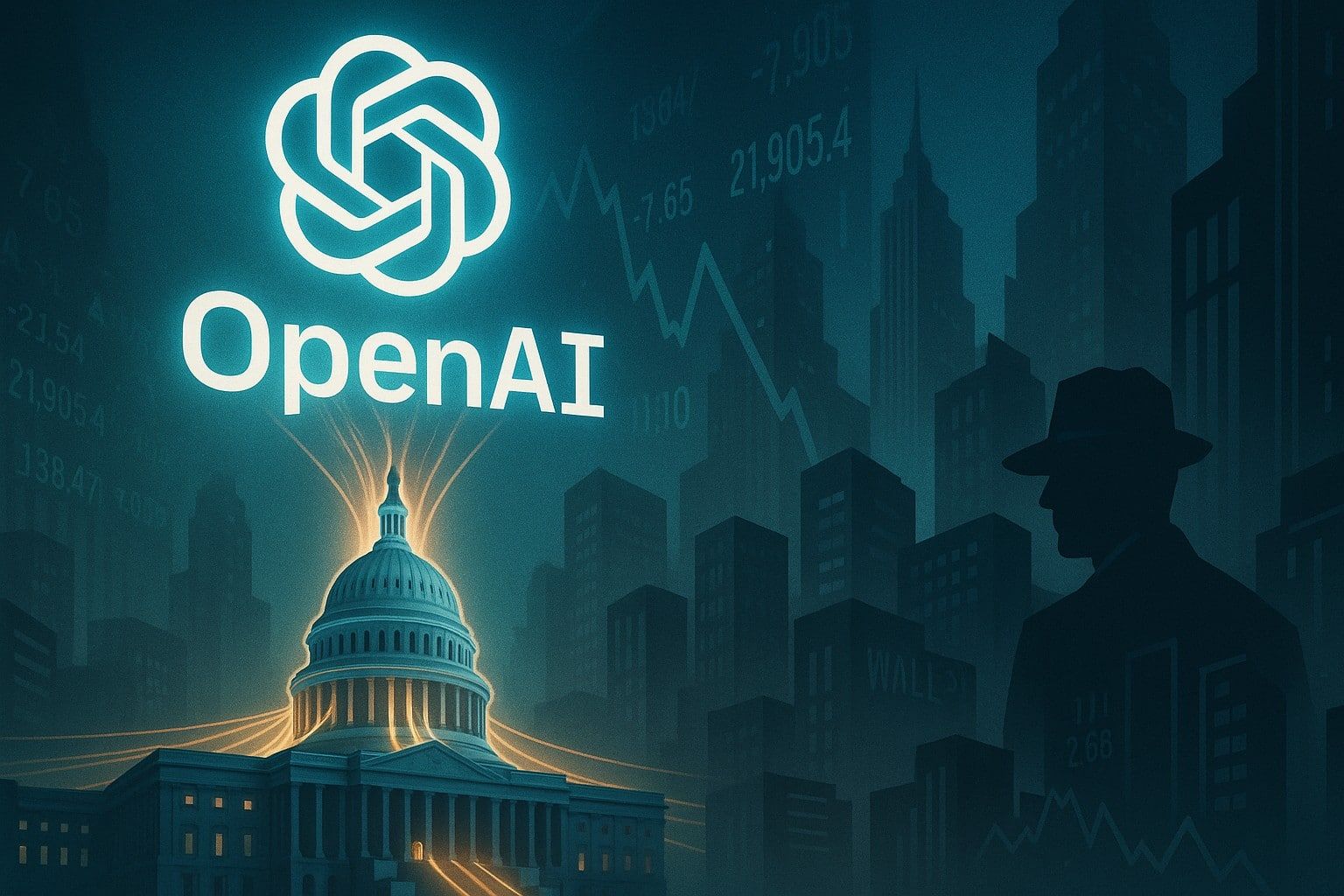
OpenAI’s Ambitious $1 Trillion AI Infrastructure Plan: A New Era of Public-Private Partnership?
Overview: OpenAI’s Historic Request for Government Loan Guarantees
OpenAI is reportedly pursuing U.S. government-backed loan guarantees to finance what could become one of the largest private infrastructure projects ever undertaken-an AI expansion valued at over $1 trillion. This initiative aims to accelerate the development of advanced AI data centers and reduce reliance on expensive GPU suppliers like Nvidia by exploring alternative chip sources and innovative financing models.
The timing of this request is significant, as it coincides with growing skepticism on Wall Street about the sustainability of the AI investment boom. Notably, hedge fund manager Michael Burry has taken substantial put option positions against AI-related stocks such as Nvidia and Palantir, signaling his expectation of a market correction. Meanwhile, Deutsche Bank is quietly hedging its exposure to AI infrastructure debt, reflecting a more cautious stance among financial institutions.
Public Funding for AI: A Paradigm Shift in Technology Financing
From Private Capital to Federal Support
While OpenAI has benefited from significant private investments, including a strategic partnership with Microsoft, its latest move to seek federal loan guarantees marks a departure from traditional venture capital funding. By requesting government-backed loans, OpenAI aims to share the financial risks of scaling AI infrastructure with the public sector, potentially lowering borrowing costs and expanding the pool of lenders willing to support its ambitious growth.
Sarah Friar, OpenAI’s Chief Financial Officer, recently highlighted the company’s vision of creating “an ecosystem of banks, private equity, and possibly government participants” to fund this next phase of AI development. This hybrid funding model could redefine how cutting-edge technologies are financed in the digital age.
How the Loan Guarantee Mechanism Works
Typically, tech firms secure loans through private markets, paying interest rates that reflect their credit risk. OpenAI’s proposal would transfer a significant portion of this default risk to the U.S. government, enabling the company to negotiate more favorable loan terms. This approach could substantially reduce OpenAI’s capital costs, facilitating the rapid expansion of AI data centers and infrastructure.
Political and Economic Implications of Government-Backed AI Investment
The prospect of a private AI company receiving state-backed financial support raises complex questions for policymakers and taxpayers. Unlike traditional infrastructure projects, AI data centers and GPUs depreciate rapidly, creating a mismatch between the short lifespan of these assets and the long-term liabilities that public funding might entail.
Some analysts draw parallels to historical government programs like the Defense Production Act or the Department of Energy’s loan initiatives that supported early electric vehicle and solar industries. However, OpenAI’s plan focuses on digital infrastructure rather than physical manufacturing, signaling a new frontier in industrial policy.
Supporters argue that such a partnership could secure U.S. leadership in artificial general intelligence (AGI) amid global competition from China and emerging state-backed players in the Middle East. Critics, however, warn of a familiar pattern where risks are socialized while profits remain privatized, raising concerns about accountability and equitable distribution of benefits.
Market Reactions: Diverging Views on the AI Investment Boom
Michael Burry’s Contrarian Bet Against AI Stocks
Michael Burry’s Scion Asset Management disclosed put options valued at approximately $1.1 billion against Nvidia and Palantir, representing about 80% of its U.S. equity portfolio. This bold move reflects Burry’s belief that AI stock valuations have become detached from underlying fundamentals and are due for a significant correction.
While Burry’s track record includes prescient bets like the 2008 housing market crash, his timing has sometimes been premature, as seen in his bearish stance on social media platform X in 2023 before its rebound. This underscores the difficulty of predicting market tops, especially in rapidly evolving sectors like AI.
Deutsche Bank’s Strategic Hedging of AI Exposure
In contrast to the aggressive expansion in Silicon Valley, Deutsche Bank is reportedly rebalancing its exposure to AI-related credit risks by employing hedges and short positions on data center debt and AI-linked equities. This cautious approach signals a potential shift from the recent exuberance toward more measured investment strategies in AI infrastructure.
The Broader Debate: Is AI Too Big to Fail Without Public Support?
OpenAI’s pursuit of government-backed financing raises fundamental questions about the future of AI development. Can the AI revolution continue to thrive solely on private capital, or has it reached a scale where public sector involvement is necessary to mitigate systemic risks?
As AI models evolve from enterprise tools to personalized, user-centric applications with customizable features, the infrastructure demands are growing exponentially. This transformation may require new funding paradigms that blend public and private resources to sustain innovation while managing economic and social impacts.
Ultimately, the outcome of OpenAI’s loan guarantee request could set a precedent for how advanced digital technologies are financed globally, influencing the balance between innovation, risk-sharing, and public accountability in the coming decades.
Summary of Key Insights
- OpenAI’s $1 trillion AI infrastructure plan seeks unprecedented U.S. government loan guarantees, signaling a shift toward public-private collaboration in tech financing.
- Wall Street shows mixed reactions: contrarian investors like Michael Burry bet on a market correction, while banks such as Deutsche Bank hedge AI-related credit risks.
- The proposal raises political and economic challenges, including the socialization of risk and the rapid depreciation of AI hardware assets.
- Supporters view government involvement as a strategic industrial policy to maintain U.S. leadership in AI, while critics warn of privatized gains amid public liabilities.
- The debate highlights whether AI innovation can sustain itself on private capital alone or requires government backing to manage its scale and impact.