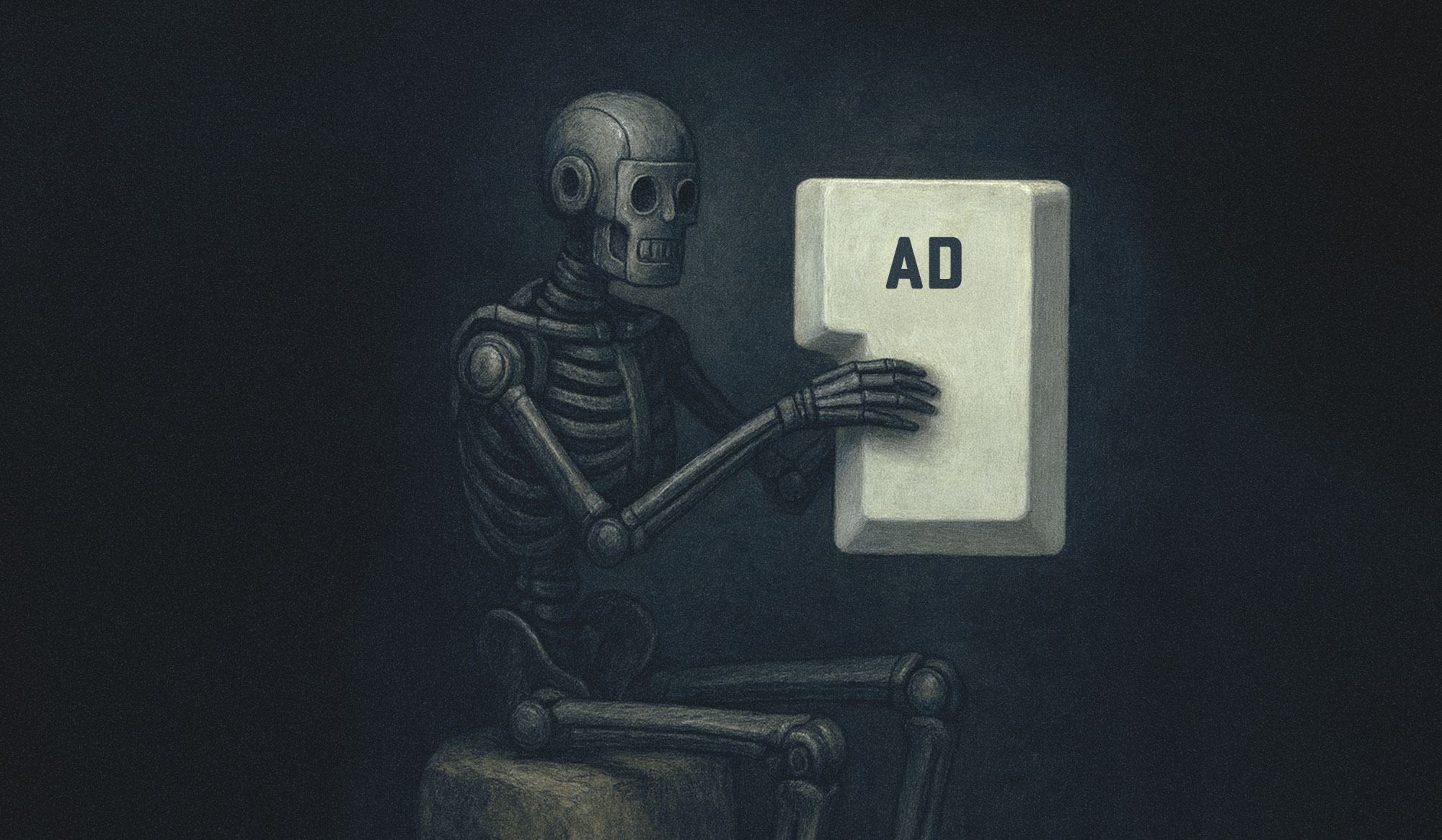
It’s hard to ignore the direction OpenAI is heading.
The executive hint, the ad-world hires, and the burn rate that could make a tech CEO blush all point to advertising. This week’s launch confirms this view. Digiday traces how the company reached this inevitable moment.
December 20, 2024: OpenAI reverses its anti-advertising position
In December last year, the company’s Chief Financial Officer, Sarah Friar, made it clear that OpenAI “had no active plans to pursue advertisements”but was open to exploring other revenue streams. The Financial Times was informed.
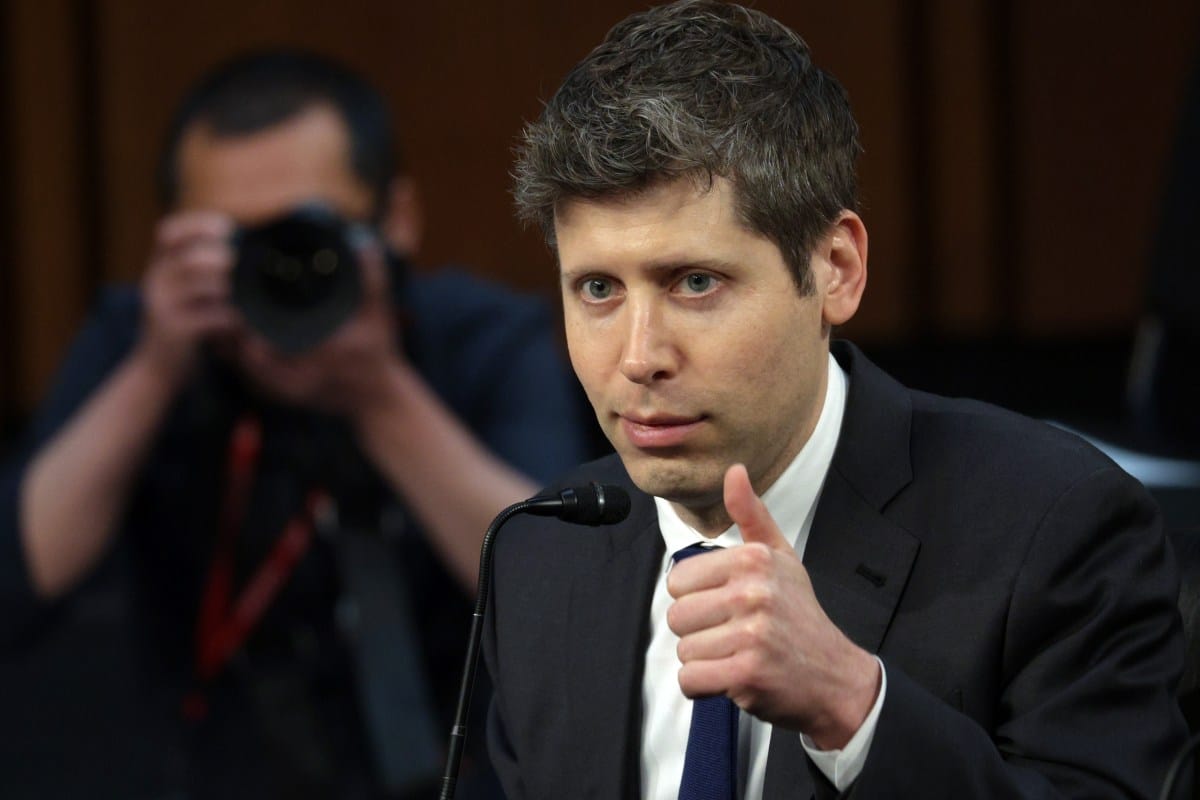
This was a big step up from the initial venom that CEO Sam Altman expressed towards advertising. He had previously said that he hated “advertising as an aesthetic choice” referring to it as “last resort” by the company. “Ads plus AI is… uniquely unsettling for me,” He said this during an interview with Harvard University on May 2024.
According to the Financial Times, at the time Friar made his 180-degree turn, OpenAI reported an annualised income of $4 billion. However, it also had an expected annual cash burn (minus spending revenue) of $5 Billion.
To put it simply, Altman may have hated the idea, but the team needed to begin to reconsider. The tech they develop and run is expensive and requires a stable, consistent revenue stream.
Great expectations for April 2025
Four months later, internal documents still forecast “free user monetization”also known as advertising. LeakedOpenAI predicted that it could bring in $1 Billion in 2026 and $25 Billion by 2029. Amazon, the third-largest digital advertising company in the world, is a good comparison. It generated $56 billionin ad revenues last year, but is able to sell ads against the NBA, The Rings of Power, and its vast commerce database. OpenAI has a huge user base, but it is not able to meet the demand for its chatbot. To replace their therapist It’s less obvious whether the information it has on its users will meet advertisers’ requirements.
Despite the caveats, it’s clear that OpenAI has a monetisable market. “Anyone with eyeballs can generate significant revenue.” Michael True, CEO of the ad-measurement firm Prescient, said that it would be shortsighted to say this was not something they would consider. “I think open AI will have to seriously consider this decision, and I think they’re going be one of the main sources of advertising and search inventory as they begin to inch towards it,” he said.
OpenAI poaches Instacart CEO Fidji Simo in May 2025
Simo joined OpenAI’s Board of Directors in 2024. In May,was appointed CEO of Applications. She reports directly to the company’s CEO Sam Altman.
Before her four-year stint as CEO of Instacart she spent a decade with Meta, where Simo began her career overseeing the launch and management of Facebook’s News Feed, and eventually led the Facebook App.
Jim Louderback is the CEO and editor of the Inside the Creator Economy Newsletter. He said that Fiji Simo had been running a lot of products for Facebook for quite some time. “She went to Instacart as CEO for a time. She joined OpenAI a few months ago to manage the product. You can see she has already applied what she learned from Facebook to Sora. You can see the fingerprints of her on this one. I’m a fan of hers.”
ChatGPT, July 2025: Sam Altman declares “I’m still not against ads.”
After dismissing ads for nine months as a necessary evil Sam Altman now has a new tune. On the In the debut episode ofOpenAI Podcasthe admitted that ads may not be as bad as they seem. Spending $2.5 billion can change your principles. Altman told Andrew Mayne in a conversation that “we haven’t done a product for advertising yet” (the key word being “yet”)
He added: “I’m actually not against it,” saying that he enjoys ads on platforms like Instagram (and has even purchased items from them). Altman acknowledged that any step to incorporating or developing an ad product “would take a lot of time and care to get it right.”
Nick Turley says ads are possible if done correctly
OpenAI launched GPT-5 almost three years after its initial release. The push was not successful, with users complaining about lost functionality and hallucinations A perceived lack of expression Nick Turley, OpenAI’s head of ChatGPT went on the campaign trail that same month in an In an interview with The Verge (19459024), OpenAI continued to push forward its reluctant embrace of advertising, while boasting about the app’s 700 million active users.
He said, “What makes ChatGPT magic is that you get the right answer for you without any other stakeholder getting in the way… We’re not trying upsell you.” “We would have to be very tasteful and thoughtful about it.”
Soon, those words became reality.
OpenAI’s vacancy in September 2025 for an ad platform engineer and the search for a monetization head
OpenAI laid down the foundations of ads expertise with Simo. What better way to move forward than to hire someone who will oversee the monetization plan, and bring ads to ChatGPT in particular? Simo is looking for someone to oversee the monetization of the business including subscriptions. Sourceswill report directly to her.
According to Sources, she has already met with potential candidates, including former Facebook colleagues. It won’t take long before a list of names is circulated.
OpenAI is also kicking off the process. Thepostedjob vacancy for a San Francisco based growth paid marketing platform engineering, with a range of salaries between $160,000 and $385,000 plus equity offers. According to the job posting, this role will be located within ChatGPT’s growth team and is responsible for building and scaling systems which power OpenAI’s marketing channels and spending efficiency.
OpenAI launches Sora 2 and its ChatGPT Atlas browser in October 2025
Once a platform decides to go down the ads route, it must find surfaces where they can appear.
Firstly, there is Sora, OpenAI’s standalone AI content app, which was launched on September 30 for iOS devices only in the U.S. We’ve seen how ads fit seamlessly into apps like Meta’s Instagram or TikTok.
The launch of ChatGPT’s Atlas, OpenAI’s long awaited browser that puts ChatGPT in the center was followed shortly by its launch. Google Chrome is an excellent example of how ads and search can be integrated.
Let’s talk numbers
Operating an AI company is expensive, especially when you’re fast-tracking AI content apps and web browsers. You’re essentially taking on three of the largest tech companies in the world, including Google, Meta, and TikTok.
This is why all platforms do the anti-ads jig before reversing course and eventually incorporating them.
According to The Information, revenue-wise, the company generated a total of $4.3 billion in the first half 2025. This means that the company is on track to achieve its $13 billion projection for the full year. OpenAI spent $2.5 billion in H1 2025 on its AI models, and this was partly due to the costs incurred for research and development.
The Information reported that the company also suffered a $7.8-billion loss in the first half of this year. That’s not the worst part. OpenAI will burn through $115 billion by 2029 before it turns a profit. This is due to the $450 billion it must pay cloud providers to rent servers. TechCrunch reports that ChatGPT had around 500,000 downloads in its first week (back in 2023) when it was only available for iOS devices in the U.S. The AI-content app broke ChatGPT’s download record in less than a day. Bill Peebles, OpenAI’s Sora head, posted to X that the AI-content app had reached one million downloads in fewer than five days – faster than ChatGPT.
It is clear that the company is using its old playbook to attract attention to its apps. As of the publication of this article, Sora was still only available by invitation in the U.S., Canada and for iOS devices.