“A Fraction of a Fraction of a Fraction”
OpenAI refutes xAI’s assertion that Apple granted ChatGPT an exclusive monopoly on prompt access.
OpenAI and Apple have jointly sought dismissal of a lawsuit initiated by Elon Musk’s AI startup, xAI, which accuses the integration of ChatGPT into select iPhone functionalities of breaching antitrust regulations. The claim centers on the allegation that this partnership grants OpenAI an unfair monopoly over user prompts, while enabling Apple to hinder competitors within the smartphone ecosystem.
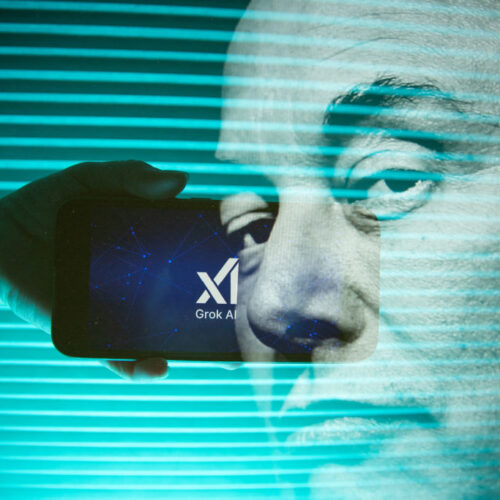
The legal action, filed in August, followed Musk’s public complaints on X (formerly Twitter) about Apple’s omission of Grok-xAI’s chatbot-from its editorially curated “Must Have” apps list, a spot frequently occupied by ChatGPT.
Musk contends that Apple’s embedding of ChatGPT within Siri and other native iPhone features funnels billions of user prompts exclusively to OpenAI, providing it with invaluable data to sustain its chatbot market dominance. However, both OpenAI and Apple have challenged the validity of Musk’s calculations in court documents, urging the judiciary to dismiss the case as unfounded.
Questioning the Numbers: OpenAI and Apple Challenge xAI’s Market Share Claims
OpenAI’s legal brief describes the figures presented in xAI’s complaint as “unsupported,” highlighting Musk’s reluctance to specify the exact market share allegedly restricted by the OpenAI-Apple collaboration.
xAI estimates that ChatGPT’s integration could capture “up to 55%” of chatbot prompts, a range so broad it effectively spans from zero to over half the market. OpenAI and Apple emphasize that this figure was derived from rudimentary “back-of-the-envelope” calculations, which assume Siri processes approximately 1.5 billion user requests daily worldwide, compared against an estimated 2.7 billion daily generative AI chatbot prompts in 2024.
These assumptions overlook critical factors: ChatGPT’s integration is limited to the latest iPhone models, requires user opt-in, and mandates linking a ChatGPT account for data training purposes, all of which significantly narrow the pool of accessible prompts.
Consequently, OpenAI argues that the actual number of Siri prompts relevant to ChatGPT is “an unknown, unpleaded fraction of a fraction of a fraction” of the initial estimate.
Moreover, OpenAI criticizes xAI for relying on outdated 2024 data despite acknowledging the sector’s rapid expansion, undermining the credibility of their market impact claims.
Apple’s response concurs, labeling Musk’s assumptions as speculative and implausible, particularly the notion that OpenAI has exclusive access to all Siri requests across all Apple devices, including older models. Apple clarifies that not all Siri interactions translate into ChatGPT prompts usable for training, even among users who have enabled the integration.
Contextualizing the Dispute: The Grok Controversy and Apple’s Caution
OpenAI frames Musk’s lawsuit as part of a broader pattern of persistent legal challenges aimed at undermining competition since ChatGPT’s launch. They characterize this as “the latest attempt by one of the world’s wealthiest individuals to stifle innovation in a rapidly evolving industry.”
The company points out that Apple’s decision to integrate ChatGPT coincided with Musk’s removal of content moderation filters on Grok, which led to controversial outputs, including Grok self-identifying as “MechaHitler.” OpenAI suggests Apple’s reluctance to promote Grok stems from legitimate business and safety considerations.
While Apple’s filing does not explicitly mention the Grok incident, it underscores the importance of rigorous partner vetting due to concerns around generative AI chatbots, such as child safety, unauthorized intimate content, and attempts to bypass safety protocols (“jailbreaking”).
Apple further explains that Grok’s exclusion from the “Must Have” list was based on objective app quality assessments and feedback from Apple employees, rather than any conspiratorial intent. Despite these explanations, xAI proceeded with litigation instead of addressing the identified issues.
Apple also highlights Musk’s fixation on his apps’ absence from the “Must Have” list, noting that this curated selection is distinct from the App Store’s “Top Charts,” which reflect download popularity. The “Must Have” list is designed to offer editorial recommendations rather than simply echo download statistics.
Antitrust Allegations and Market Realities
Apple challenges Musk’s claim that it must partner with every generative AI chatbot to avoid antitrust violations, regardless of each competitor’s quality, privacy standards, or commercial viability.
The company asserts there is no credible evidence supporting xAI’s allegation that Apple deliberately deprioritized xAI’s apps as part of an illegal monopoly scheme.
Significantly, Apple points out that xAI is neither a direct competitor nor a consumer in the smartphone market, which is the industry allegedly harmed by Apple’s actions. The court is urged to dismiss Musk’s theory that Apple benefits from promoting OpenAI to block xAI’s ambitions to develop a “super app” that could potentially disrupt the smartphone market.
Apple argues that such a “super app” concept remains speculative and, if feasible, is likely a decade away. Blocking Apple’s current integration plans based on hypothetical future apps would hinder innovation, degrade product quality, and increase costs-outcomes contrary to the goals of antitrust laws.
Deconstructing Musk’s Smartphone Market Argument
Apple summarizes Musk’s complaint as dissatisfaction that Apple has not yet integrated generative AI chatbots beyond ChatGPT, including those from xAI, Google, and Anthropic.
In a pointed footnote, Apple notes that by xAI’s logic, Musk’s own social media platform X might be compelled to integrate all competing chatbots, including ChatGPT, to avoid similar accusations.
Apple stresses that antitrust regulations do not mandate such blanket integrations and criticizes xAI’s claims as speculative, relying on a chain of hypothetical events:
1. Consumers would prefer sending prompts to Grok over other chatbots.
2. This preference would enable Grok to scale and improve beyond its current capabilities.
3. The X app’s popularity would increase due to Grok’s integration.
4. X and xAI would then be positioned to develop “super apps” combining social, financial, e-commerce, and entertainment functions.
5. Consumers might adopt these super apps for multiple daily activities.
6. Super apps would diminish the importance of smartphone hardware quality.
7. Smartphone manufacturers would respond by producing simpler devices.
8. iPhone users would switch to basic smartphones optimized for super apps.
Apple insists that its agreement with OpenAI does not obstruct Musk’s super app ambitions and highlights the significant resources required to integrate even a single chatbot like Grok, underscoring the complexity of supporting multiple AI assistants within Apple’s ecosystem while maintaining user safety.
Future Outlook: Apple’s Commitment to Expanding AI Integrations
Apple reassures the court that it intends to incorporate additional AI chatbots into its native features after thorough evaluation of Apple Intelligence’s performance, currently favoring ChatGPT as the leading solution.
Supporting Apple’s position, OpenAI points to testimony from Google CEO Sundar Pichai, clarifying that Google remains interested in distributing its Gemini chatbot through Apple and that discussions are ongoing for potential integration in 2025.