Good morning, AI enthusiasts. The most debated corporate transformation in the tech world has just concluded-OpenAI’s original nonprofit entity now controls an astonishing $130 billion in equity.
Alongside a revamped agreement with Microsoft that eases longstanding tensions in their AI collaboration, has OpenAI finally crafted a sustainable framework to lead the race toward Artificial General Intelligence (AGI)?
P.S. – We’re thrilled by the innovative ways our readers incorporate AI into their daily routines and projects! If you haven’t yet, share your AI story for a chance to be featured below.
Today’s AI Highlights:
- OpenAI’s corporate restructuring and updated Microsoft partnership
- Adobe’s expansive AI innovations unveiled at MAX conference
- Google Flow’s breakthrough in AI-powered video editing
- Nvidia’s ambitious $500 billion chip sales forecast amid new alliances
- Four fresh AI tools, community workflows, and more
OPENAI

Overview: OpenAI has finalized its contentious shift to a public benefit corporation, simultaneously revising its Microsoft partnership to resolve disputes over AGI ownership and intellectual property rights.
Key points:
- The original nonprofit, now named OpenAI Foundation, holds $130 billion in equity and plans to allocate $25 billion toward health research and AI safety infrastructure.
- Microsoft’s stake decreases from 32.5% to roughly 27%, yet its share value has surged to about $135 billion after recent investments.
- An independent expert committee will validate any future AGI claims, with Microsoft retaining technology rights through 2032, even post-AGI development.
- Both OpenAI and Microsoft can collaborate with other partners on AGI projects; OpenAI commits to $250 billion in Azure cloud purchases but retains freedom to source compute power elsewhere.
Significance: After a complex and scrutinized restructuring process, OpenAI has established what it calls one of the most well-funded philanthropic organizations ever. The updated Microsoft terms are expected to improve the partnership dynamics between the AI pioneer and its largest collaborator.
IN PARTNERSHIP WITH COMPOSIO
Summary: Rube transforms your AI into a productive teammate that handles tedious tasks like meeting notes, ticketing, follow-ups, and reports, integrating seamlessly with over 800 applications via Claude or Cursor.
Rube’s capabilities include:
- Connecting 800+ tools through a single MCP node compatible with n8n, agentkit, langflow, and lindy
- Designing scheduled automation workflows triggered by custom events
- Accessing and customizing community-shared workflow recipes
- Eliminating authentication hassles with Composio’s OAuth and enterprise SEO management
ADOBE
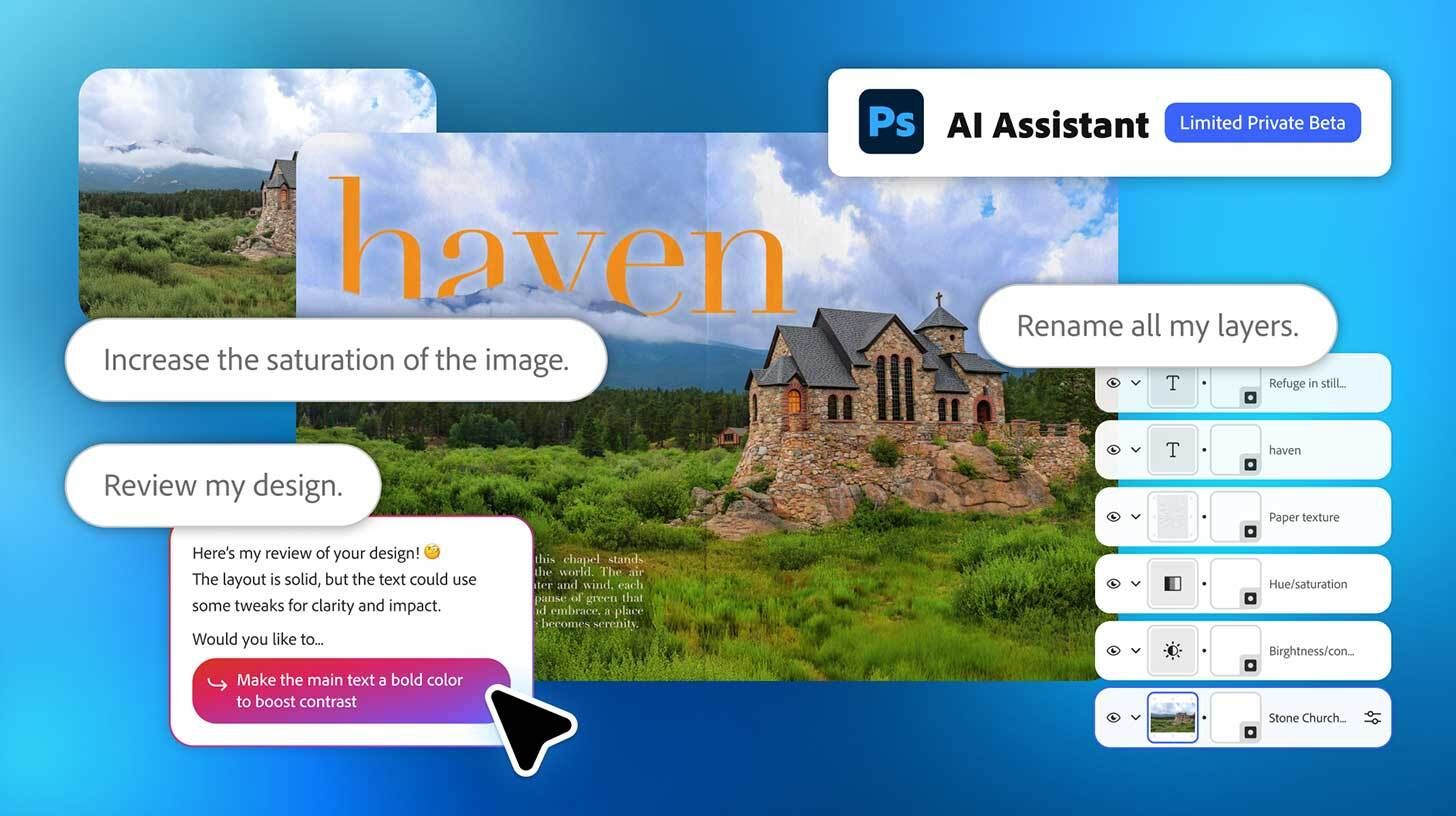
Summary: At its MAX conference, Adobe unveiled a suite of AI enhancements across its creative suite, including conversational AI assistants, the advanced Firefly Image Model 5, expanded third-party model integrations, and innovative video editing tools.
Highlights:
- AI assistants integrated into Photoshop and Express for intuitive image creation and editing; preview of “Project Moonlight,” an autonomous creative assistant.
- Firefly Image Model 5 introduces “Prompt to Edit” for interactive image modifications, alongside new AI-driven video features such as soundtracks, voiceovers, and editing capabilities.
- Artists can now train custom Firefly image models using their own artwork, enabling personalized creative outputs.
- Collaborations with Google Cloud and YouTube bring Gemini, Veo, and Imagen models into Adobe’s ecosystem; Premiere Pro’s editing tools are expanding to YouTube Shorts.
Why it matters: Adobe’s strategy to serve as an open platform atop leading AI models positions it well for the future. By embedding AI assistants and agentic features, Adobe aims to unify the best aspects of standalone creative tools within its widely adopted software environment.
AI VIDEO EDITING WITH GOOGLE FLOW

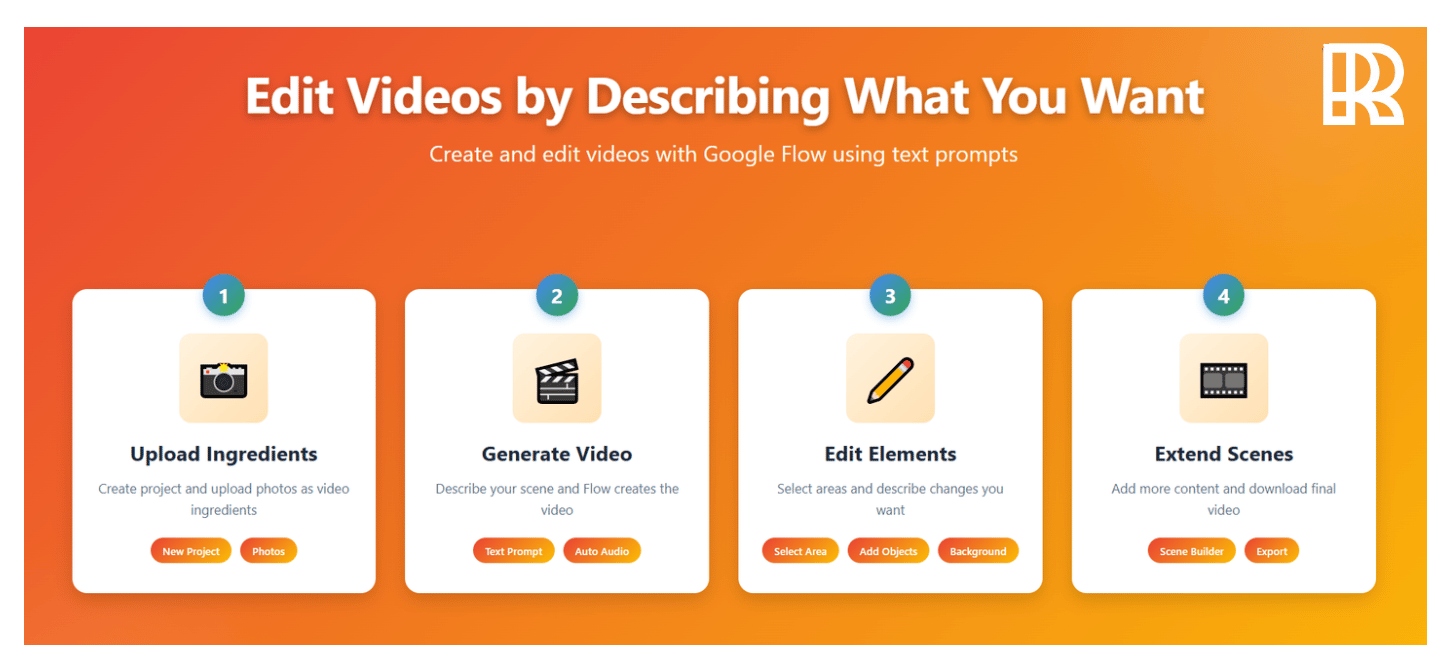
Overview: Discover how to create and modify videos effortlessly using Google Flow’s AI-powered tools-add objects, alter backgrounds, and extend scenes simply by describing your vision.
Step-by-step guide:
- Log in to Google Flow, start a new project, switch from “Text to Video” to “Ingredients to Video,” and upload images of your subject and background.
- Input the prompt: “Using uploaded photos, create a video where I stop typing, look at the camera, and say ‘Ready to collaborate? DM me!’ with soft upbeat music and keyboard sounds.”
- Edit the output by selecting areas to modify-for example, add a “no-smoking” sign to a window or insert a robot into the background.
- Add new scenes by extending the video with prompts like “Robot moves out and person gives thumbs up to camera.”
- Review the smooth transitions and export the final edited video.
Pro tip: Use these editing features to embed product logos, create branded marketing content, or develop training videos with visual annotations.
SPONSORED BY LOVART
Update: Lovart’s AI Design Agent now operates up to 80% faster with its new Fast Mode, maintaining exceptional quality in creative outputs.
Lovart enables you to:
- Automatically stitch together 1-minute Sora 2 clips for compelling storytelling with integrated sound and narrative flow.
- Leverage Veo 3.1 for cinematic, studio-quality visuals ideal for advertisements.
- Combine top AI models like Nano Banana, Sora 2, and Veo 3.1 seamlessly within one platform.
Experience the next generation of AI-driven creativity with Lovart.
NVIDIA
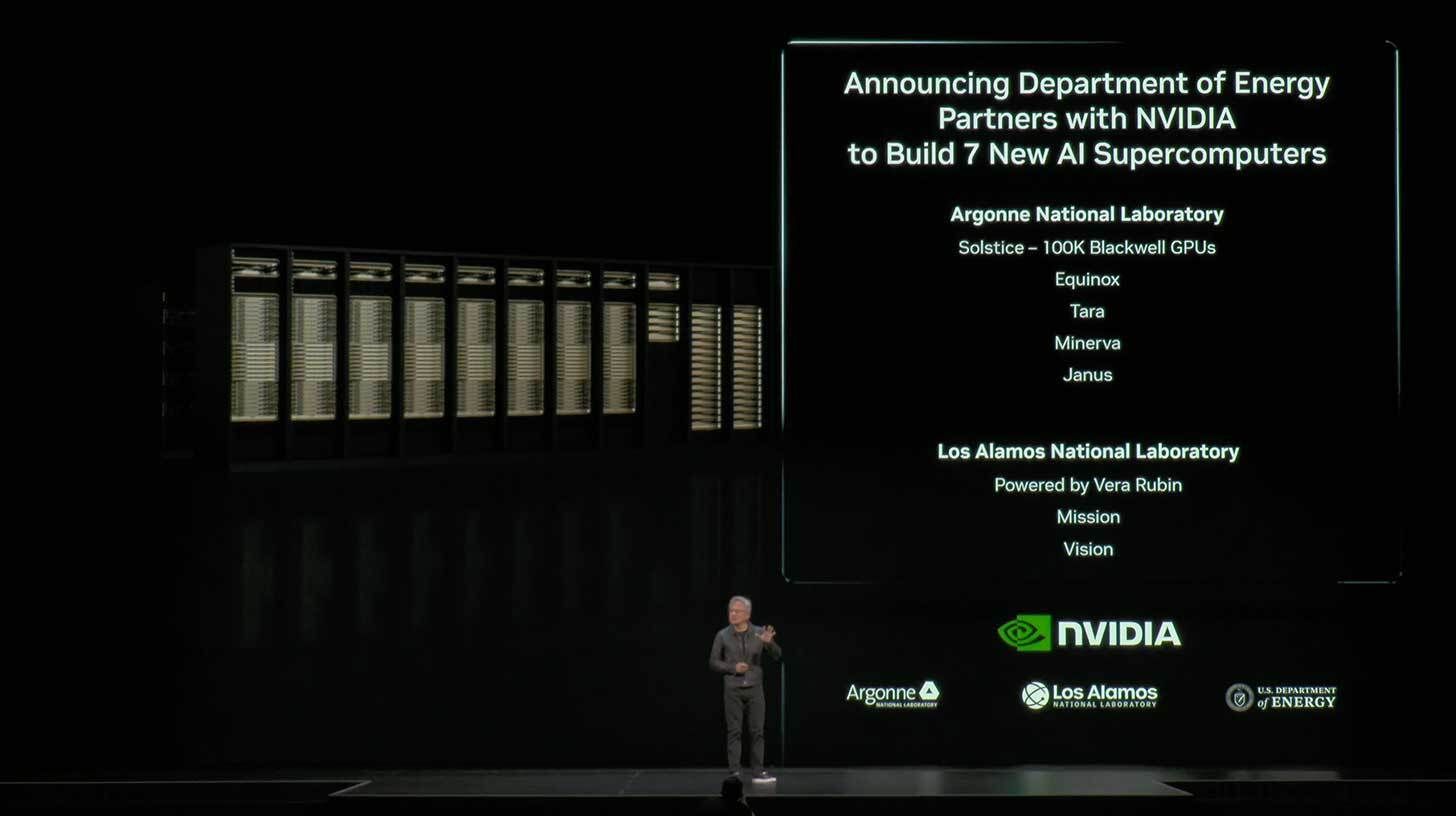
Summary: Nvidia CEO Jensen Huang announced a bold forecast of $500 billion in revenue from the company’s Blackwell and Rubin chips by 2026, alongside unveiling new partnerships, AI models, and investments at a recent event in Washington D.C.
Key developments:
- The U.S. Department of Energy is deploying seven supercomputers powered by over 100,000 domestically produced Blackwell GPUs.
- Nvidia launched new open-source AI models focused on reasoning, robotics, physical AI, and biomedical research, complemented by extensive open datasets.
- New collaborations include Eli Lilly, Palantir, Hyundai, Samsung, and Uber, contributing to Nvidia’s stock reaching record highs.
- A $1 billion investment in Nokia supports the telecom company’s pivot toward AI-driven network redesign and connectivity.
Why it’s important: Despite speculation about an AI market bubble, Nvidia’s leadership in AI hardware and software continues to expand robustly, solidifying its dominant role in the AI revolution.
QUICK UPDATES
- ⚙️ An open-source AI coding assistant now supports over 400 models with unlimited usage for planning, building, and debugging code.
- 🎥 MiniMax introduces an AI video model with enhanced realism and fluid motion.
- 💻 New AI agents integrate knowledge, creativity, and execution into unified workflows.
- 📚 xAI launches Grokipedia, an AI-powered encyclopedia featuring over 800,000 AI-generated articles with real-time user-editing capabilities.
INDUSTRY NEWS
xAI has released Grokipedia, a dynamic AI encyclopedia with user-editable content and over 800,000 AI-generated entries.
OpenAI CEO Sam Altman projects achieving an “intern-level research assistant” AI by next year and a fully autonomous AI researcher by 2028.
GitHub launched Agent HQ, a dashboard integrating coding agents from Anthropic, OpenAI, Google, Cognition, and xAI into developer workflows.
Amazon announced plans to cut 14,000 corporate jobs, attributing the reductions to efficiency gains from AI and robotics.
Google introduced Pomelli, a Labs experiment that designs AI-driven marketing campaigns based on brand websites.
Flowith unveiled FlowithOS, an AI operating system outperforming OpenAI’s Operator, ChatGPT Atlas, and Gemini 2.5 in agentic web tasks.
COMMUNITY SPOTLIGHT
💡
Each edition, we highlight how readers harness AI to boost productivity, save time, or simplify life.
Today’s feature comes from Bryan R. in York, PA:
“I developed a GPT-powered assistant to manage a wetland restoration and land stewardship project on my property. It tracks native bird, mammal, insect, flower, and plant populations to assess ecological health, returning a score and tailored recommendations for natural ecosystem management optimized for my location. I’ve already established a promising pollinator corridor that’s expected to flourish next spring.”
How are you using AI? Share your story with us.
📚
- Catch up on our previous AI newsletter
- Explore the latest Tech newsletter
- Read our recent Robotics newsletter
- Discover today’s AI tool guide
- Reserve your spot for the upcoming workshop at 4 PM Thursday
Until next time,
Rowan, Joey, Zach, Shubham, and Jennifer – the team behind The Rundown