Limitations of Current Deep Research Tools
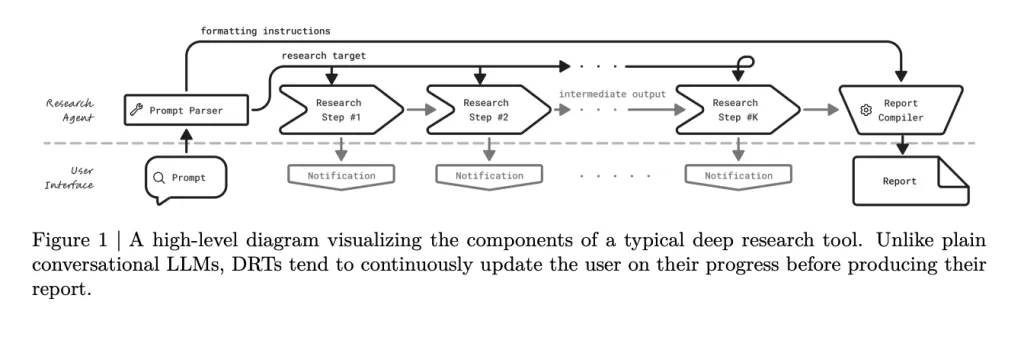
Popular Deep Research Tools (DRTs) such as Gemini Deep Research, Perplexity, OpenAI’s Deep Research, and Grok DeepSearch operate within fixed frameworks tied to specific large language models (LLMs). While these platforms deliver solid performance, they inherently restrict users by disallowing customization of research methodologies, model interchangeability, and enforcement of domain-specific protocols.
Key challenges highlighted by NVIDIA’s evaluation include:
- Inability for users to mandate preferred data sources, validation procedures, or budget constraints.
- Lack of support for specialized research workflows tailored to sectors like finance, legal, or healthcare.
- Dependence on a single LLM, limiting the flexibility to combine optimal models with tailored research strategies.
These constraints hinder the adoption of DRTs in critical enterprise and scientific environments where adaptability and precision are paramount.
Introducing Universal Deep Research (UDR): A New Paradigm
Universal Deep Research (UDR) is an innovative open-source framework currently in preview that fundamentally separates the research strategy from the underlying model. This decoupling empowers users to craft, modify, and execute bespoke deep research workflows without the need for retraining or fine-tuning any LLM.
UDR distinguishes itself by operating at the orchestration layer:
- Transforms user-defined research plans into executable code.
- Executes workflows within a secure, sandboxed environment to ensure safety and reliability.
- Utilizes LLMs as specialized tools for localized reasoning tasks such as summarization, ranking, and data extraction, rather than granting them overarching control.
This design philosophy renders UDR lightweight, adaptable, and compatible with any LLM, fostering greater flexibility.
Mechanics of UDR: From Strategy to Execution
UDR requires two primary inputs: a research strategy outlining the stepwise workflow, and a research prompt specifying the topic and desired output format.
- Compiling the Strategy
- Natural language instructions are converted into structured Python code with strict formatting rules.
- Intermediate results are stored in variables to prevent exceeding context window limits.
- All functions are deterministic and fully transparent, enhancing reproducibility.
- Executing the Workflow
- Control logic is processed on the CPU, while the LLM is invoked solely for reasoning tasks.
- Real-time progress updates are communicated through
yieldstatements, keeping users informed. - Final reports are generated from stored variables, ensuring full traceability of the research process.
This clear division between orchestration and reasoning optimizes computational efficiency and reduces GPU resource consumption.
Predefined Research Strategies and Customization
UDR comes equipped with three foundational strategy templates designed to suit various research needs:
- Minimal Strategy: Formulates a limited set of search queries, collects results, and produces a succinct summary report.
- Expansive Strategy: Simultaneously investigates multiple topics to provide comprehensive coverage.
- Intensive Strategy: Employs iterative refinement of queries using evolving subcontexts, ideal for in-depth analysis.
These templates serve as flexible starting points, with the framework allowing users to develop entirely customized workflows tailored to their specific requirements.
Outputs Generated by UDR
UDR delivers two primary types of output:
- Structured Notifications: Detailed progress updates including event type, timestamps, and descriptive information to maintain transparency.
- Comprehensive Final Report: A Markdown-formatted document featuring organized sections, tables, and citations, facilitating easy review and sharing.
This approach ensures both auditability and reproducibility, setting UDR apart from opaque, agent-driven systems.
Versatile Applications of UDR Across Industries
Thanks to its modular and model-agnostic architecture, UDR is highly adaptable across a wide range of fields:
- Scientific Research: Conducting systematic literature reviews and hypothesis generation.
- Corporate Due Diligence: Verifying data against official filings and large datasets.
- Market Intelligence: Building pipelines for comprehensive market trend analysis.
- Startup Innovation: Creating tailored AI assistants without incurring the costs of retraining language models.
By disentangling the choice of LLM from research logic, UDR fosters innovation both in model development and research methodology.
Conclusion: Shifting Towards System-Centric AI Research
Universal Deep Research represents a transformative move from traditional model-centric AI towards system-centric research agents. By granting users direct control over research workflows, UDR enables the creation of customizable, efficient, and fully auditable research systems.
For enterprises and startups alike, UDR offers a scalable foundation to develop domain-specific AI assistants without the overhead of model retraining, unlocking new avenues for innovation across diverse sectors.