

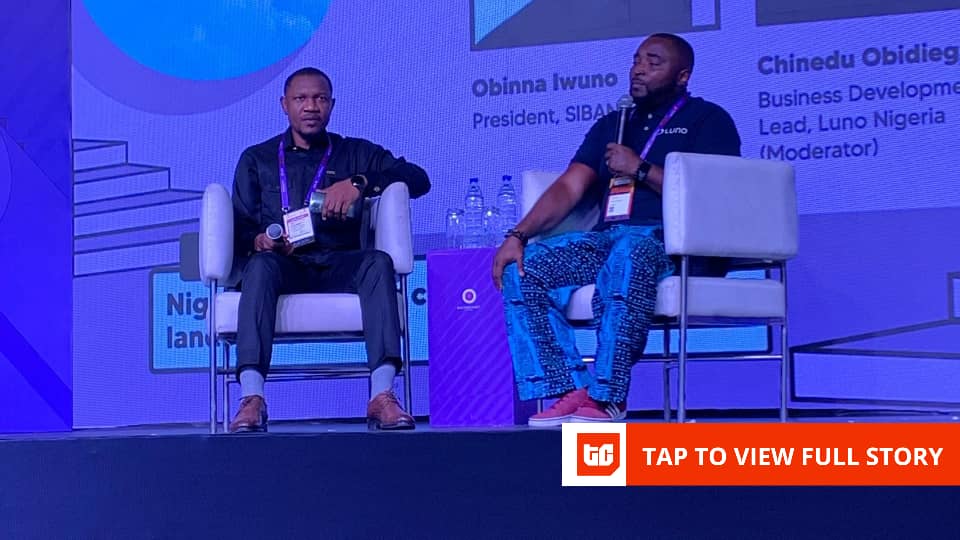
After many years of stop-start regulations, Nigeria has made it clear that it’s ready to bring its crypto market, which has operated in a Wild West environment, under its watchful eyes. Obinna Iwuno echoed the sentiments of this advocacy group during a fireside conversation with Chinedu Obidiegwu (Head of Business at Luno Nigeria), a crypto company. This was held at Moonshot by TechCabal, on Thursday, October 16, in a discussion between Obinna Iwuno and Chinedu Obidiegwu.
Iwuno said, “Crypto regulations are becoming more clear, but we’re not yet where we want to get.” “The ISA [Investment and Securities Act, 2025, which was signed in March] may not be the best regulation, but we can make it better.” We say that if you are an operator entering the market, it’s still early.
Nigeria’s Securities and Exchange Commission has been working to position itself as a progressive regulator since 2024. In June, the SEC announced that it would be launching a new regulatory framework. Launched Accelerated Regulatory Incubation Programmes (ARIP) & Regulatory Incubation Programmes (RI) to test emerging crypto businesses in controlled conditions.
The regulator, through these sandboxes granted provisional licenses to seven operators in both programmes and began monitoring experiments with stablecoins and tokenisation. The SEC has cited extended due diligence as the reason for the slowdown in the transition to full licenses. Iwuno, SIBAN’s director, said that SIBAN is working to ensure alignment between crypto operators and policymakers as well as multiple regulators who are involved in different aspects of overseeing the flow of crypto transactions. These include the Nigerian Communications Commission, the telecoms regulator, the Economic and Financial Crimes Commission, the anti-graft organization, the Nigerian Financial Intelligence Unit, the body responsible for reporting financial intelligence, the National Information Technology Development Agency, the ICT sector regulator, and the Ministry of Communications. Iwuno said that a large part of SIBAN’s efforts is to educate the stakeholders, ensuring a more holistic approach in regulating crypto.
Iwuno said that[Nigeria] had implemented a national policy on blockchains, which focuses on capacity development and responsible adoption. “We also have the ISA but the [regulations] do not capture the different nuances in crypto.” We want to see responsible integration of crypto into the private and public sector.
Despite a lack of regulatory clarity around crypto, the adoption and use of digital assets has exploded in Nigerialed by a younger population who wants speed and convenience in sending and receiving money.
Crypto is the most practical in Africa. Crypto is the only way to conduct high-value, fast cross-border transactions. Despite this, the sector is still outside of institutional finance due to regulators’ concerns about the lack of centralized oversight. According to Iwuno, the SIBAN has led efforts in implementing compliance standards for operators to give crypto an independent front.
As SIBAN, Iwuno ensured that every operator conducted at least two identity verification checks in order to increase security. “And that’s bringing the confidence we need in the marketplace.”
According to Iwuno, blockchain technology is one of few sectors where everyone can find a job, regardless of their background or skill level. The industry is exciting because of its inclusiveness and the endless possibilities for innovation. He believes that the future belongs to those people who create and add real value in it.





