

Unlocking Compression Efficiency: Training Format-Aware Graph Compressors with a Universal Decoder
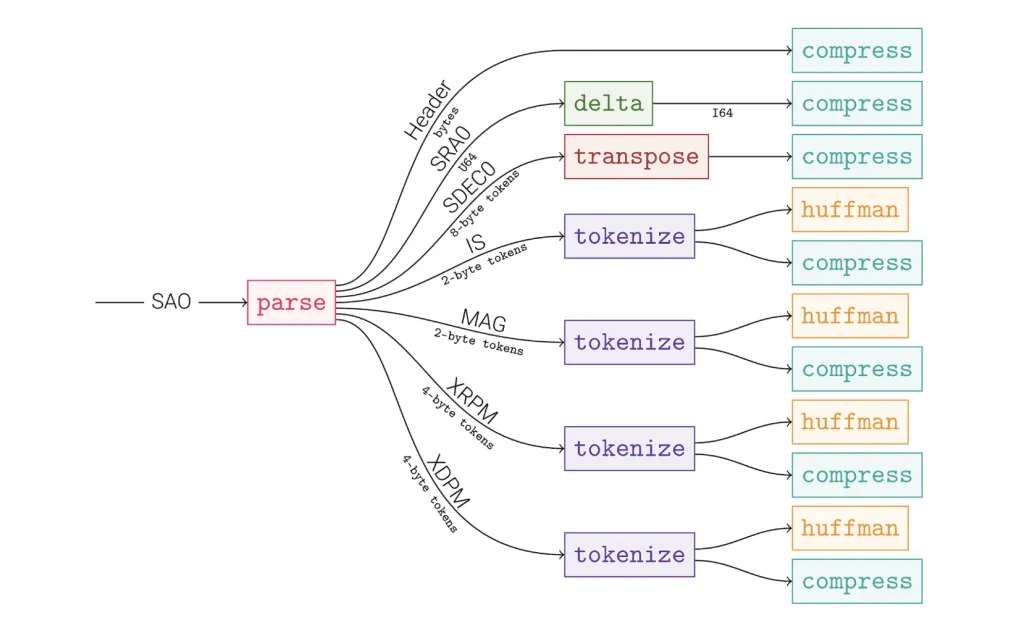
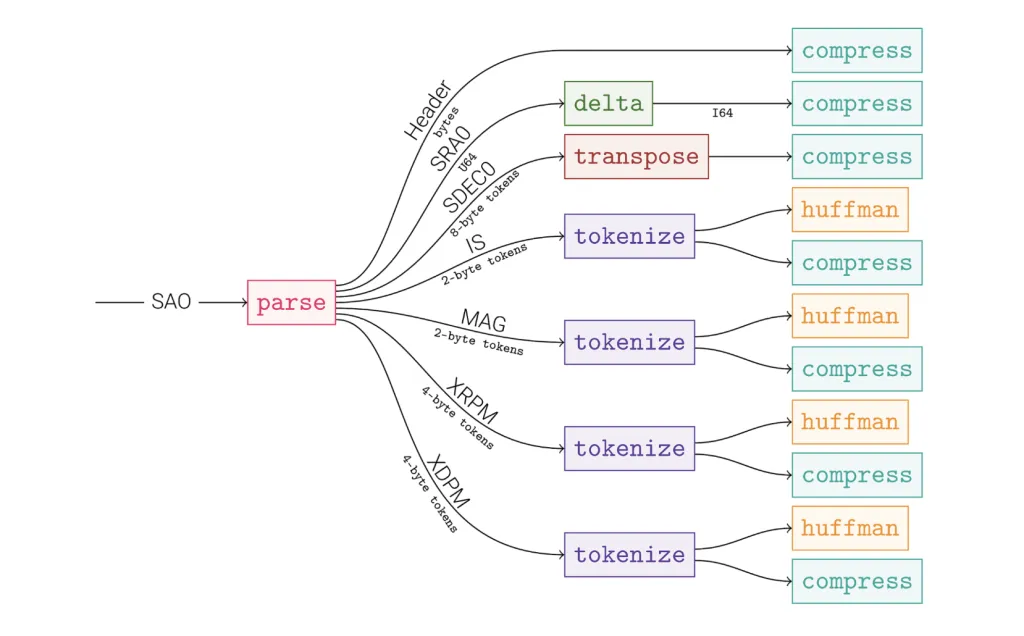
Meta AI has introduced OpenZL, an innovative open-source platform designed to create specialized, format-aware compression tools from high-level data schemas. This system outputs a self-describing wire format that can be interpreted by a universal decoder, effectively separating the evolution of compressors from the deployment of decoders. At its core, OpenZL leverages a graph-based compression model, representing compression workflows as directed acyclic graphs (DAGs) composed of modular codec components.

Introducing a Paradigm Shift in Compression
OpenZL redefines compression by modeling it as a computational graph where each node represents a codec or subgraph, and edges correspond to typed message streams. The finalized graph is embedded alongside the compressed data, enabling any frame generated by an OpenZL compressor to be decoded by the universal decoder. This architecture merges the high compression ratios and throughput of domain-specific codecs with the operational ease of maintaining a single, stable decoder executable.
Mechanics Behind OpenZL
- Data Description and Graph Construction: Developers provide a detailed data schema, which OpenZL uses to assemble a DAG of parsing, grouping, transformation, and entropy coding stages tailored to the input structure. The output is a self-describing compressed frame containing both the encoded data and its graph specification.
- Universal Decoding Process: The decoder interprets the embedded graph to reconstruct the original data, eliminating the need to distribute new decoding software as compression methods evolve.
Developer Tools and Language Support
- Simple Data Description Language (SDDL): This built-in language and its APIs facilitate breaking down inputs into typed streams based on precompiled data descriptions. SDDL is accessible through C and Python interfaces under
openzl.ext.graphs.SDDL. - Multi-language Bindings: The core OpenZL library and its bindings are fully open-source, with comprehensive documentation for C/C++ and Python. The community is actively expanding support, including Rust bindings via
openzl-sys.
Performance Highlights and Real-World Impact
According to Meta’s research, OpenZL consistently delivers enhanced compression ratios and faster processing speeds compared to leading general-purpose codecs across diverse real-world datasets. Internal deployments at Meta have demonstrated notable improvements in both size reduction and throughput, alongside accelerated compressor development cycles. While no single universal metric is provided, performance gains are presented as Pareto improvements, varying with dataset characteristics and pipeline configurations.
Why OpenZL Matters: Expert Insights
OpenZL transforms format-aware compression from a theoretical concept into a practical solution by encoding compressor logic as DAGs embedded within each compressed frame. This approach enables a universal decoder to handle all frames, removing the operational burden of rolling out new readers. Meta’s findings indicate that OpenZL outperforms established codecs like zstd and xz on multiple real-world datasets, offering a compelling balance of efficiency and maintainability.
Explore the capabilities of OpenZL and its potential to revolutionize data compression workflows. Stay updated with the latest advancements and community contributions by following relevant developer forums and subscribing to technology newsletters.





