Revolutionizing Virtual Interaction: The Capabilities of SIMA 2
Google DeepMind’s latest AI agent, SIMA 2, demonstrates remarkable proficiency in navigating and performing intricate tasks within virtual environments. Unlike traditional game-playing AI, SIMA 2 autonomously tackles challenges, engages in meaningful dialogue with users, and refines its skills through iterative learning and trial-and-error methods.
From Pixels to Actions: How SIMA 2 Operates
SIMA 2 interprets its surroundings by analyzing video game visuals frame-by-frame, enabling it to decide on appropriate actions. Users can interact with the agent through multiple modalities, including text commands, voice input, or on-screen drawings, making the communication dynamic and versatile.
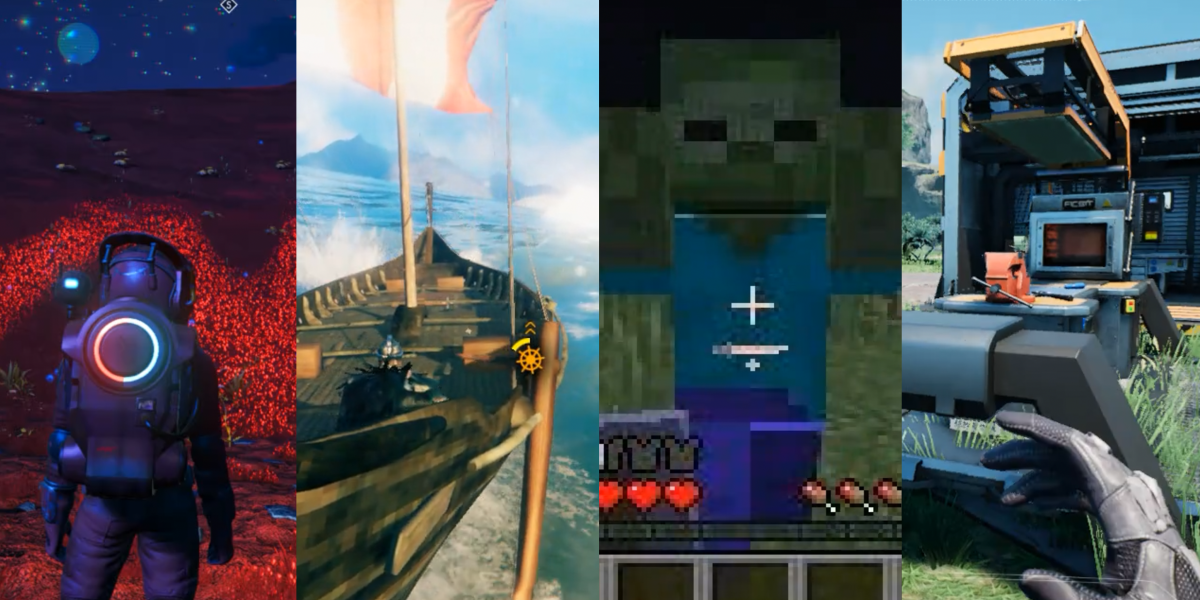
Its training involved extensive observation of human gameplay across diverse titles such as No Man’s Sky, Goat Simulator 3, and several proprietary virtual worlds crafted by DeepMind. By correlating keyboard and mouse inputs with in-game actions, SIMA 2 developed a nuanced understanding of control mechanisms.
Instruction Following and Adaptive Problem Solving
One of SIMA 2’s standout features is its enhanced ability to comprehend and execute complex instructions. It actively asks clarifying questions and provides progress updates, showcasing a level of interactive reasoning that surpasses many predecessors. This adaptability was tested in unfamiliar virtual settings generated by Genie 3, DeepMind’s advanced world-building model, where SIMA 2 successfully navigated and completed tasks without prior exposure.
Generating New Challenges with Gemini
To foster continuous improvement, SIMA 2 leverages Gemini, an AI system designed to create novel tasks and offer strategic hints when the agent encounters difficulties. This feedback loop encourages SIMA 2 to refine its approach through repeated attempts, mirroring human learning processes.
Current Limitations and Future Prospects
Despite its advancements, SIMA 2 remains experimental. It struggles with tasks requiring extended sequences of actions and has limited memory retention, focusing primarily on recent interactions to maintain responsiveness. Additionally, its proficiency with keyboard and mouse controls still lags behind human dexterity.
Julian Togelius, an AI and game design expert at New York University, highlights the challenge of training a single AI to master multiple games purely through visual input, calling it “hard mode.” He notes that previous systems like Google DeepMind’s GATO failed to generalize skills across different virtual environments effectively.
Togelius remains cautiously optimistic about SIMA 2’s potential to inform real-world robotics, emphasizing that physical environments present unique challenges and advantages compared to video games. Unlike virtual worlds with varying rules, robots operate within consistent physical laws but must interpret complex sensory data and manage their own bodily capabilities.
Expert Skepticism and Real-World Applicability
Matthew Guzdial, an AI researcher at the University of Alberta, expresses skepticism regarding the transferability of SIMA 2’s gaming skills to robotics. He points out that many video games share similar input schemes, making cross-game mastery less surprising. However, real-world visual perception is far more complex than the structured, human-friendly graphics of games, posing significant hurdles for AI.
Looking Ahead: Training AI in Virtual Dojos
DeepMind’s team plans to continue refining SIMA 2 by utilizing Genie 3 to generate diverse virtual training environments, creating a “training dojo” where the agent can learn through trial, error, and guided feedback from Gemini. Joe Marino, a lead researcher, remarked that this is just the beginning of exploring the vast potential of such AI systems.
As AI agents like SIMA 2 evolve, they pave the way for more sophisticated human-machine collaboration, potentially transforming how robots assist in real-world tasks by building on the foundational skills honed in virtual realms.