Introducing a Unified Protocol for AI Agent-Driven Payments
Imagine your digital shopping assistant automatically upgrading your subscription from a $49 Basic plan to a $499 Pro tier-who bears the responsibility for this transaction? Is it the user, the developer behind the agent, or the merchant? This uncertainty creates a significant barrier to widespread adoption of AI agent-initiated checkouts within current payment infrastructures. To bridge this trust gap, a new open and interoperable standard has been developed, enabling AI agents and merchants worldwide to communicate payment intents securely and transparently.
Google’s Agent Payments Protocol (AP2): A New Standard for AI-Powered Transactions
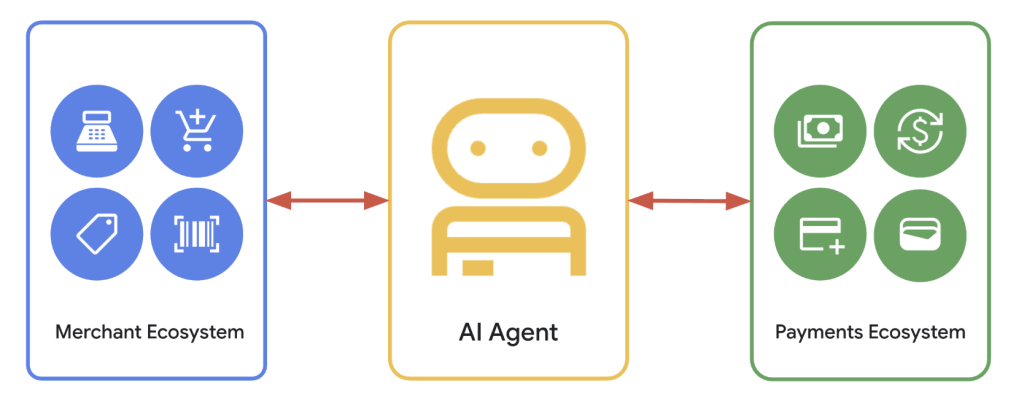
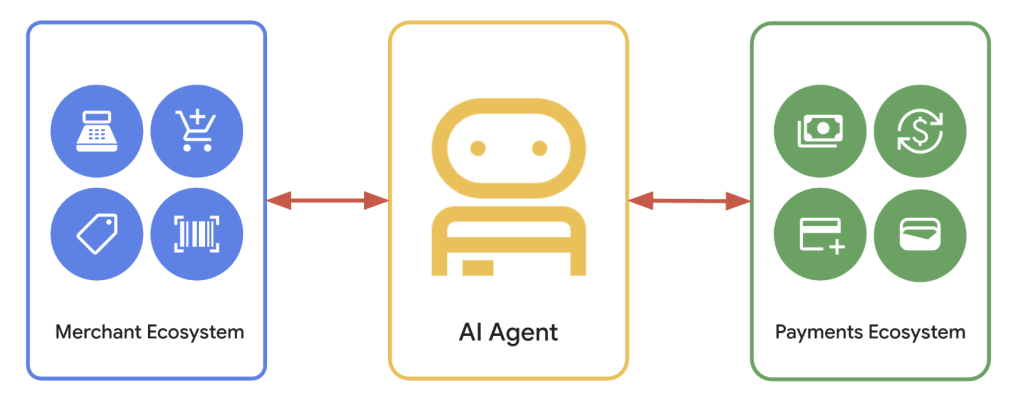
Google’s Agent Payments Protocol, known as AP2, is a vendor-neutral, open specification designed to facilitate payments initiated by AI agents. It leverages cryptographic proofs to provide auditable evidence of user consent. Building upon existing open standards like Agent2Agent (A2A) and Model Context Protocol (MCP), AP2 defines a comprehensive framework for exchanging verifiable data throughout the entire transaction lifecycle-from user intent to cart confirmation to payment authorization. This approach aims to close the trust gap in agent-led commerce while maintaining a cohesive and interoperable payments ecosystem.

Why Is a Dedicated Payments Protocol Essential for AI Agents?
Current payment systems are designed with the assumption that a human is directly authorizing purchases through trusted interfaces. When AI agents autonomously or semi-autonomously initiate transactions, merchants and financial institutions face critical challenges:
- Authorization: Has the user genuinely delegated permission to the agent?
- Authenticity: Does the transaction accurately reflect the user’s original intent and approval?
- Accountability: Who is liable if the transaction is disputed or erroneous?
AP2 addresses these concerns by standardizing the data formats, cryptographic methods, and communication protocols necessary to provide consistent, verifiable answers across different payment providers and transaction types.
Building Trust Through Cryptographically Verifiable Credentials
At the heart of AP2 are Verifiable Credentials (VCs), which are digitally signed, tamper-resistant documents that carry proof of user authorization throughout the payment process. AP2 defines three key mandate types that structure this evidence:
- Intent Mandate (Human-Absent): Specifies the parameters under which an agent may act-such as preferred brands, spending limits, or timing constraints-and is signed by the user in advance.
- Cart Mandate (Human-Present): Represents the user’s explicit approval of a merchant-signed shopping cart, ensuring “what you see is what you pay” with undeniable proof.
- Payment Mandate: Communicates to payment networks and issuers that an AI agent facilitated the transaction, including context about whether the user was present and relevant risk factors.
These credentials create a transparent audit trail linking user consent directly to the final payment request, enhancing trust and reducing disputes.
Defining Roles and Trust Boundaries in the AP2 Ecosystem
AP2 employs a role-based architecture to clearly delineate responsibilities and protect sensitive information:
- User: The individual who delegates tasks to an AI agent.
- User/Shopping Agent: The interface that interprets user instructions, negotiates with merchants, and collects approvals.
- Credentials Provider: Typically a digital wallet that stores payment methods and issues payment-specific credentials.
- Merchant Endpoint: Provides product catalogs, pricing, and signs the shopping cart.
- Merchant Payment Processor: Prepares the payment authorization data for the network.
- Network & Issuer: Responsible for evaluating and approving the payment.
Distinguishing Human-Present and Human-Absent Payment Flows
AP2 clearly defines two distinct transaction flows to accommodate different levels of user involvement:
- Human-Present: The merchant signs the finalized cart, and the user approves it through a secure interface, generating a signed Cart Mandate. The payment processor then submits this along with the Payment Mandate for authorization. Additional authentication steps, such as 3D Secure, occur on trusted platforms.
- Human-Absent: The user pre-authorizes an Intent Mandate (e.g., “purchase if price drops below $100”). The agent later converts this into a Cart Mandate once conditions are met, or the merchant may require re-confirmation to proceed.
Integration with Existing Protocols: AP2, A2A, and MCP
AP2 extends the Agent2Agent (A2A) protocol, which facilitates communication between AI agents, and interoperates with the Model Context Protocol (MCP), which manages tool access and context sharing. This layered approach allows developers to leverage existing capabilities for discovery, negotiation, and execution while focusing AP2 on standardizing payment mandates, signatures, and accountability signals.
Supporting a Wide Range of Payment Methods
Designed to be payment-method agnostic, AP2 initially targets common pull-based payment instruments such as credit and debit cards. Future updates will incorporate real-time push payment systems like India’s UPI and Brazil’s PIX, as well as digital assets and cryptocurrencies. In fact, Google and partners have introduced an A2A x402 extension to enable agent-initiated crypto payments, aligning with AP2’s mandate framework.
Developer Resources and Implementation
Google has made AP2 accessible to developers through an open-source repository under the Apache-2.0 license, featuring comprehensive documentation, Python type definitions, and practical examples:
- Sample Workflows: Demonstrations include human-present card transactions, crypto payment variants, and Android digital payment credentials, illustrating the full cycle from mandate issuance to network authorization.
- Core Types Package: Protocol objects are available for integration under
src/ap2/types. - Framework Flexibility: Although sample code uses Google’s ADK and Gemini 2.5 Flash, AP2 is designed to be framework-independent, allowing any agent platform to implement mandate generation and verification.
Ensuring Privacy and Security in Agent Payments
AP2’s architecture isolates sensitive data-such as primary account numbers (PANs) and tokens-within the Credentials Provider, preventing exposure through general agent interfaces. Mandates are cryptographically signed with verifiable identities and can include risk indicators without revealing full payment details to other parties. This design supports existing security measures like step-up authentication and provides payment networks with explicit markers of AI agent involvement to enhance fraud detection and dispute resolution.
Industry Collaboration and Ecosystem Adoption
Over 60 organizations, including major players like American Express, Mastercard, PayPal, Coinbase, Intuit, ServiceNow, UnionPay International, Worldpay, and Adyen, are collaborating to align on common mandate semantics and accountability standards. This collective effort aims to prevent fragmented, one-off integrations and foster a unified, scalable agent payment ecosystem.
Addressing Edge Cases and Operational Considerations
- Deterministic Authorization: Merchants receive cryptographic proof of exactly what the user approved or pre-authorized, avoiding reliance on AI-generated summaries.
- Dispute Resolution: The chain of credentials serves as evidence for networks and issuers, enabling clear assignment of responsibility based on signed mandates.
- Authentication Challenges: Issuers or merchants can require additional verification steps, which must be completed on trusted platforms and linked to the mandate trail.
- Multi-Agent Coordination: In complex scenarios involving multiple agents (e.g., travel metasearch engines coordinating with airlines and hotels), A2A manages task orchestration, while AP2 ensures each cart is properly signed and authorized before payment.
Looking Ahead: The Future of Agent Payments
The AP2 team is committed to evolving the protocol openly, expanding reference implementations, deepening integrations with payment networks and web3 technologies, and collaborating with standards organizations to refine verifiable credential formats and identity frameworks. Developers are encouraged to experiment with sample scenarios, integrate mandate types, and validate AP2 flows within their own agent and merchant environments.
In Conclusion
AP2 establishes a robust, cryptographically verifiable framework that empowers AI agents to transact on behalf of users with clear proof of authorization and accountability. By binding user consent to merchant-signed carts and providing auditable records to issuers, AP2 paves the way for trustworthy, scalable agent-led commerce without locking developers into proprietary stacks or payment methods. As AI agents increasingly handle purchases autonomously, this protocol offers the transparency and security essential for the future of digital payments.