When Dubai unveiled its ambitious AI initiative in April 2025, featuring over 100 transformative AI applications, the city was not merely flaunting its technological advancements. Instead, it was strategically positioning itself in the global competition for AI-driven governance by prioritizing rapid implementation over sheer financial investment.
Dubai’s Distinctive AI Governance Model: Speed Meets Ethics
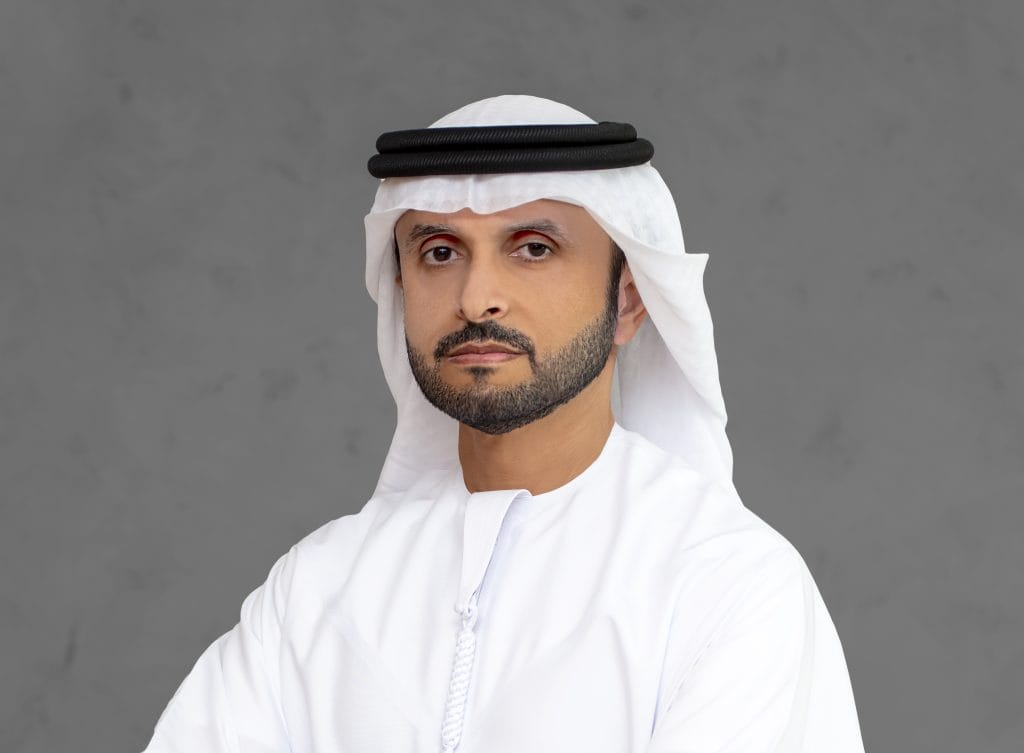
Matar Al Hemeiri, CEO of the Digital Dubai Government Establishment, shared insights into how Dubai’s AI strategy diverges sharply from both regional rivals and established Asian technology centers. The emirate’s approach hinges on swift deployment combined with robust ethical standards, creating a governance framework that many predict will become a global exemplar.
Unified AI Services: Over 180 Government Functions via a Single Virtual Assistant
Unlike Abu Dhabi’s $4.8 billion plan to establish a fully AI-driven government by 2027, Dubai has chosen a path focused on embedding AI ethics, interoperability, and transparency within a scalable governance structure. “While Abu Dhabi invests heavily in infrastructure, Dubai integrates ethical AI principles directly into every layer of government operations,” Al Hemeiri explained.
DubaiAI, the city’s AI-powered virtual assistant, now supports more than 180 public services, making it one of the most extensive government AI chatbot systems worldwide. This platform manages approximately 60% of routine inquiries, resulting in a 35% reduction in operational expenses.
Contrary to common fears about AI-induced unemployment, Al Hemeiri emphasized that automation liberates employees from monotonous tasks, enabling them to be retrained for higher-value roles such as AI governance, service innovation, and strategic policymaking.
With Dubai’s population surging, the demand for government services has escalated dramatically, making AI-driven efficiency not just advantageous but essential for sustainable urban management.
Rapid AI Integration: From Concept to Citywide Deployment in Mere Months
Dubai’s competitive advantage lies not only in the sophistication of its AI solutions but also in the speed of their implementation. “Our AI projects transition from pilot phases to full-scale deployment within months, a pace that outstrips global standards,” Al Hemeiri noted.
By 2025, over 96% of Dubai’s government agencies had integrated at least one AI application, with 60% of users expressing a preference for AI-enhanced services. Dubai benchmarks itself against leading smart cities such as Singapore, Berlin, Helsinki, and Tallinn, but distinguishes itself by embedding AI ethics directly into procurement and operational processes.
“Our AI Policy is a binding framework, not a theoretical guideline,” Al Hemeiri stressed. This policy, initiated in 2019, ensures ethical compliance is a mandatory criterion from acquisition to performance assessment, setting Dubai apart as a pioneer in responsible AI governance.
Expanding AI Impact: Healthcare, Energy, and Predictive Public Services
Beyond the widely recognized DubaiAI assistant, the emirate is deploying AI in critical sectors with tangible benefits. Advanced AI algorithms now enable earlier detection of chronic illnesses like diabetes and enhance auditing accuracy within the Dubai Health Authority.
In the energy sector, AI-driven smart grids optimize consumption patterns and minimize environmental footprints. Dubai is also developing a predictive public services platform designed to anticipate citizen needs-ranging from automated license renewals to proactive health alerts-with a full rollout planned for the early 2030s.
Preliminary versions of this vision are already operational through AI-powered urban planning tools and digital twins that simulate policy impacts before implementation, ensuring data-driven decision-making.
Data Governance: Balancing Sovereignty and Innovation
Dubai’s data management strategy strikes a balance between China’s stringent data localization laws and the European Union’s GDPR standards. “Our hybrid model keeps anonymized citizen data within Dubai’s jurisdiction under strong sovereignty protections, while enabling secure data sharing across government entities via the UAE PASS digital identity system,” Al Hemeiri explained.
Moreover, Dubai leverages synthetic data frameworks to accelerate AI development without compromising privacy or regulatory compliance. This innovative approach facilitates rapid AI experimentation while addressing privacy concerns that have slowed progress in other regions.
Fostering Innovation: The AI Startup Sandbox Ecosystem
Dubai’s AI sandbox environment offers more than regulatory leniency; it provides startups with direct access to government datasets and real-world testing platforms. For example, a healthcare diagnostics startup successfully integrated its AI triage tool into Dubai Health Authority services after piloting within the sandbox.
“Our interconnected digital ecosystem allows startups to seamlessly integrate solutions across various city services, from cutting-edge mobility projects like the Dubai Loop and eVTOL air taxis to AI-driven healthcare diagnostics,” Al Hemeiri highlighted.
Transforming Global Interest into Economic Growth
Dubai AI Week 2025 attracted delegates from over 100 countries and forged partnerships with tech giants including Meta, Google, Microsoft, and OpenAI. However, the emirate’s focus remains on converting this global attention into concrete results.
“We have established collaborative working groups with these partners to fast-track joint initiatives such as AI upskilling programs, research and development projects, and pilot deployments in healthcare, transportation, and urban planning,” Al Hemeiri said.
These efforts align with Dubai’s D33 Economic Agenda, which targets generating AED 100 billion annually through digital innovation. According to the State of AI Report, AI is projected to contribute more than AED 235 billion to Dubai’s economy by 2030, accounting for nearly 20% of the emirate’s planned economic growth.
Subtle Achievements and Addressing Potential Challenges
Highlighting less-publicized successes, Al Hemeiri mentioned the UN Citiverse Challenge, co-led by Digital Dubai, which unites innovators to create AI-driven solutions for inclusive public services and environmental sustainability.
Additionally, the Dubai Future Foundation’s autonomous delivery robots are currently being tested on city streets, enhancing last-mile delivery efficiency while reducing traffic congestion and emissions.
Regarding risks, Al Hemeiri was candid: “The biggest threat is scaling AI without adequate oversight.” Dubai counters this by enforcing continuous audits and mandating explainability for all AI systems deployed in the public sector.
He also emphasized the importance of return on investment (ROI) in AI projects, stating, “We rigorously evaluate ROI before proceeding with any AI initiative to ensure it delivers measurable benefits to the city.”
Looking Ahead: The Five-Year Benchmark
Asked about potential failure indicators five years from now, Al Hemeiri defined failure as “disjointed AI adoption that fails to enhance citizen trust, operational efficiency, or quality of life.”
Conversely, success would be “the seamless, anticipatory, and inclusive integration of AI-powered public services that simplify daily life for residents and serve as a replicable model for governments worldwide.”
This ambitious vision positions Dubai not merely as a rapid adopter of AI in governance but as a potential global leader demonstrating how to deploy transformative technologies swiftly without compromising ethical standards or public confidence.
While the replicability of Dubai’s model beyond its unique governance and resource environment remains uncertain, the city’s rapid AI adoption-already embraced by 96% of government entities with deployment timelines measured in months-offers a compelling real-time experiment. Dubai is betting that in the race to build AI-enabled governments, velocity is as crucial as vision.