
Good morning, AI enthusiasts. The AI giant has returned, unveiling an open-source reasoning engine that achieves top-tier results in one of the globe’s most challenging mathematics contests.
The breakthrough here is profound: cutting-edge reasoning capabilities, once confined to exclusive corporate labs, are now accessible to everyone. For the first time, the intellectual prowess of a world-class mathematician is available to the public.
Today’s AI Highlights:
- DeepSeek’s latest reasoning model dominates the IMO 2025 challenges
- OpenAI faces a data exposure incident via a third-party analytics provider
- Generate stunning Instagram product visuals effortlessly with Nano Banana Pro
- NVIDIA proposes that scaling isn’t the sole path to AI advancement
- Discover four innovative AI tools, community-driven workflows, and more
DeepSeek’s Mathematical Reasoning Breakthrough


DeepSeek has launched DeepSeek-Math-V2, an open-source mixture-of-experts (MoE) model that clinched gold-medal status at the International Mathematical Olympiad (IMO) 2025. This democratizes access to research-grade mathematical reasoning, previously restricted to proprietary AI systems.
- Achieved a near-perfect 118 out of 120 on the 2024 Putnam exam, surpassing the highest human score.
- Solved five out of six problems at IMO 2025, meeting the gold medal threshold.
- Scored 61.9% on the IMO ProofBench benchmark, closely rivaling Google’s specialized Gemini Deep Think model, and significantly outperforming GPT-5’s 20% score.
- Employs a generator-verifier architecture where one model drafts proofs and another critically evaluates each step, promoting iterative refinement rather than just final answers.
- The verifier assigns confidence levels to each reasoning step, compelling the generator to self-correct and debug its logic progressively.
This open-source release shatters the exclusivity of advanced mathematical AI, offering a framework for building agents capable of self-auditing their reasoning. Such technology holds transformative potential in high-stakes fields like engineering, where precision is paramount.
Introducing Bland: Human-Like AI Voice Agents
Based in San Francisco, Bland is pioneering AI-powered inbound voice agents that mimic human conversation, operate nonstop, and boast an impressive 127% net revenue retention rate.
By engaging with Bland, you can:
- Simulate any scenario through customizable role-play
- Experience ultra-low latency calls under 500 milliseconds
- Enjoy phone interactions that feel genuinely natural
For Black Friday, Bland offers enterprises a complimentary pilot program to evaluate agent performance before committing.
OpenAI’s Third-Party Data Exposure Incident


OpenAI disclosed that its analytics partner, Mixpanel, experienced a security breach on November 9, resulting in unauthorized access to some API users’ profile data. Importantly, no chat logs, API keys, payment information, or user credentials were compromised.
- The breach affected Mixpanel’s frontend web analytics systems linked to OpenAI’s API dashboard.
- Exposed data included user profile details such as names, email addresses, geographic locations, and device information.
- OpenAI promptly removed Mixpanel’s integration and is notifying impacted users while advising caution against phishing attempts leveraging the leaked data.
This incident underscores the vulnerabilities introduced by third-party services. While direct account breaches were avoided, exposed contact information could facilitate sophisticated social engineering attacks.
Enhance Your Social Media with Nano Banana Pro
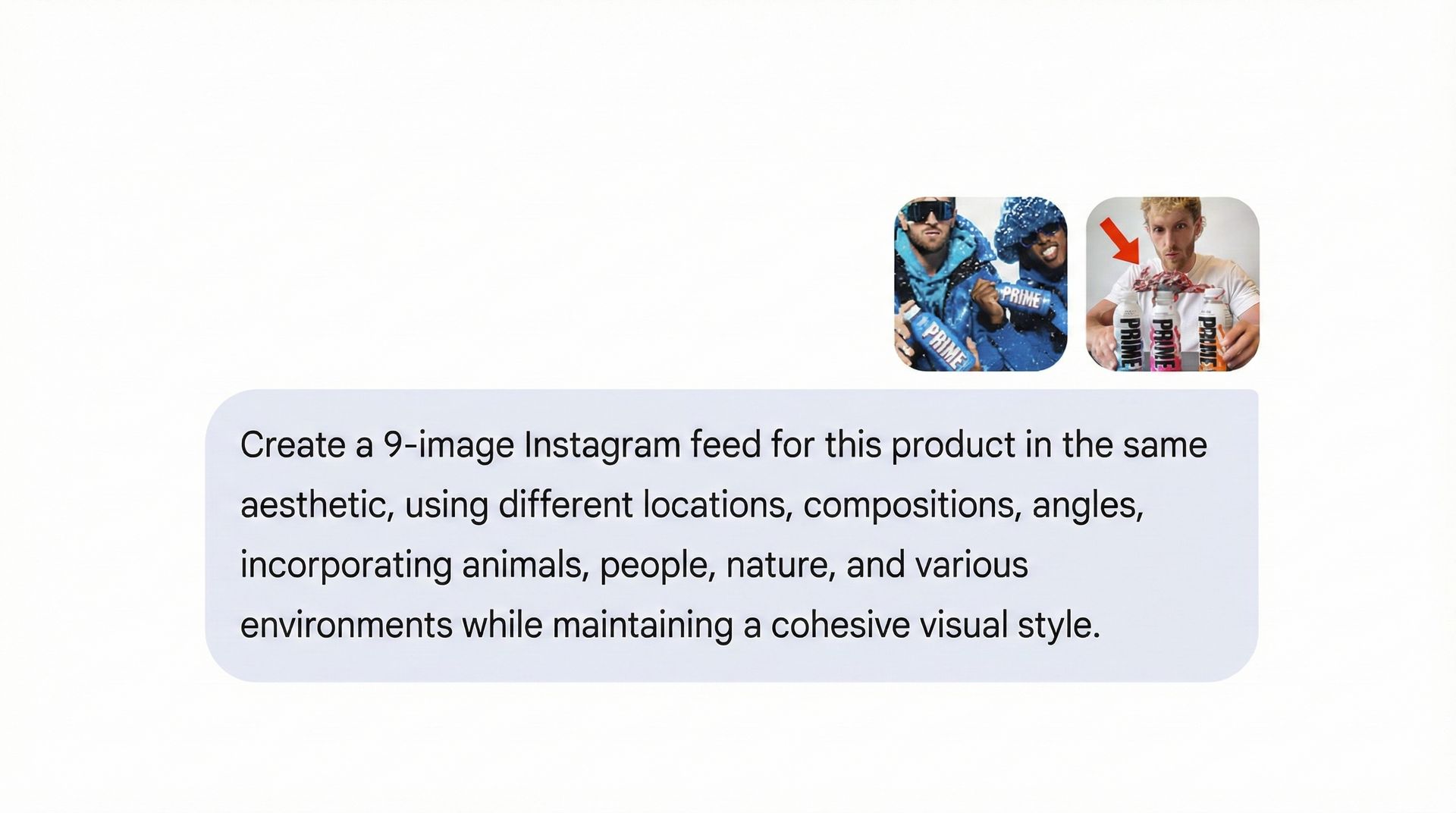
This tutorial guides you through using Nano Banana Pro to transform a single inspiration photo into a cohesive nine-image Instagram feed, perfect for elevating product marketing campaigns.
- Navigate to Gemini → Tools → Create Images, activate Pro mode, and upload an inspiration image that captures your desired style.
- Upload your product photo, provide a description, then prompt: “Generate a 9-image Instagram feed showcasing this product from diverse angles, with people and varied settings.”
- Submit the request and review the generated grid. Request regenerations or isolate specific images as needed.
- Download your preferred visuals and publish them directly to Instagram, TikTok, or your online store for a polished, consistent look.
Pro tip: The more detailed and style-consistent your inspiration images, the better the AI’s output aligns with your vision.
Mastering AI Agent Management: A Guide from You.com
Many organizations struggle with AI agents because they rely solely on prompt engineering. This comprehensive guide from You.com explores the evolution of agent management, outlining five critical stages to build dependable AI agents.
- Why prompts alone fall short and how incorporating context and metadata enhances automation reliability.
- Four key methods to measure ROI on AI agents, with guidance on when and how to apply each metric.
- Common obstacles encountered at each stage of agent deployment and strategies to overcome them.
If you’re ready to elevate your AI agent strategy beyond basic prompting, this guide is essential reading.
Rethinking AI Progress: NVIDIA’s ToolOrchestra
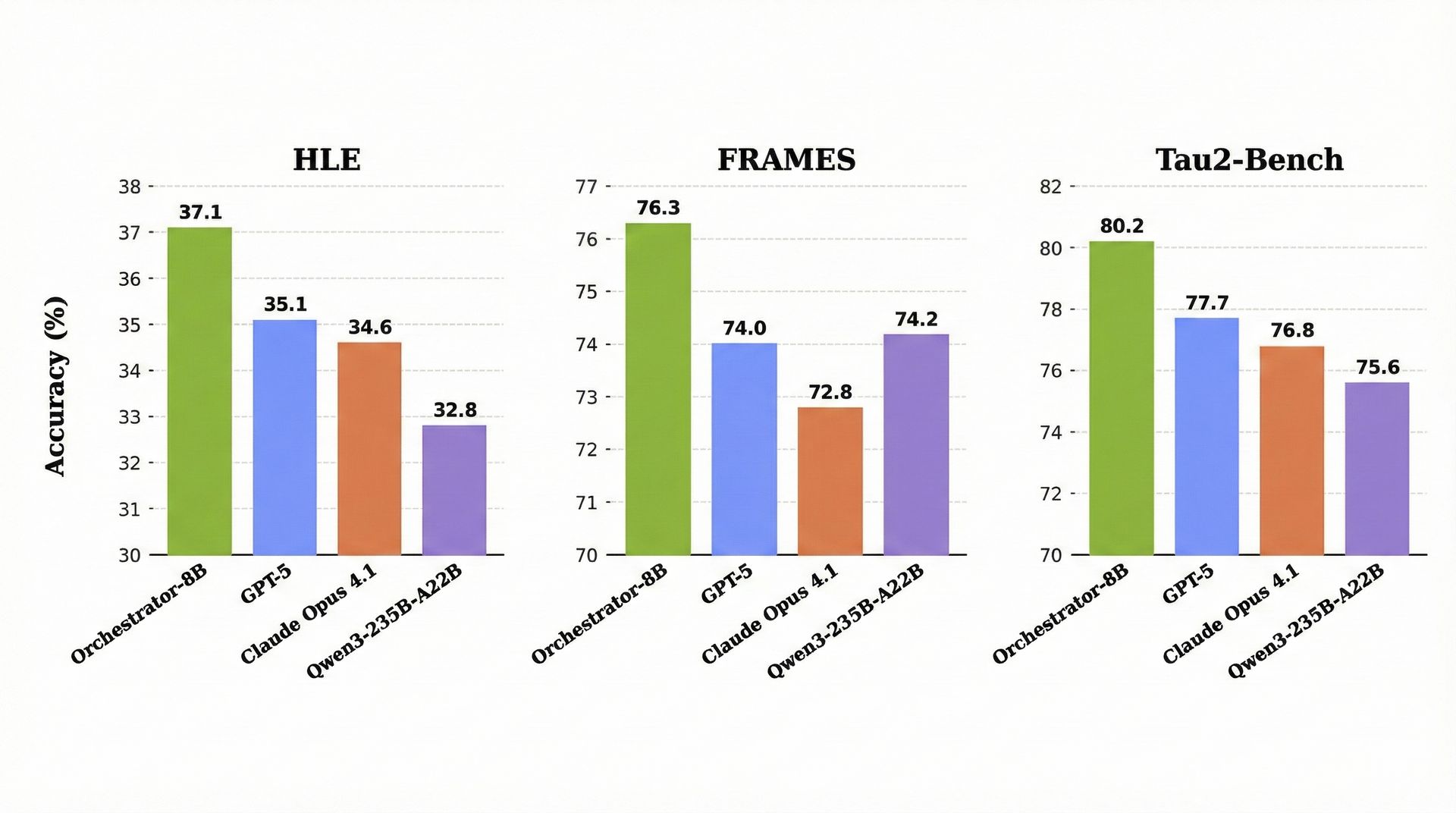
NVIDIA, in collaboration with the University of Hong Kong, introduced ToolOrchestra, a novel AI training framework that challenges the prevailing “bigger is better” mindset by focusing on intelligent orchestration over sheer scale.
- ToolOrchestra trains a compact “orchestrator” model that dynamically decides when to process internally and when to delegate tasks to specialized tools or models.
- An 8-billion parameter model trained with this approach outperformed GPT-5 and Claude Opus 4.1 on Humanity’s Last Exam, achieving a 37.1% score while being 2.5 times more efficient and faster.
- The orchestrator demonstrated adaptability to new, unseen tools, highlighting its flexibility in evolving AI ecosystems.
- Unlike previous agents that over-relied on the most powerful and costly models, ToolOrchestra optimizes resource use by selectively engaging tools based on task requirements.
This research aligns with recent insights from AI thought leaders, suggesting that future breakthroughs may come from smarter coordination of smaller models rather than ever-larger monolithic systems. The ability to orchestrate diverse AI components efficiently could define the next frontier in artificial intelligence.
Quick AI News & Updates
- 🛍️ An AI-powered shopping assistant now includes virtual try-on features for a seamless retail experience.
- 🧠 DeepSeek’s open-source math reasoning model continues to gain traction in academic and research circles.
- 🤖 Character AI launches an engaging interactive platform designed specifically for children’s education and entertainment.
- 🌲 Black Forest Labs debuts a cutting-edge visual intelligence model enhancing image recognition capabilities.
Industry Movements
Jeff Bezos has quietly invested in “Project Prometheus,” a stealth AI startup focused on agentic computing, signaling his renewed interest in AI innovation.
OpenAI faces a legal ruling compelling it to disclose internal communications regarding the deletion of datasets containing allegedly pirated books, potentially strengthening copyright infringement claims.
Perplexity AI has introduced persistent memory features, allowing its assistant to retain user preferences and conversation history for more personalized interactions.
Additionally, Perplexity’s email assistant now supports multi-calendar management, compatible with Gmail and Outlook.
Cohere has expanded its collaboration with SAP, integrating its agentic AI platform, North, into SAP’s Cloud infrastructure and Business Technology Platform.
Alibaba launched Quark AI Glasses in China, smart eyewear powered by proprietary Qwen large language models and the Quark assistant, retailing from 1,899 yuan (approximately $268).
Community Spotlight: AI in Creative Workflows
Each edition, we highlight how readers leverage AI to enhance productivity and creativity. Today, Allen W. from Santa Barbara shares:
“As a songwriter rooted in traditional folk, I write lyrics and then use ChatGPT to adapt them into indie folk style. I provide the lyrics and ask how an indie folk artist might reinterpret them. While ChatGPT offers suggestions on chords and tempo, I focus solely on refining the lyrics.”
How do you integrate AI into your work? Share your story with us.
Further Reading & Resources
Until next time,
Rowan, Joey, Zach, Shubham, and Jennifer – your team behind The Rundown