
Revolutionizing AI: From Pattern Recognition to True Comprehension
An innovative AI startup is pioneering what it calls “reasoning-native computing,” a transformative approach designed to enable machines to genuinely understand information rather than merely imitate patterns. This advancement promises to elevate artificial intelligence from simple pattern matching to authentic cognitive processing, allowing systems to think critically and make informed decisions-essentially bringing AI closer to human-like reasoning.
Addressing the ‘Twin Trap’ Hindering AI Progress
Gerard Rego, Chairman of the company, highlights a fundamental challenge they refer to as the ‘twin trap’-two core issues that currently restrict AI systems from achieving stability, efficiency, and true intelligence, even at scale.
Outdated Numerical Foundations: The First Trap
The first obstacle lies in the mathematical underpinnings of today’s AI, which rely on legacy numerical methods such as floating-point arithmetic. Originally developed decades ago to optimize speed for applications like gaming and graphics, these methods lack the precision and consistency required for dependable AI operations.
Each computational step introduces minute rounding errors that accumulate, resulting in non-deterministic outcomes. Consequently, running the same AI model multiple times can yield varying results, undermining reproducibility and trustworthiness. This unpredictability poses significant challenges in critical sectors such as healthcare, finance, and legal systems, where transparent and verifiable AI decisions are paramount. When AI outputs cannot be reliably explained or validated, they are often dismissed as ‘hallucinations’-a term reflecting their absence of provable accuracy.
This precision deficit creates an invisible barrier that limits AI’s performance, inflates operational costs, and wastes energy on correcting computational noise. In fact, recent studies estimate that data centers powering AI consume nearly 1% of global electricity, underscoring the urgency of more efficient computing methods.
Architectural Limitations: The Second Trap
The second challenge is architectural. Current AI models operate without true memory or reasoning capabilities. They function by predicting the next token or frame based solely on statistical patterns, akin to an advanced form of predictive text. However, these models do not retain the rationale behind their predictions, nor can they revisit or refine their decision-making processes. This means AI systems simulate reasoning without genuinely understanding the logic that leads to their conclusions.
Building a New Paradigm: The Team and Technology Behind the Breakthrough
Counterintuitive has assembled a multidisciplinary team of mathematicians, computer scientists, physicists, and engineers-experts from top-tier research institutions and technology firms-dedicated to overcoming the twin trap. With over 80 patents pending, their innovations span deterministic reasoning hardware, causal memory architectures, and novel software frameworks aimed at establishing a new era of computing grounded in authentic reasoning rather than mimicry.
The Artificial Reasoning Unit (ARU): A Leap Beyond Traditional Processors
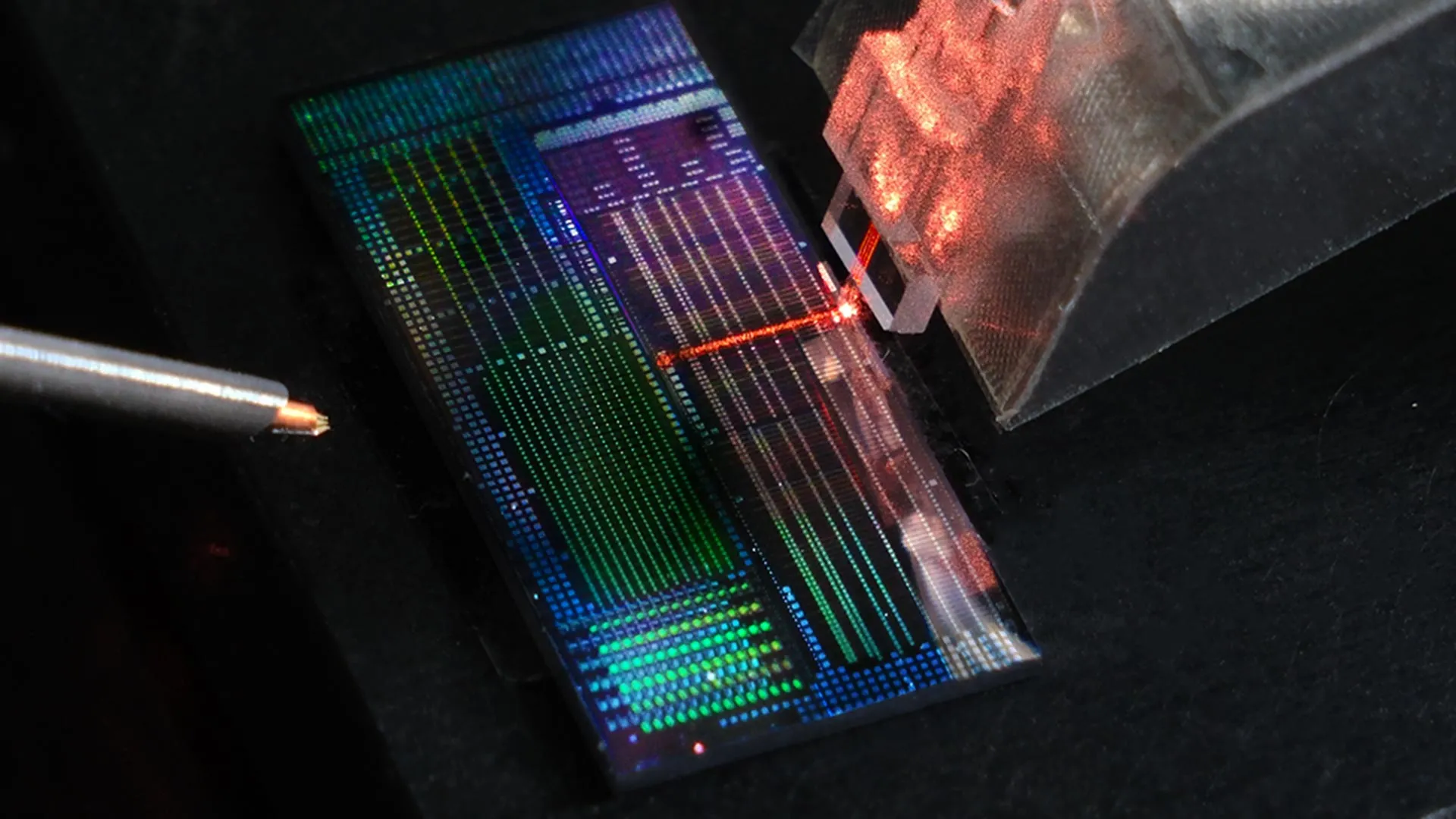
At the heart of this revolution is the company’s Artificial Reasoning Unit (ARU), a fundamentally new computing paradigm that prioritizes memory-driven reasoning and executes causal logic directly in silicon. Unlike conventional GPUs designed for probabilistic computations, the ARU represents a clean break from existing architectures.
Syam Appala, co-founder of the startup, explains, “The ARU is not just a new chip category; it’s a foundational shift that will redefine intelligence by moving from imitation to genuine understanding. This technology will empower critical industries without the need for enormous hardware infrastructures, data centers, or excessive energy consumption.”
Implications for the Future of AI and Industry
By embedding causal logic and memory into both hardware and software, this approach promises AI systems that are more reliable, transparent, and auditable. This marks a significant departure from today’s speed-centric, black-box AI models, offering a pathway toward accountable and explainable artificial intelligence.
Such advancements could revolutionize sectors where trust and precision are vital, including autonomous vehicles, personalized medicine, financial forecasting, and legal analytics, enabling AI to make decisions that are not only fast but also verifiable and grounded in true understanding.