Presented by Celonis
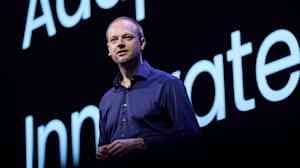
Following a year filled with ambitious claims about “AI transformation” in corporate boardrooms, this week marked a pivotal moment where business leaders convened to discuss practical, proven AI implementations. During his keynote address, Celonis co-founder and co-CEO Alexander Rinke set a clear agenda:
“Currently, only 11% of organizations report tangible benefits from their AI initiatives,” he stated. “This isn’t an issue of adoption-it’s a problem of context.”
This insight resonates deeply with those who have attempted to integrate AI within complex enterprises. The fundamental challenge remains: automation cannot succeed without a comprehensive understanding of existing workflows, yet most companies still lack a cohesive view of how their operations truly function.
Celonis’ solution, highlighted throughout their annual event, shifts focus away from buzzwords and new technologies toward the essential “connective tissue” that integrates AI into the dynamic, often chaotic processes that underpin business activities. The company calls this achieving a genuine “Return on AI (ROAI),” emphasizing measurable outcomes that arise only when AI is embedded within the real context of business processes.
Creating a Dynamic Digital Twin of Enterprise Operations
Central to Rinke’s keynote was the concept of a “living digital twin” of an organization’s operations-a continuously updated, accurate model of how work flows through the enterprise. While Celonis has been developing this vision for years, this event showcased significant advancements in its realization.
“Our approach begins by liberating processes from the constraints imposed by legacy systems,” Rinke explained. Celonis’ data infrastructure extracts raw data directly from source systems, capable of querying billions of records almost in real time with refresh rates under a minute. This capability extends visibility far beyond traditional record-keeping systems.
At the core of the Celonis Platform lies the Process Intelligence Graph, a system-agnostic, graph-based model that consolidates data from diverse sources-including applications, devices, and task mining tools that track user interactions like clicks and spreadsheet usage. This data is enriched with business context such as rules, KPIs, benchmarks, and exceptions, creating a living replica of the organization’s actual operations.
Built atop this foundation, the new Build Experience empowers companies to analyze, design, and manage AI-driven, modular processes. This platform enables:
- Identification of bottlenecks and repetitive tasks within workflows
- Designing future process states with defined outcomes, safeguards, and AI integration points
- Coordinated operation where humans, systems, and AI agents collaborate seamlessly-facilitated by a generally available orchestration layer that manages and monitors every step in a unified flow
This represents a strategic move from exploratory AI pilots toward outcome-focused AI operations, establishing a framework where human teams, software systems, and autonomous agents work in harmony through shared process understanding rather than isolated silos.
Demonstrated Success: Insights from Mercedes-Benz, Vinmar, and Uniper
The Celosphere stage featured compelling case studies illustrating the Celonis Platform’s impact in real-world scenarios.
Mercedes-Benz’s Dr. Jörg Burzer, Member of the Board of Management, described how process intelligence became the “connective tissue” during the semiconductor shortage. “We had data scattered across plants, suppliers, and logistics,” he recalled. “What we lacked was a unified view. Celonis enabled us to connect these dots quickly enough to respond effectively.”
Since then, the partnership has expanded to cover eight of Mercedes-Benz’s ten most critical processes, spanning supply chain management, quality control, and after-sales service. Beyond scale, Burzer emphasized the cultural transformation: “When you present data in context and allow teams to visualize processes, you don’t just transform processes-you transform people.”
At Vinmar, CEO Vishal Baid highlighted Celonis as “the cornerstone of our automation and AI strategy.” His global plastics distribution company automated its entire order-to-cash cycle for a $3 billion business unit, achieving a 40% increase in productivity. Baid is now focusing on more complex challenges: “Matching purchase and sales orders seems straightforward until you encounter thousands of exceptions. We’re developing an AI agent to handle these intelligently-this is the next frontier.”
In the energy sector, Uniper, in collaboration with Microsoft, demonstrated how process-aware AI copilots are revolutionizing operations. Leveraging Celonis and Microsoft’s AI technologies, Uniper predicts maintenance needs for hydropower plants and optimizes scheduling to minimize downtime and reduce emissions.
“Every technician, part, and system is part of a living process,” said Hans Berg, Uniper’s CIO. “Humans can’t perceive all of it, but process intelligence can-and it guides the system toward optimal outcomes.”
Agnes Heftberger, CVP & CEO of Microsoft Germany & Austria, who joined Berg on stage, summarized the challenge succinctly: “The difficulty isn’t in creating AI features-it’s in scaling them responsibly. Success requires integrating intelligence with the company’s core: its processes.”
With over 120 certified value champions worldwide, Celonis demonstrates that process intelligence is delivering measurable results well beyond pilot projects. Rinke described these as “early indicators of a true return on AI.”
From Isolated Systems to Integrated, Composable AI
Celosphere 2025 signaled a transition from focusing solely on AI architecture to prioritizing interoperability-moving from defining enterprise AI to enabling it to function seamlessly across organizational boundaries.
Rinke’s vision embraces openness: “Innovation flourishes in open ecosystems.” This philosophy is materializing through enhanced platform integrations with major cloud providers and data platforms, featuring zero-copy, bidirectional lakehouse access that allows customers to query process data in place with minimal latency. Additionally, Celonis announced support for embedding the Process Intelligence Graph directly into agentic AI platforms such as Amazon Bedrock and Microsoft Copilot Studio.
These developments make “composable enterprise AI” a reality, empowering organizations to build and govern AI solutions across diverse ecosystems without vendor lock-in.
Rather than competing over proprietary AI agents, the future lies in agents collaborating through shared context and models that accurately reflect business operations.
“Every vendor is launching their own agent,” Rinke noted. “But these agents are confined to their own ecosystems. Without interoperability, they can’t truly serve your business. Process intelligence bridges that gap.”
This message resonated strongly, especially for companies managing multiple cloud environments, ERPs, and data tools, where composability is not just a convenience but a necessity for survival.
Extending Beyond Business: The Power of Data, Transparency, and Human Agency
The keynote concluded with a profound shift from enterprise technology to human resilience. Nobel Peace Prize laureate and Venezuelan opposition leader María Corina Machado joined via satellite to share how her movement harnessed data, encrypted communication, and civic coordination to expose electoral fraud and mobilize millions.
This powerful example underscored that the same principles-transparency, accountability, and contextual understanding-are vital not only in business but also in democracy.
“Technology can be either a weapon or a liberator,” Machado reflected. “Its impact depends on who controls the context.”
Her remarks resonated deeply with an audience accustomed to discussing data governance and systems, serving as a reminder that context is as much a human concern as a technical one.
Why Celosphere 2025 Was a Turning Point
Celosphere 2025 marked a fundamental shift in enterprise AI-from experimental pilots to results-driven implementations anchored in process intelligence. This evolution was evident in both the enhanced technology stack, including a more robust Data Core, an improved Process Intelligence Graph, and the new Build Experience, and in the underlying philosophy: AI scales effectively only when it reflects the real interactions between people and systems.
Celonis president Carsten Thoma acknowledged that early process mining efforts often “rushed in with discovery” without fully grasping organizational value-a lesson that now informs the company’s pragmatic, value-focused approach to AI.
Rinke captured the essence of this transformation: “We’re not merely automating tasks; we’re creating enterprises capable of instant adaptation, continuous innovation, and ongoing improvement.”