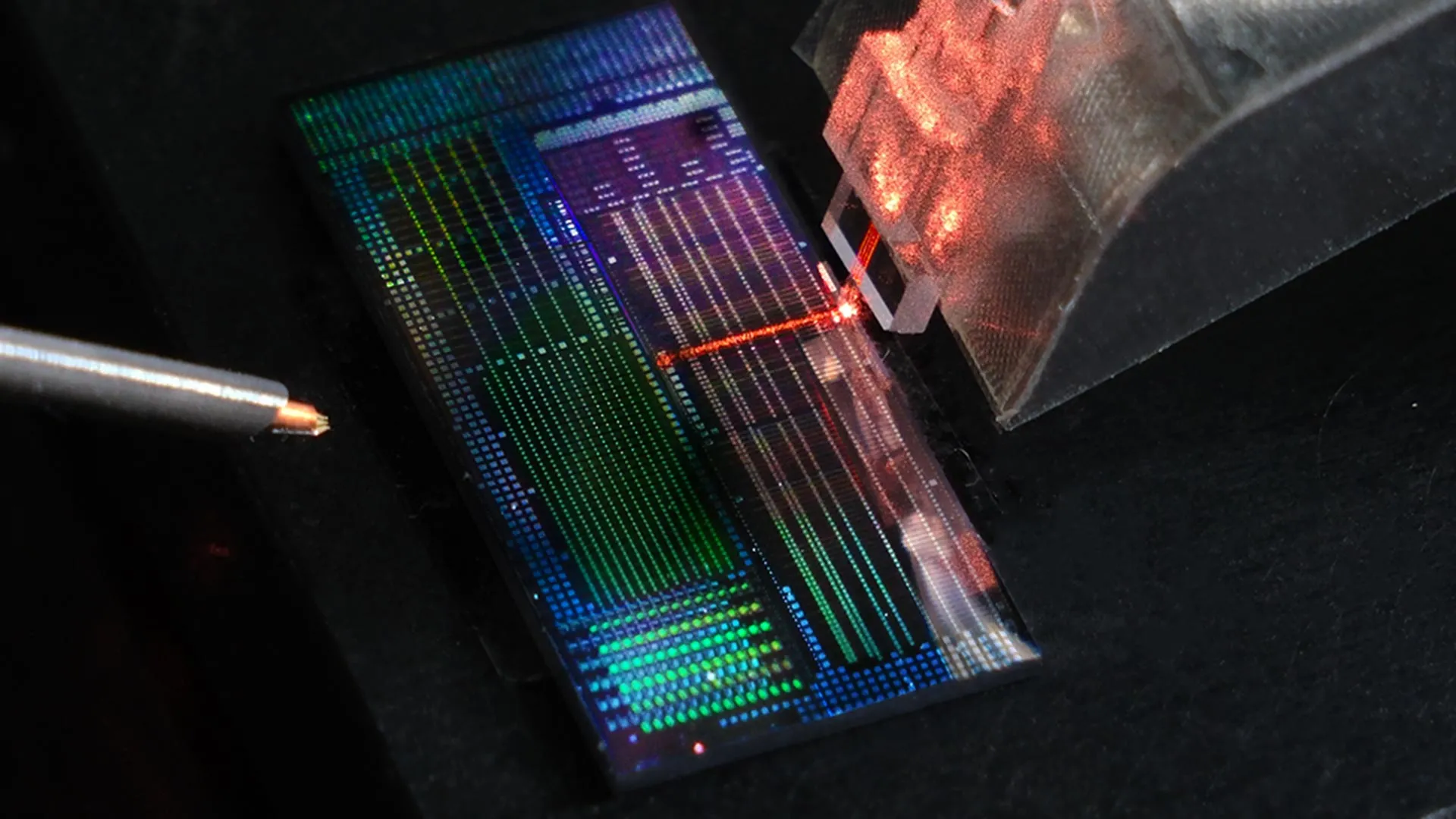
In the rapidly evolving landscape of AI infrastructure, Cisco has emerged as a formidable contender in the race to lead AI data center interconnect technology. The company recently introduced its cutting-edge 8223 routing system, a purpose-built solution engineered to seamlessly connect distributed AI workloads across multiple data centers.
Launched on October 8, Cisco’s 8223 router boasts an unprecedented 51.2 terabits per second (Tbps) fixed routing capacity, positioning it as the industry’s first device tailored specifically for AI-driven data center interconnectivity. Central to this innovation is the Silicon One P200 chip, designed to tackle one of AI’s most pressing challenges: overcoming physical and operational growth constraints within data centers.
Emerging Contenders in the Scale-Across Networking Arena
Cisco’s entry into this market follows significant moves by other industry leaders. Broadcom set the stage in August with its “Jericho 4” StrataDNX switch/router chips, delivering 51.2 Tbps bandwidth and leveraging high-bandwidth memory (HBM) for enhanced packet buffering to mitigate congestion. Shortly thereafter, Nvidia unveiled its Spectrum-XGS ASICs, securing CoreWeave as a key customer, though detailed technical specifications remain limited.
With Cisco now joining the fray, a competitive three-way battle is unfolding among these networking giants, each vying to dominate the scale-across networking segment that is critical for distributed AI workloads.
Why AI Infrastructure Demands Distributed Data Centers
The scale of contemporary AI workloads, such as training expansive language models or executing complex machine learning algorithms, necessitates thousands of high-performance processors operating in unison. This intense computational activity generates substantial heat and consumes vast amounts of power, pushing data centers to their physical and electrical limits.
Martin Lund, Executive Vice President of Cisco’s Common Hardware Group, highlights this challenge: “AI compute is outgrowing the capacity of even the largest data centers, driving the need for reliable, secure connections between facilities separated by hundreds of miles.”
Traditional strategies to increase capacity-scaling up by enhancing individual systems or scaling out by adding more systems within a single facility-are no longer sufficient. Constraints on space, power availability, and cooling capabilities have necessitated a third approach: “scale-across.” This method involves distributing AI workloads across multiple geographically dispersed data centers, which introduces new complexities, particularly in maintaining high-speed, low-latency interconnects.
Limitations of Conventional Routing Solutions
AI workloads generate unique network traffic patterns characterized by intense, bursty data flows during training phases, followed by quieter intervals. Networks that cannot efficiently handle these surges risk bottlenecks that stall GPU clusters, leading to wasted computational resources and increased operational costs.
Most existing routers excel either in raw throughput or in traffic management but rarely balance both while maintaining energy efficiency. For AI data center interconnects, a trifecta of high speed, intelligent buffering, and power efficiency is essential.
Cisco 8223: A Tailored Solution for AI Data Center Connectivity
The Cisco 8223 system breaks away from traditional routing paradigms. Encased in a compact 3RU chassis, it offers 64 ports of 800-gigabit connectivity-the highest density currently available in fixed routing hardware. It can process over 20 billion packets per second and scale interconnect bandwidth up to three exabytes per second, addressing the massive data flows AI workloads demand.
A standout feature is its deep buffering capability, powered by the P200 chip. This buffering acts like a reservoir, temporarily holding data during traffic spikes to prevent congestion and maintain smooth data flow, ensuring GPU clusters remain fully utilized.
Power efficiency is another critical advantage. Despite its routing capabilities, the 8223 achieves “switch-like” power consumption, a vital consideration as data centers grapple with energy constraints.
Additionally, the system supports 800G coherent optics, enabling data center connections spanning distances up to 1,000 kilometers-facilitating the geographic distribution essential for modern AI infrastructure.
Adoption by Industry Leaders and Practical Deployments
Leading hyperscale cloud providers have already integrated Cisco’s Silicon One technology into their networks. Microsoft, an early adopter, leverages this architecture across diverse environments including data centers, wide area networks (WAN), and AI/ML workloads. Dave Maltz, Corporate Vice President of Azure Networking, emphasizes the versatility the common ASIC architecture provides in scaling across multiple roles.
Alibaba Cloud is also expanding its eCore architecture using the P200 chip, aiming to replace traditional chassis-based routers with clusters of P200-powered devices, according to Dennis Cai, Vice President and Head of Network Infrastructure.
Lumen is evaluating the 8223’s potential to enhance network performance and deliver superior services, with CTO Dave Ward noting the company’s interest in integrating Cisco’s latest technology into its infrastructure plans.
Programmability: Ensuring Longevity Amid Rapid Change
AI networking demands are evolving swiftly, with new protocols and standards emerging frequently. Unlike traditional hardware that often requires costly replacements or upgrades, the P200 chip’s programmability allows organizations to adapt to new requirements through software updates, safeguarding their investments against obsolescence.
Robust Security for Distributed AI Networks
Extending data center connections over long distances introduces heightened security risks. The Cisco 8223 addresses these concerns with line-rate encryption employing post-quantum cryptography algorithms, preparing networks for future threats posed by quantum computing. Integration with Cisco’s observability platforms further enhances security by enabling real-time network monitoring and rapid issue resolution.
Evaluating Cisco’s Position in a Competitive Market
While Broadcom and Nvidia have established footholds in the scale-across networking domain, Cisco leverages its extensive experience in enterprise and service provider networks, a mature Silicon One portfolio launched in 2019, and strong partnerships with major hyperscalers.
The 8223 initially supports open-source SONiC, with plans to introduce IOS XR compatibility, and the P200 chip will be deployed across various platforms, including modular systems and the Nexus series. This deployment flexibility offers customers the ability to avoid vendor lock-in while building scalable, distributed AI infrastructures.
Ultimately, the success of Cisco’s approach will depend not only on technical merits but also on the breadth of its software ecosystem, support services, and integration capabilities. As AI systems continue to expand beyond the confines of single data centers, the demand for efficient, scalable interconnect solutions will only intensify.