Sponsored by Solidigm
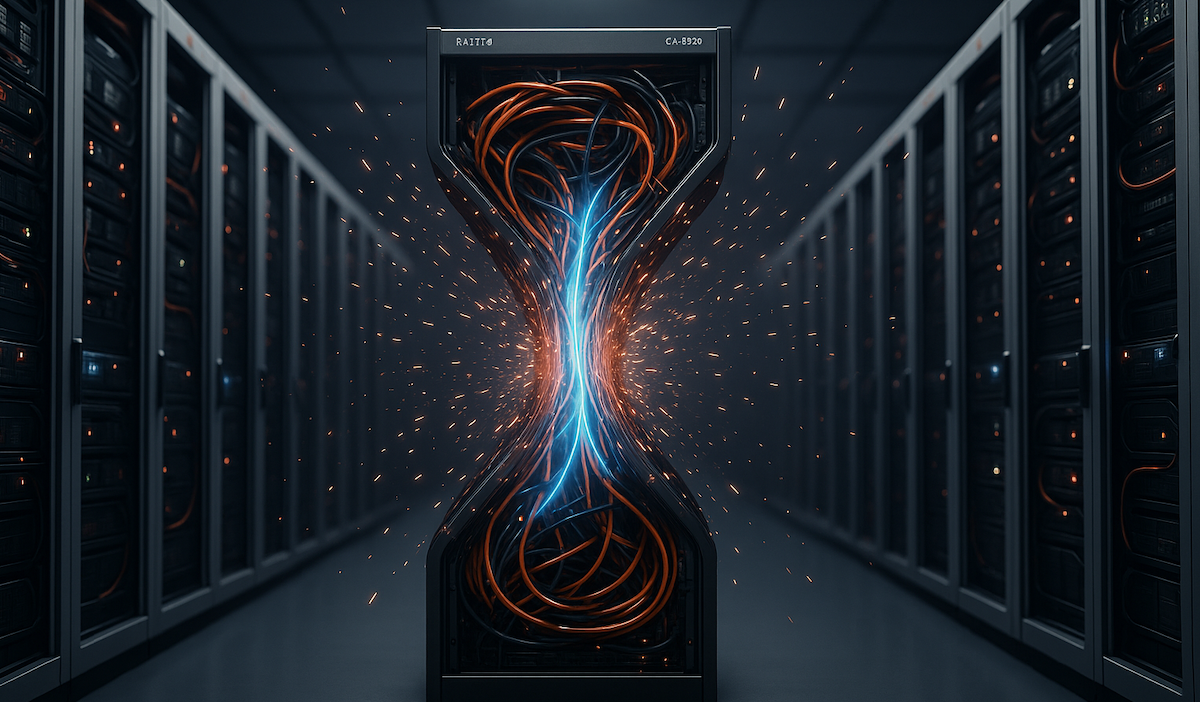
With the rapid expansion of artificial intelligence (AI) adoption, data centers are encountering a significant challenge in storage infrastructure-traditional hard disk drives (HDDs) are increasingly becoming a bottleneck. Data that was once relegated to cold storage archives is now frequently accessed to enhance AI model accuracy and improve inference outcomes. This evolution from cold to warm data necessitates storage solutions that offer low latency and high throughput, capable of supporting parallel processing demands. While HDDs will continue to serve as cost-effective options for cold storage, their role must be reconsidered to prevent the high-capacity storage tier from becoming a limiting factor in AI workflows.
Reevaluating Storage: The Shift from HDDs to High-Capacity SSDs
Jeff Janukowicz, research vice president at IDC, highlights the emerging challenges HDDs face amid modern AI workloads and data center limitations. Although HDD manufacturers are increasing drive capacities, this often results in slower performance, prompting the industry to explore “nearline SSDs” as a viable alternative. AI operators today must optimize GPU utilization, efficiently manage network-attached storage, and scale computing resources-all while minimizing power consumption and physical space. Roger Corell, senior director of AI and leadership marketing at Solidigm, emphasizes that overcoming these challenges requires more than incremental upgrades; it demands a fundamental shift in data infrastructure strategy.
Why High-Capacity SSDs Are Essential for AI
High-capacity solid-state drives (SSDs) offer a transformative solution by combining large storage volumes with superior performance and energy efficiency. Unlike HDDs, which rely on mechanical components such as spinning platters and read/write heads, SSDs use flash memory, enabling faster data access and higher input/output operations per second (IOPS). This is critical for AI applications that require low latency and high concurrency. Moreover, SSDs consume significantly less power and generate less heat, allowing data centers to maximize GPU density within constrained power and space budgets.
Comparing HDDs and SSDs: Performance, Efficiency, and Scalability
HDDs, despite their robust mechanical engineering, inherently suffer from slower data retrieval speeds due to physical seek times. This latency is detrimental to real-time AI inference and training tasks. Additionally, HDDs demand more power and cooling, especially under heavy workloads, which reduces overall efficiency as data transitions from cold to warm states.
In contrast, SSD-based storage solutions, such as those developed by Solidigm in partnership with VAST Data, demonstrate remarkable energy savings. A recent study analyzing exabyte-scale storage-equivalent to one quadrillion bytes-revealed that a VAST SSD solution consumes approximately 77% less energy than comparable HDD configurations over a decade. For context, a single 122TB Solidigm SSD matches the capacity of four 30TB HDDs. When combined with advanced data reduction techniques, the SSD solution requires just 3,738 drives compared to over 40,000 HDDs, drastically reducing power, cooling, and maintenance demands.
Reducing Data Center Footprints and Environmental Impact
Corell notes that deploying 122TB SSDs to leading OEMs and AI cloud providers results in a ninefold reduction in data center footprint compared to hybrid HDD and TLC SSD setups. This space and power efficiency is crucial not only for massive hyperscale facilities-some of which are investing in dedicated nuclear power plants and renewable energy contracts-but also for regional and edge data centers where real estate is limited and costly.
This reduction in physical infrastructure also translates into a smaller environmental footprint. The construction of data centers involves significant use of concrete and steel, materials responsible for over 15% of global greenhouse gas emissions. By minimizing the number of storage bays and associated hardware, high-capacity SSDs can cut embodied emissions by more than 80% relative to HDD-based systems. Furthermore, the end-of-life disposal process benefits from having 90% fewer drives to recycle or discard.
Transforming Cold and Archival Storage Paradigms
The transition to SSDs represents more than a hardware upgrade; it signals a strategic overhaul of data storage approaches in the AI era. While hyperscale operators have traditionally pushed HDDs to their limits-sometimes operating them at near 90% capacity to maximize IOPS per terabyte-they are increasingly adopting all-flash, high-capacity storage infrastructures. This trend is expected to extend beyond AI into sectors like big data analytics and high-performance computing (HPC).
Despite the rise of SSDs, HDDs will maintain a role in scenarios where cost per gigabyte is paramount and real-time access is less critical, such as long-term archival and cold storage. However, as enterprises recognize the value of monetizing data, the volume of warm and warming data-data accessed more frequently-will continue to expand, further driving SSD adoption.
Addressing Future Power and Cooling Challenges
Solidigm’s fourth-generation Quad-Level Cell (QLC) SSD technology has shipped over 122 exabytes globally, striking a balance between high capacity and cost-effectiveness. Corell explains that storage innovation is not merely about capacity but about delivering comprehensive solutions that meet AI’s demanding performance and efficiency requirements.
A notable advancement is the Solidigm D7-PS1010 E1.S drive, the industry’s first enterprise SSD featuring single-sided direct-to-chip liquid cooling. Developed in collaboration with NVIDIA, this drive addresses the dual challenges of thermal management and cost efficiency, making it ideal for next-generation fanless GPU servers.
As data centers increasingly adopt direct-to-chip liquid cooling for critical IT components, power constraints will remain a persistent challenge. Corell advocates for a “neocloud” mindset-designing infrastructure with a focus on maximizing efficiency and scalability. With AI workloads pushing against memory and storage bottlenecks, high-capacity SSDs combined with innovative cooling solutions are becoming indispensable for future-proofing data centers.
Conclusion: Building Scalable AI Storage Infrastructure
The escalating demands of AI necessitate a reimagined storage architecture that prioritizes performance, efficiency, and scalability. High-capacity SSDs are not just replacing HDDs; they are enabling a structural transformation in how data centers support AI workloads. Organizations that embrace this shift today will be better positioned to scale their AI capabilities and maintain competitive advantage in the rapidly evolving digital landscape.