

Amazon’s Strategic Commitment to Agentic AI in Software Engineering
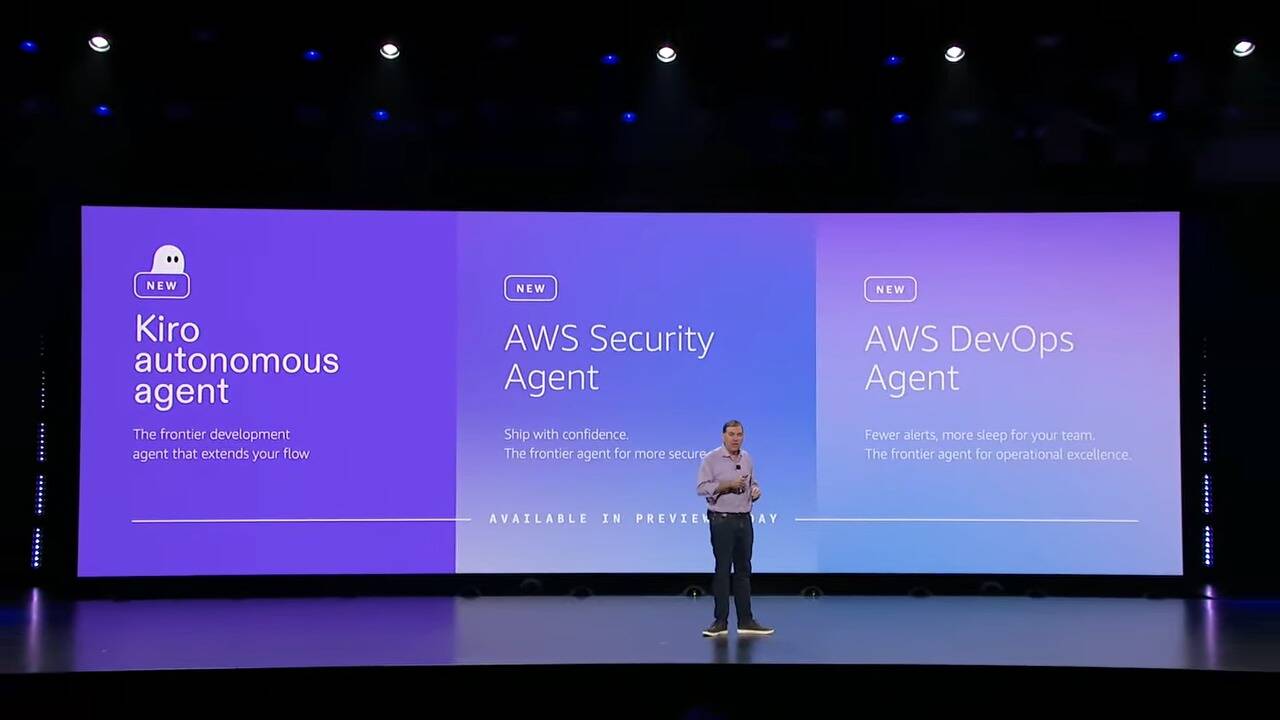
At the recent AWS re:Invent conference in Las Vegas, Amazon unveiled a groundbreaking vision centered on agentic AI designed to revolutionize software development workflows. AWS Chief Matt Garman introduced three pioneering “frontier agents” aimed at transforming coding, DevOps, and security operations through intelligent automation.
Introducing Kiro: The Next-Generation AI-Powered IDE
One of the highlights was Kiro, an AI-integrated development environment crafted to enhance coding productivity while mitigating common AI pitfalls such as unexpected code deletions or database errors. Unlike earlier AI coding assistants, Kiro is engineered to maintain continuous contextual awareness across multiple repositories and development sessions, learning from pull requests and developer feedback in real time.
By automating routine tasks like bug triage and improving test coverage, Kiro aims to free developers from tedious coordination efforts. AWS emphasizes that Kiro operates discreetly in the background, allowing engineers to focus on creative problem-solving without interruption.
Real-World Impact: Dramatic Efficiency Gains
Amazon shared a compelling case study where Kiro accelerated a traditionally 18-month, 30-developer project down to just 76 days with only six engineers involved. Garman highlighted that this leap in efficiency far surpasses the modest 10-20% improvements seen with first-generation AI coding tools, representing a transformative shift in software development productivity.
While initial adoption involved incremental improvements as teams adapted to the tool, the newly introduced frontier agents are positioned as the key to unlocking substantial productivity breakthroughs.
Ensuring Safety and Control: Sandbox Environments and Permission Levels
Recognizing the critical importance of security and control, AWS designed Kiro to operate within sandboxed environments with user-defined permissions. Organizations can tailor the agent’s network access across three tiers: integration-only (e.g., GitHub proxy), access to common package registries like npm, or full internet connectivity. Additionally, users control which environment variables and secrets the agent can access, ensuring sensitive data remains protected.
DevOps Agent: Reducing On-Call Stress Through Intelligent Automation
Another frontier agent focuses on DevOps, aiming to alleviate the pressure on engineers responsible for maintaining system uptime. This agent gains comprehensive visibility into application architectures, codebases, monitoring tools, repositories, and CI/CD pipelines to diagnose issues swiftly.
Internally, AWS reports that this DevOps agent successfully identified root causes in 86% of incidents, although details on the remaining cases remain undisclosed. The agent’s ability to autonomously triage problems could significantly reduce the cognitive load on on-call engineers, though AWS has yet to clarify safeguards against potential mishaps.
Security Agent: Automating Code Validation and Penetration Testing
Complementing the development and operations agents, AWS also introduced a security-focused AI agent capable of performing automated code validation and penetration testing. This tool is designed to proactively identify vulnerabilities and enforce security best practices, streamlining the traditionally manual and time-consuming security review process.
Balancing Optimism with Caution: The Reality of AI in Software Development
Despite the promising capabilities of AWS’s agentic AI suite, industry-wide data suggests caution. Recent studies indicate that AI agents fail to complete basic office tasks correctly approximately 70% of the time, raising concerns about granting them extensive autonomy in critical software environments.
Moreover, while nearly two-thirds of organizations have adopted AI tools for developers, many report minimal productivity gains. Developers often spend significant time verifying AI-generated code, which can offset the intended efficiency benefits.
AWS’s vision for agentic AI represents a bold step forward, but widespread trust and adoption will depend on consistent, reliable performance and robust safeguards. The promise of freeing developers to focus on innovation hinges on these agents delivering tangible, error-free assistance.
Looking Ahead: The Future of AI-Driven Software Development
- Amazon is advancing hardware integration by combining Nvidia’s NVLink with its 4th-generation Trainium accelerators to boost AI performance.
- AWS continues to expand its AI agent ecosystem, signaling a full-speed commitment to autonomous software development tools.
- As AI agents evolve into SaaS offerings, users should anticipate more complex pricing models and service structures.
Ultimately, Amazon’s agentic AI initiative aims to redefine how software is built and maintained, promising unprecedented efficiency gains while emphasizing developer oversight and security. Whether this vision will fully materialize remains to be seen, but the trajectory is clear: AI is becoming an indispensable partner in the software development lifecycle.





