Good morning, AI enthusiasts. Mark Zuckerberg has described smart glasses as the “perfect form factor” for personal AI, and Apple appears to share this vision.
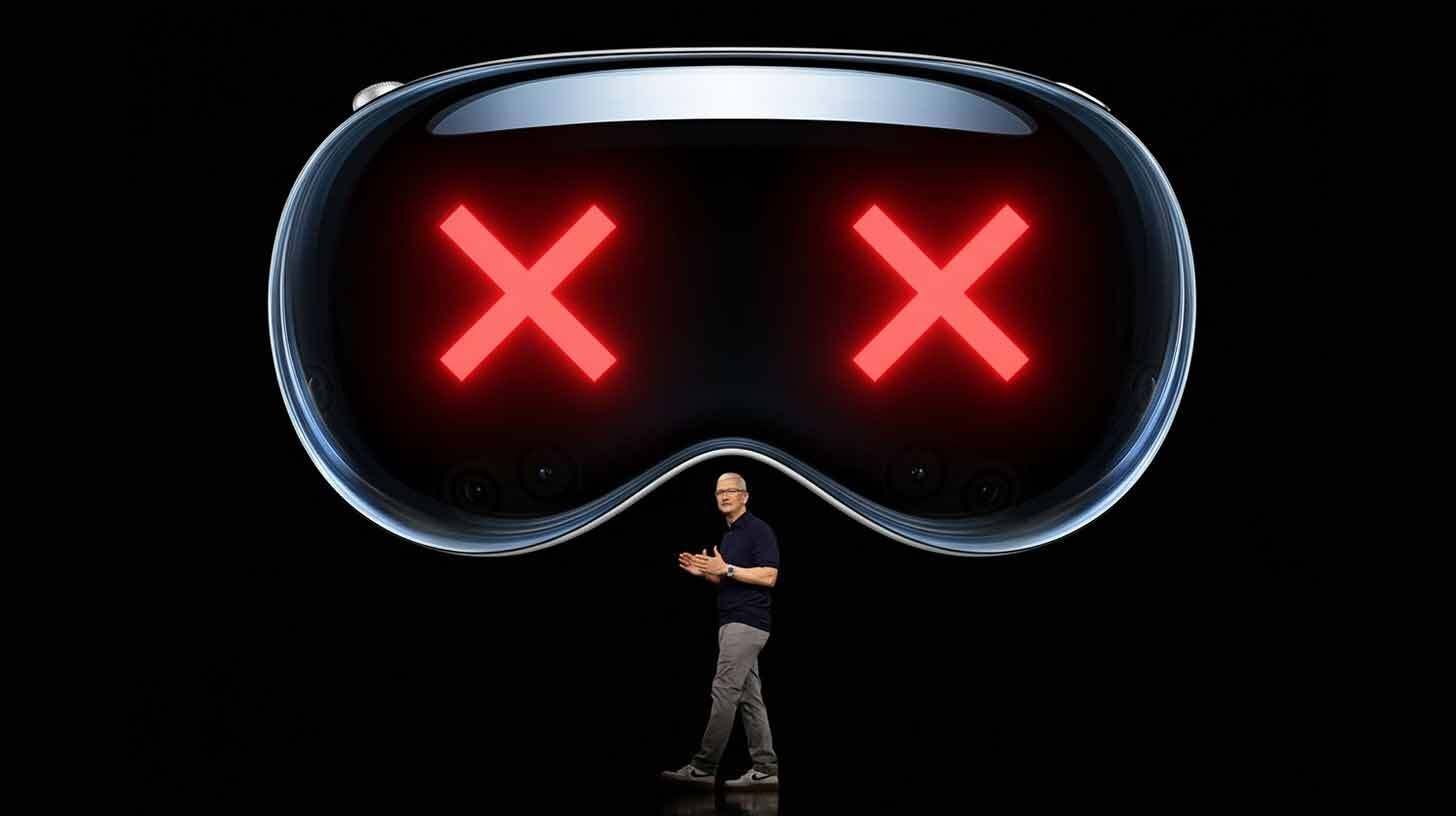
Recent reports reveal that Apple has abandoned its plans to revamp the Vision Pro headset, opting instead to focus on developing AI-powered smart glasses aimed at competing with Meta’s popular Ray-Ban series. However, with Apple facing growing challenges in AI integration, the question remains: can they truly contend in this emerging market?
Today’s AI Highlights:
- Apple enters the smart glasses competition
- Thinking Machines Lab launches its first product
- Create professional headshots effortlessly with Gemini
- Google DeepMind’s AI agent excels in Minecraft through simulation
- Four innovative AI tools, community workflows, and more
Apple’s Strategic Shift Toward AI Smart Glasses


Overview: According to recent insider information, Apple has decided to discontinue its plans for a lighter, more affordable Vision Pro headset expected in 2027. Instead, the company is reallocating resources to accelerate the development of multiple smart glasses prototypes designed to rival Meta’s Ray-Ban lineup.
- One model, anticipated for release in 2027, will connect seamlessly to iPhones and omit a built-in display.
- Another variant will feature an integrated screen, aiming to compete directly with Meta’s Display glasses.
- These devices will emphasize voice commands and AI functionalities, incorporating speakers, cameras, and health monitoring powered by an upgraded Siri.
- Meta recently expanded its smart glasses portfolio with new Display and Neural Band models, an athlete-focused Oakley edition, and the Ray-Ban Gen 2.
Significance: Since its 2023 launch, the Vision Pro has struggled with high costs, bulky design, and limited user adoption, making it less relevant in today’s fast-paced AI landscape. While Meta has carved out a niche in the market, Apple’s success hinges on the effectiveness of its Siri overhaul and the ability to deliver compelling AI wearables.
Thinking Machines Lab Unveils Tinker: Custom AI Model Fine-Tuning Made Simple

Summary: Founded by former OpenAI CTO Mira Murati and a team of leading AI researchers, Thinking Machines Lab has launched Tinker, an API that empowers developers to fine-tune advanced AI models without the burden of managing complex infrastructure.
- Tinker supports both supervised and reinforcement learning fine-tuning on models such as Meta’s Llama and Alibaba’s Qwen.
- Users can adapt these models for specialized tasks like mathematical problem-solving, chemical data analysis, and more, using straightforward coding.
- Prestigious institutions including Princeton, Stanford, and Berkeley are early adopters, leveraging Tinker to create AI systems for scientific research and proof generation.
- The platform is currently accepting free early access applications, with paid subscription plans expected soon.
Why it matters: Building AI models from the ground up demands extensive resources. Tinker’s approach of customizing existing models offers a scalable alternative, enabling organizations to develop highly specialized AI solutions efficiently. Murati and her team believe the future lies in democratizing the creation of niche AI models rather than competing to build the largest general-purpose AI.
Gemini 2.5 Flash: Effortless Professional Headshots from Your Selfies
Overview: This tutorial guides you through transforming a casual selfie into a polished, professional headshot using Gemini 2.5 Flash-no costly photo studio required.
- Visit the Gemini platform and enable the “Create Images” feature at the top of the prompt box.
- Upload your selfie and enter the prompt: “Convert my selfie into a fresh, professional image suitable for social media profiles. Use natural, flattering, multi-dimensional lighting. My head is slightly tilted to avoid stiffness, and the background should resemble a modern, bright office with a soft blur.”
- Evaluate the generated image and refine the prompt as needed, adjusting lighting or background descriptions until satisfied.
- Download your final headshot for use on LinkedIn, resumes, websites, or speaking engagements.
Pro tip: Experiment with different backgrounds such as “cozy café,” “minimalist studio,” or “outdoor park with bokeh” to find the style that best represents your professional brand.
Google DeepMind’s Dreamer 4: Mastering Minecraft Through Mental Simulation

Summary: Researchers at Google DeepMind have developed Dreamer 4, an AI agent that learns to excel at Minecraft by training entirely within a simulated environment. Remarkably, it became the first AI to collect diamonds in Minecraft using only offline data, without interacting with the live game.
- Dreamer 4 operates by practicing in a predictive world model that replicates Minecraft’s physics in real time, processing over 20,000 actions from visual inputs.
- The training process involves stages: learning from gameplay videos, developing decision-making skills, and refining performance through simulated practice.
- The model achieved unprecedented accuracy, completing 14 out of 16 tasks in simulation, outperforming competitors like Oasis, which managed only 5.
- Dreamer 4 surpassed OpenAI’s Minecraft VPT agent while using 100 times less data and outperformed models based on Gemma vision-language architectures.
Importance: While Minecraft remains a popular benchmark for AI research, Dreamer 4’s simulation-based learning approach has broader implications. It paves the way for safer, more efficient training of robotic systems and autonomous agents, reducing reliance on costly and risky real-world testing.
Latest AI Innovations and Industry Updates
- OpenAI introduces a state-of-the-art video generation model, pushing creative boundaries.
- A new open large language model (LLM) enhances reasoning, agentic behavior, and coding capabilities.
- Thinking Machines’ API simplifies fine-tuning of language models for diverse applications.
- Hume AI releases Octave 2, a multilingual text-to-speech system supporting 11 languages with advanced voice conversion and phoneme editing.
- Character AI removes Disney characters like Elsa, Moana, Spider-Man, and Darth Vader following legal action.
- Pew Research Center reports that 9% of U.S. adults now receive news from AI sources, with one-third struggling to verify accuracy and half encountering misinformation.
- Google enhances its visual search in AI Mode, enabling image and text queries across 50 billion product listings for streamlined shopping.
- Zhipu AI launches GLM-4.6, an open-source LLM with a 200,000-token context window, outperforming competitors like Claude Sonnet 4 and DeepSeek-V3.2 in benchmarks.
Community Spotlight: AI in Action
Each edition, we highlight how readers leverage AI to boost productivity and creativity. Today’s feature comes from Cynthia L. in Jupiter, Florida:
“As an instructional designer creating eLearning courses, I’m building my portfolio using AI to generate scripts, quizzes, images, videos, text-to-speech, and visual design briefs covering color schemes, typography, imagery style, iconography, layout, and interface elements. While I still assemble the courses myself, AI saves me countless hours of work!”
How are you integrating AI into your workflow? Share your story with us.
Upcoming Resources and Events
- Explore our previous AI newsletter for more insights.
- Catch up on the latest in technology and robotics newsletters.
- Discover today’s curated AI tool guide.
- Reserve your spot for our next interactive workshop, happening Friday at 4 PM EST.
Looking forward to connecting soon,
Rowan, Joey, Zach, Shubham, and Jennifer – your team behind The Rundown