As artificial intelligence agents advance beyond basic chatbot functionalities, innovative design methodologies have surfaced to enhance their intelligence, flexibility, and autonomy. These agentic design frameworks dictate how AI agents reason, act, and collaborate to tackle intricate challenges in practical environments. Whether it involves logical problem-solving, coding and execution, interfacing with external resources, or self-assessment, each pattern embodies a unique strategy for developing more sophisticated and self-reliant AI systems. Below are five essential agentic design patterns that every AI developer should be familiar with.
Reasoning and Acting (ReAct) Agents
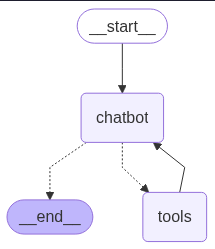
ReAct agents operate on a framework that integrates deliberate reasoning with proactive actions, enabling them to think through problems methodically while utilizing external tools when necessary. Unlike rigid rule-based systems, these agents engage in a continuous loop of contemplation, action, and observation, adapting their approach based on new information.
This process mirrors human problem-solving: for instance, when organizing a weekend trip, you might first consider your budget (reasoning), then check available transportation options (action), and finally adjust your plans based on ticket prices or schedules (observation). Similarly, ReAct agents alternate between cognitive steps and tool usage to navigate complex tasks effectively.
The architecture of a ReAct agent includes access to multiple tools, with the agent autonomously deciding when to invoke them. Conditional pathways allow the agent to selectively engage tools only when deemed beneficial, ensuring efficient and context-aware problem resolution.
CodeAct Agents: Intelligent Coding Assistants
CodeAct agents are specialized AI systems capable of interpreting natural language commands to generate, execute, and iteratively refine code. This dynamic capability allows them to address multifaceted programming challenges with precision and adaptability.
Key functionalities of CodeAct agents include:
- Translating user instructions into executable code
- Running code within secure, sandboxed environments
- Analyzing execution outcomes to detect errors or inefficiencies
- Refining code based on feedback to optimize performance
These agents rely on an integrated ecosystem comprising a controlled execution environment, workflow orchestration, prompt engineering, and memory modules to maintain context and reliability. For example, a CodeAct agent might process a request to automate data analysis by selecting appropriate libraries, executing scripts in a Linux sandbox, and iterating until the desired output is achieved, before delivering the final results to the user.
Self-Reflective Agents: Learning Through Introspection
Self-reflective agents possess the ability to critically assess their own outputs, identify flaws, and enhance their responses through iterative self-improvement. This cyclical process resembles human learning, where feedback and reflection lead to progressively better results.
The workflow typically involves generating an initial response-be it text, code, or other content-followed by a thorough evaluation phase where the agent detects inconsistencies or errors. Leveraging expert-level reasoning, the agent then revises its output, repeating this loop until the quality meets or exceeds predefined standards.
Such agents are particularly valuable in scenarios requiring high accuracy and reliability, such as drafting legal documents or debugging complex software, where iterative refinement significantly boosts trustworthiness and effectiveness.
Collaborative Multi-Agent Systems
Multi-agent systems distribute complex tasks among a network of specialized agents, each dedicated to a particular function. This division of labor enhances efficiency and accuracy by allowing agents to focus on their strengths rather than overburdening a single entity.
Advantages of this approach include:
- Tailored prompts and instructions for each agent, enabling the use of fine-tuned language models optimized for specific tasks
- Independent evaluation and improvement of individual agents without disrupting the entire system
- Scalable and modular workflows that can adapt to evolving requirements
For instance, a multi-agent system designed for content creation might assign research to one agent, drafting to another, and quality review to a third, synthesizing their outputs into a polished final product. This parallel processing model accelerates task completion while maintaining high standards.
Agentic Retrieval-Augmented Generation (Agentic RAG)
Agentic RAG represents an evolution in information retrieval and response generation by incorporating autonomous agents that actively seek, evaluate, and remember relevant data to produce contextually rich answers. Unlike traditional RAG systems that rely on static retrieval followed by generation, Agentic RAG dynamically manages both processes for enhanced performance.
The system architecture is composed of three integral components:
- Retrieval Module: Employs advanced indexing and query techniques, such as BM25 or dense vector embeddings, to extract pertinent information from extensive knowledge bases.
- Generation Model: Utilizes fine-tuned large language models that transform retrieved data into meaningful embeddings, apply attention mechanisms to highlight critical details, and generate coherent, fluent responses.
- Agent Coordination Layer: Orchestrates the interaction between retrieval and generation, enabling context-aware decision-making and memory retention for future queries.
This synergy allows Agentic RAG systems to deliver more accurate, relevant, and context-sensitive outputs compared to conventional retrieval-augmented models, making them ideal for applications like customer support, research assistance, and dynamic knowledge management.