
The “Big, Beautiful Bill”which President Donald Trump signed on July 4, was full of controversial policies: increased funding for ICE, a reduction in tax credits for vehicles and clean energy, just to name a few. One highly contested provision was absent. In a late-night vote, the Senate had just days earlier killed the bill’s 10-year ban on state-level AI regulations.
Scott Wiener, California state senator, and author of SB 1047 – a bill which would have held companies responsible for damages caused by large AI models – says, “We really dodged the bullet.” Wiener now works to pass SB 53 which provides whistleblower protections to employees of AI companies. He says that if the federal AI regulation ban had passed, this bill would have likely been dead.
A moratorium could have also killed laws already adopted across the country. These include a Colorado law that targets discrimination based on algorithm, laws in Utah, California, and other legislation aimed at preserving data privacy, and keeping children safe online. OpenAI and Senator Ted Cruz are among the supporters of the moratorium. They claim that a “patchwork of state-level regulation” would place undue pressure on technology companies and stymie their innovation. They argue that federal regulation is the best approach, but there is no federal AI regulation currently in place.
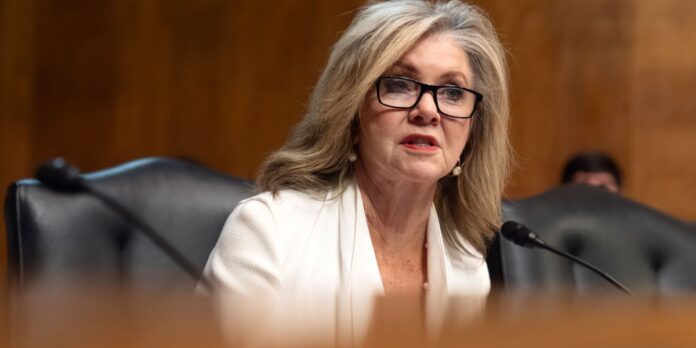
Wiener, and other state legislators can now get back into writing and passing AI policies, at least temporarily–with a tailwind of a significant moral victory on their backs. The effort to defeat the moratorium had a bipartisan nature: forty state attorneys general, along with over 250 Republican and Democratic legislators, signed a letter opposing the measure. While congressional Democrats were united in their opposition to the moratorium, Senator Marsha Blackburn, a Tea Party conservative who is a Trump ally, pulled out of a deal with Cruz in the eleventh-hour.
It’s possible that the moratorium fight signaled a larger political shift. “In the past few months, a much wider and more diverse coalition has formed in support of AI regulations generally,” says Amba KAK, co-executive Director of the AI Now Institute. After years of relative inaction by politicians, they are now concerned about the risks posed by unregulated artificial intelligent.
There’s a strong argument that the moratorium was defeated due to a number of factors. Blackburn’s motivations appear to be primarily centered around concerns about the safety of children online and the rights that country musicians have to control their likenesses. State lawmakers were also astonished by the federal government trying to undermine legislation they had already passed.
And despite powerful technology firms like Andreessen Horowitz, and OpenAI According to reports, the Trump administration and allies lobbied for the moratorium. However, it may not have been worth the effort to continue pushing for it–at the expense of tax cuts and entitlement reductions. Baobao Zhang is an associate professor of Political Science at Syracuse University. She says that the Trump administration was willing to give up the moratorium to get the rest of the bill passed by the self-imposed Independence Day deadline. Andreessen Horowitz has not responded to a comment request. OpenAI stated that it was against a state by state approach to AI regulation, but did not answer specific questions about the moratorium being defeated.
The moratorium’s broad scope, as well as the decade-long duration of the moratorium, almost certainly helped opponents to marshal a diverse alliance on their side. This breadth is not accidental–it’s directly related to AI’s nature. Blackburn, who represents Nashville country musicians, and Wiener who represents San Francisco software developers, both have a common interest in AI regulation. This is because AI, as a powerful tool with a wide range of applications, has the potential to impact so many peoples’ well-being and livelihood. Kak says that “there are real anxieties” that affect people of all classes. “It creates a sense of solidarity that perhaps didn’t exist previously.”
Faced by outspoken advocates, worried constituents, and the constant buzz about AI discourse, politicians on both sides of aisle are beginning to argue for AI to be taken seriously. Marjorie Taylor Greene was one of the most prominent voices against the moratorium. She voted for a version of the bill that contained the moratorium, but later admitted she hadn’t thoroughly read it and committed to oppose the moratorium going forward. She posted that last month: “We don’t know what AI will be able to do in the next ten years.”
Two weeks ago, Pete Buttigieg’s Transportation Secretary, President Biden, published a Substack article titled “We are Still Underreacting to AI.” “The Terms of What it Is Like to Be a Human Are About to Change in Ways that Rival the Transformations of the Enlightenment and the Industrial Revolution – Only Much More Quickly,” he wrote.
Wiener noticed a change among his peers. “More policymakers are realizing that we cannot ignore this,” says Wiener. Regulation opponents aren’t going to give up their fight, but awareness is a few steps short of effective legislation. Cruz has said that he plans to introduce his anti-regulation bill. According to reports, the Trump administration is preparing a list of executive actions designed for more energy to be available for AI deployment and training.
In the meantime, those who support regulation will have to figure out a way to convert the opposition to the moratorium to support for specific policies. It won’t come easy. Kak says, “It is easy for us to all agree on what we do not want.” “The harder question is what is it that we do want?”

