
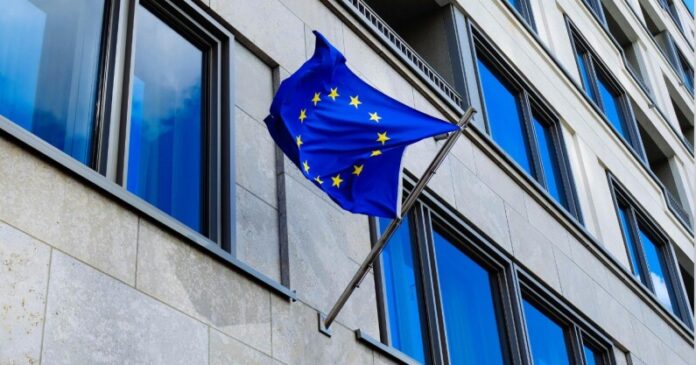
This is my concern. In its eagerness to pass the first major piece AI regulation, the European Commission is missing the forest for the trees. Yes, we do need guardrails. Yes, AI must be ethical and human centered. Yes, AI can be powerful. And powerful technologies tend to develop in unpredictable ways. Yes, less regulation will lead to more AI deployment and therefore more energy consumption. But the AI Act remains a mistake.
AI will first make industries more efficient and reduce emissions for years to follow. Jensen Huang, Nvidia’s pointed outthat AI models are far more efficient than traditional computing methods once they are created. A weather AI model, for example, can forecast more than 1,000 times better than conventional techniques. The energy invested in AI will be repaid with the change that comes from reusing the model.
Thanks to recent developments in AI such as the creations of increasingly sophisticated large-language models (LLMs), and remote sensing foundation models (RSFMs), it only takes hours to analyze data that used to take days. In my line, this means near-real time analysis of satellite images, which allows us to do extraordinary feats like predict wildfires and floods, enabling cost savings, and in the hands the emergency services could even prevent loss of life.
As my colleagues at BNP, AXA and Siemens have argued persuasively, the real concern with the AI Act, is that it could impede our ability to compete in the most important technological field of the world. Do not believe that the world powers have the same concerns as we do in Europe about this. They will race into the future as they have done in other critical areas like space and create a huge distance, making it exponentially harder for us catch up. It’s not what we want: Europe is awash in world-class talent, eager to make Europe an AI superpower. There is also a lack in clarity. Startup founders are rightfully concerned about the regulation of general-purpose AI models. What if different rules are applied in different member countries? Will it be easier for large, wealthy US tech firms to navigate these than smaller companies whose pockets may not be as deep? The fear of breaking rules and facing heavy penalties could discourage startups from developing AI. This is the last thing that we want. They’re best placed to break things and move quickly.
This defence is as strong as economic arguments. As the global balance of power shifts, Europe is acutely aware that it needs to rearm. Anyone in the defence industry will emphasize the role data, software and technological innovation plays in conflict today. AI is a part of this. We run the risk of sabotaging our efforts to create a modern fighting force that can protect European interests and values and keep peace on the continent. AI is not a single sector of the global economy. It will soon be a technology that underpins almost all sectors.
No, I am not against AI regulations in any shape or form. I signed the letter because I think we are being too hasty and putting our soft power, economic security and technological sophistication as well as our military strength at risk by our eagerness to regulate.

