
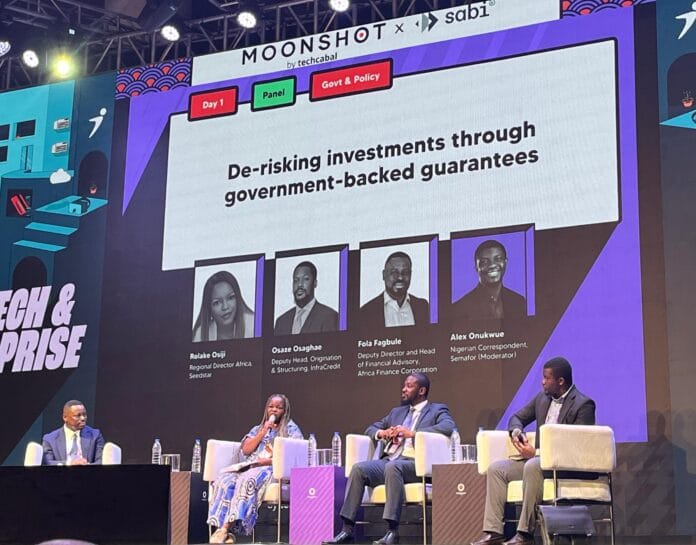
Addressing Africa’s Investment Landscape: Overcoming Risk Perceptions to Unlock Infrastructure Growth
The core challenge facing investment in Africa is not a shortage of opportunities but rather the widespread perception of risk. During a recent panel discussion held on Wednesday, October 15th, experts explored how government-backed guarantees could revolutionize Africa’s infrastructure financing and reshape the impact investing ecosystem.
Local Currency Financing: Navigating Inflation and Currency Risks
Fola Fagbule, Deputy Director of Financial Advisory at Africa Finance Corporation (AFC), highlighted the complexities of funding infrastructure projects in local currencies. “Inflationary pressures make it challenging to conduct business using domestic currency,” she explained. To mitigate this, governments and major financial institutions offer guarantees that enhance the attractiveness of investments for foreign capital. When strategically deployed, these guarantees serve as powerful tools to reduce perceived risks and improve investor confidence.
De-Risking Mechanisms: Unlocking Institutional Capital
Despite the abundance of viable projects in sectors like infrastructure, energy, and technology, institutional investors remain hesitant. This reluctance stems not from project feasibility but from risk aversion. Innovative de-risking strategies and blended finance models are essential to bridge this gap. Instead of governments shouldering the entire financial burden, guarantee frameworks enable institutions to absorb specific risks-such as political instability, currency volatility, and regulatory uncertainties-that private investors find difficult to manage. This risk-sharing approach encourages participation from investors who might otherwise stay on the sidelines.
Local Funding and Long-Term Infrastructure Sustainability
Osaze Osaghae, Deputy Head of Origination and Structure at InfraCredit, emphasized the importance of domestic funding sources amid Nigeria’s volatile macroeconomic environment. “Infrastructure projects funded by local investors tend to be more sustainable,” he noted. Many projects, including railways, generate revenue in Nigerian Naira and often require a decade or more before yielding returns. Therefore, the presence of guarantors willing to assume risk is crucial to facilitate access to debt capital markets for these long-term ventures.
Building Trust Through Transparency and Impact Measurement
Panelists also underscored the vital role of transparency and trust in attracting investment. Rolake Osiji, Regional Director for Africa at Seedstars, pointed out that many blended finance instruments-such as concessional loans and results-based financing-are tied to clearly defined social impact metrics. “For catalytic capital from development finance institutions, accurate and transparent impact data is essential,” she said. Demonstrating measurable outcomes not only validates the social value of projects but also draws serious investors committed to sustainable development.
Looking Ahead: The Future of Infrastructure Investment in Africa
As Africa continues to urbanize rapidly-with the continent’s urban population expected to double by 2050-there is an urgent need for robust infrastructure development. Innovative financial instruments, including government guarantees and blended finance, will play a pivotal role in mobilizing the estimated $130 billion annual investment required. By addressing risk perceptions and fostering transparency, Africa can unlock the vast potential of its infrastructure and technology sectors, driving inclusive economic growth across the continent.

