
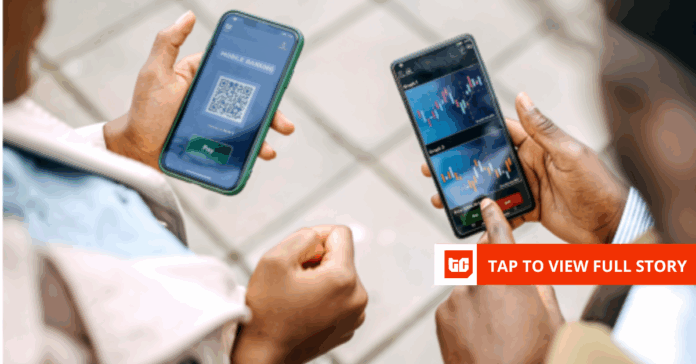
Bridging Mobile Money and Traditional Banking in Africa
Standard Bank, South Africa’s foremost financial institution, advocates for the seamless integration of mobile money platforms with conventional banking systems. This fusion promises to revolutionize payment processes by making transactions quicker, more affordable, and widely accessible. Envision a financial ecosystem where funds can be transferred instantly from mobile wallets to bank accounts, reducing reliance on costly intermediaries and aligning financial services with the dynamic lifestyles and income patterns of African consumers.
Current Challenges in African Payment Systems
Traditional money transfer methods across Africa often suffer from delays and inefficiencies. For example, a payment initiated on a Friday might not reflect in the recipient’s account until Monday or Tuesday unless additional fees are paid for expedited processing. Limited banking hours, scarce branch locations, and cumbersome paperwork disproportionately affect gig economy workers and those earning informal incomes, who frequently remain outside the formal banking network. Given Africa’s continuous economic activity, financial services must operate around the clock to meet demand.
Insights from Industry Leaders
In a recent discussion, Nthabiseng Mohale, Head of Interbank and Domestic Payments at Standard Bank, emphasized the necessity of enabling frictionless transactions between mobile money users and traditional bank account holders. She illustrated this with a scenario: “If someone holds funds in a mobile wallet, they should be able to effortlessly send money to a recipient with a conventional bank account. Achieving this level of integration is essential.”
The Mobile Money Revolution and Its Limitations
Mobile money has dramatically transformed financial transactions across sub-Saharan Africa. Projections for 2024 estimate over 80 billion mobile money transactions totaling approximately $1.1 trillion, with Kenya alone accounting for nearly 30 billion transactions. Despite this impressive scale, mobile money systems largely operate in isolation, limiting their full potential.
South Africa’s Distinct Mobile Payment Landscape
Unlike Kenya and Ghana, South Africa’s mobile money adoption has been slower, despite its advanced banking infrastructure, extensive ATM and point-of-sale networks, and high card usage. Regulatory hurdles have also posed significant barriers for new entrants. Nevertheless, the sector is experiencing steady growth, with 3.4 million active mobile money accounts recorded by 2023. This growth is fueled by rapid fintech innovation and concerted efforts to enhance financial inclusion, with platforms like VodaPay and MTN MoMo leading the charge.
Breaking Down Ecosystem Silos
Most mobile money services currently restrict transactions within their own networks. According to industry expert Hero, depositing funds from a mobile wallet into a bank account often requires withdrawing cash or undergoing manual deposit procedures. Banks face similar constraints when transferring funds to mobile wallets. Standard Bank envisions that integrating instant payment systems will enable direct communication between these platforms, allowing users to transfer money effortlessly across wallets and bank accounts alike.
Transformative Benefits for Consumers and the Economy
The integration of mobile money and traditional banking could have profound effects: farmers could receive immediate payments from agribusinesses; gig workers might access wages conveniently at local shops; governments could distribute social grants efficiently and transparently. Importantly, this integration could bring Africa’s estimated 400 million unbanked adults closer to formal financial services, fostering greater economic inclusion.
Collaborative Innovation and Future Outlook
Ali Khan, Head of Structured Payment Solutions at Standard Bank CIB, highlights the potential of partnerships between traditional banks and mobile payment providers to co-develop innovative payment solutions that accelerate financial access for underserved populations. However, challenges such as cybersecurity threats, digital literacy gaps, and inadequate rural connectivity remain obstacles to widespread adoption.
Standard Bank remains optimistic that through the use of APIs, strategic industry collaborations, and supportive regulatory frameworks, Africa can build a payment infrastructure that is inclusive by design, secure, and efficient.
Stay Informed on Africa’s Tech Evolution
Don’t miss Moonshot by TechCabal, returning to Lagos on October 15-16! Join Africa’s top founders, tech innovators, and creatives for two days of inspiring keynotes and networking. Early bird tickets are currently available at a 20% discount-secure yours today!

