
Greetings!
Welcome to Francophone Weekly, your in-depth source for insights into the tech and business landscapes across French-speaking Africa. While previous editions were available online, you can now receive this newsletter directly in your inbox every Tuesday at noon. By default, the newsletter is in French, but you can easily switch to English using the button below.
We value your input! Would you prefer to receive Francophone Weekly in English or French? Share your preference in our quick survey here. Your feedback helps us enhance this newsletter. Thank you!
Rethinking Capital Access: Can Local Stock Exchanges Transform Financing in Africa?
As venture capital slows and liquidity tightens across Africa, the conversation around alternative funding avenues is intensifying. One question gaining traction is whether regional stock exchanges can serve as a viable solution to the continent’s capital access challenges.
Startups and SMEs often face hurdles such as low market liquidity and stringent listing requirements, which discourage public offerings. However, notable successes like the IPO of Optasia, an AI-driven lending fintech serving over 121 million users monthly, highlight the potential of capital markets in Africa.
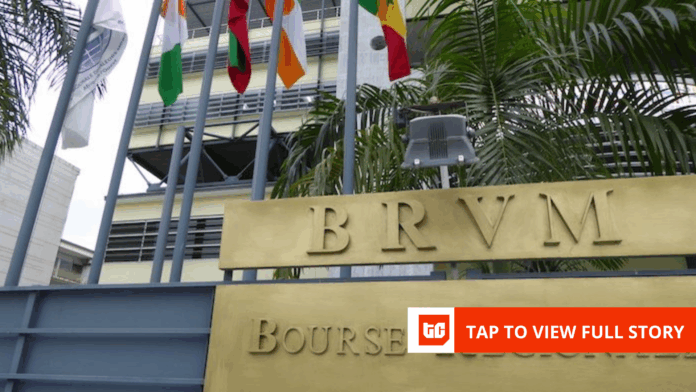
In Francophone Africa, the Bourse Régionale des Valeurs Mobilières (BRVM) is pioneering a unique approach by targeting SMEs and startups that traditionally shy away from public listings. This week, we explore whether this strategy is making headway and what it means for the future of African entrepreneurship.
The Strategic Importance of the BRVM in Today’s Financial Landscape

A recent Ernst & Young (EY) report emphasized the urgent need to revamp the technological ecosystem in French-speaking sub-Saharan Africa to maintain global competitiveness. Meanwhile, the African Private Equity and Venture Capital Association (AVCA) reported in early 2025 that venture debt is surpassing equity as the preferred financing method for African startups, signaling a shift in capital dynamics.
Despite this evolution, systemic challenges persist, including fragmented coordination among incubators, universities, investors, and government bodies, as well as the absence of unified platforms and governance frameworks.
Within this context, the BRVM stands out as a critical institution. Established in 1998 and headquartered in Abidjan, Ivory Coast, the BRVM serves eight West African Economic and Monetary Union (UEMOA) countries-Benin, Burkina Faso, Ivory Coast, Guinea-Bissau, Mali, Niger, Senegal, and Togo-using the CFA franc (XOF). It is one of the few regional stock exchanges globally shared by multiple sovereign states.
The BRVM’s core mission is to facilitate long-term capital access for companies through equity (IPOs, secondary offerings) and debt instruments (corporate bonds), while promoting transparency, sound governance, and regional financial integration. Recently, it has intensified efforts to onboard SMEs and startups, providing them with broader financing opportunities.
Given the scarcity of exit options for African startups-primarily limited to foreign acquisitions-the BRVM’s initiatives, such as the BRVM PME listing program, aim to foster local and regional exit pathways. This could stimulate capital recycling, attract domestic institutional investors, and reduce reliance on external buyers.
BRVM’s Initiatives to Boost SME Market Participation

Determined to empower SMEs, the BRVM has launched several programs designed to ease capital raising and facilitate public listings. Below is an overview of key initiatives aimed at creating IPO opportunities and exit routes for smaller enterprises.
- Third Compartment: A Gateway for SMEs
Introduced in December 2017, this segment offers more lenient listing requirements tailored to SMEs, such as reduced capital thresholds and simplified governance criteria. Despite its promise, the number of IPOs remains below expectations, as many SMEs struggle to meet even these relaxed standards, particularly in areas like financial reporting and corporate governance. - Elite BRVM Lounge: Capacity Building for Market Readiness
Launched about a year after the Third Compartment, this program focuses on preparing SMEs for capital markets by enhancing governance, financial transparency, business planning, and legal compliance. Approximately thirty SMEs have participated, with some raising nearly 22 billion FCFA through private placements and other funding rounds. While the program has driven structural improvements, transitioning from preparation to actual listing remains challenging due to regulatory hurdles and investor skepticism. - Strategic Partnerships to Support SMEs
Noteworthy collaborations include:- BRVM and BADEA (Arab Bank for Economic Development in Africa): Established in October 2024, this partnership focuses on technical assistance, debt market access, and equity financing for SMEs.
- BRVM and CIPME (Côte d’Ivoire SME Agency): This alliance promotes the Third Compartment and strengthens SME capacity through information sharing and training.
These alliances help build a more structured ecosystem, though tangible outcomes in terms of listings and exits remain limited. Funding gaps and low institutional investor engagement continue to impede progress.
- Listing Sponsors: Facilitators of Market Entry
Approved intermediaries such as consulting firms and securities brokers (e.g., Mazars Côte d’Ivoire, Mazars Senegal, FGI) assist SMEs in navigating the admission process to the Third Compartment and beyond. Their expertise mitigates technical and regulatory barriers. However, the cost and availability of these services can deter SMEs, and the perceived credibility of sponsors influences investor confidence. - Regulatory Reforms and Admission Criteria
The BRVM has introduced more flexible admission standards for SMEs, including lower capital requirements and shorter operational histories. The Elite program complements these reforms by promoting better governance and reporting standards. Despite these efforts, many SMEs still find compliance difficult, and the associated costs of audits, legal fees, and management remain prohibitive. Additionally, limited investor appetite and market liquidity for SME shares restrict the attractiveness of public listings.
Looking Ahead: The Road to Broader SME Market Integration
While the journey toward widespread SME participation in the stock market is still in its early stages, the commitment from BRVM leadership is unwavering. Dr. Edoh Kossi Amenounve reaffirmed at the AFIS conference in Morocco (October 2024) that supporting SMEs and startups to access public capital markets remains a top priority.
Overcoming entrenched challenges such as limited shareholder culture, regulatory complexity, and investor confidence will require sustained effort and innovation. However, the potential benefits-enhanced capital access, improved governance, and regional financial integration-make this an endeavor worth pursuing.
Connect with Francophone Africa’s Tech and Business Leaders
Want to reach the key players shaping the French-speaking tech and commercial ecosystem? Advertise in TechCabal’s weekly French-language newsletter and introduce your brand to decision-makers, founders, and business leaders critical to your growth. Ready to get started? Contact us at [email protected].

