
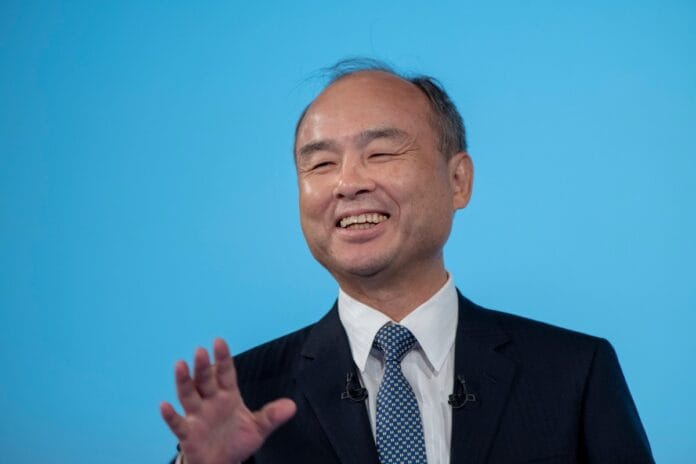
Masayoshi Son’s Bold Moves: A Legacy of High-Stakes Investments
Masayoshi Son, the visionary founder of SoftBank, has never been one to shy away from audacious financial gambles. Throughout his career, he has consistently placed monumental bets, each surpassing the last in scale and ambition.
SoftBank’s Strategic Shift: Exiting Nvidia to Embrace AI
In a surprising yet calculated move, Son recently divested his entire $5.8 billion stake in Nvidia, signaling a full commitment to artificial intelligence ventures. While this decision caught many off guard, it aligns with Son’s history of going “all-in” on transformative technologies. At 68, his willingness to place everything on the line remains undiminished.
From Dot-Com Boom to Alibaba Triumph: A Rollercoaster Journey
Son’s wealth skyrocketed during the late 1990s dot-com boom, peaking at approximately $78 billion, briefly ranking him among the world’s wealthiest individuals. However, the subsequent dot-com crash devastated SoftBank’s market value, plummeting from $180 billion to a mere $2.5 billion-a staggering 98% loss. This collapse wiped out $70 billion of Son’s fortune, marking one of the largest financial setbacks in history.
Amid this turmoil, Son made a legendary move by investing $20 million in Alibaba after a brief six-minute meeting with Jack Ma in 2000. This stake blossomed into a multibillion-dollar asset, underpinning SoftBank’s resurgence. By 2020, Son had raised over $150 billion through his Vision Fund, cementing his status as a titan in venture capital.
Vision Fund and Controversies: Navigating Complex Alliances
In 2017, Son secured $45 billion from Saudi Arabia’s Public Investment Fund to launch the first Vision Fund, a bold step taken before Saudi investments were widely accepted in Silicon Valley. Despite the global backlash following the 2018 murder of journalist Jamal Khashoggi, Son publicly condemned the act but maintained SoftBank’s partnership with Saudi Arabia, emphasizing the importance of managing the kingdom’s capital. This decision allowed the Vision Fund to accelerate its deal-making activities.
High-Profile Setbacks: Uber and WeWork
Not all of Son’s ventures have been successful. His substantial investment in Uber resulted in prolonged paper losses, reflecting the volatile nature of ride-sharing markets. More notably, Son’s infatuation with WeWork’s charismatic founder, Adam Neumann, led to an inflated valuation of $47 billion in early 2019. Despite internal opposition, Son pushed forward with the investment.
WeWork’s planned IPO unraveled after the company’s S-1 filing revealed troubling corporate culture issues, including allegations of sexism. The fallout forced Neumann’s ouster and triggered a series of restructuring efforts. Nevertheless, SoftBank suffered massive losses-$11.5 billion in equity and $2.2 billion in debt-prompting Son to describe the episode as “a blot on my life.”
Recalibrating Focus: Doubling Down on AI Innovation
Son’s ongoing comeback reached a critical juncture with the sale of SoftBank’s 32.1 million Nvidia shares. Rather than diversifying, this move was designed to concentrate resources on emerging AI opportunities, including a planned $30 billion investment in OpenAI and participation in a $1 trillion AI manufacturing initiative in Arizona.
SoftBank’s exit price of $181.58 per Nvidia share was just 14% below the stock’s all-time high of $212.19, underscoring the strategic timing of the sale. This marks SoftBank’s second complete divestment from Nvidia, following a costly initial exit in 2019 when the company sold a $4 billion stake for $3.6 billion. Today, those shares would be worth over $150 billion.
Market Impact and Investor Speculation
The announcement sent Nvidia’s stock down nearly 3% at the time of reporting. Analysts emphasize that SoftBank’s sale does not reflect a lack of confidence in Nvidia but rather a need to free up capital for aggressive AI investments. Wall Street is left pondering whether Son perceives unique opportunities in the AI landscape that others have yet to recognize. Given his track record, investors are keenly watching his next moves.
About the Author
Loizos has been covering Silicon Valley since the late 1990s, initially with Red Herring magazine. She later served as Silicon Valley Editor at TechCrunch and, as of September 2023, is the Editor-in-Chief and General Manager of TechCrunch. She also founded StrictlyVC, a daily newsletter and lecture series acquired by Yahoo in 2023 and now operated under TechCrunch.
For inquiries or to verify communications, contact via email at [email protected] or [email protected], or send encrypted messages to ConnieLoizos.53 on Signal.

