
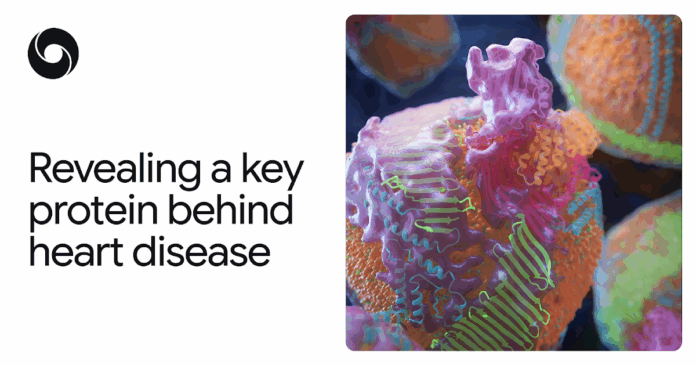
AlphaFold Unveils the Structure of a Crucial Protein Linked to Cardiovascular Disease
In a groundbreaking advancement, AlphaFold has successfully decoded the three-dimensional structure of a vital protein implicated in heart disease. This discovery marks a significant milestone in cardiovascular research, offering new avenues for therapeutic development.
Decoding the Molecular Blueprint of Heart Disease
Heart disease remains the leading cause of mortality worldwide, accounting for nearly 18 million deaths annually according to the World Health Organization. Central to many cardiac conditions are specific proteins whose malfunction or misfolding can trigger pathological processes. Understanding the precise architecture of these proteins is essential for designing targeted treatments.
AlphaFold’s Role in Protein Structure Prediction
Developed by DeepMind, AlphaFold employs advanced artificial intelligence to predict protein structures with remarkable accuracy. Unlike traditional experimental methods such as X-ray crystallography or cryo-electron microscopy, which can be time-consuming and costly, AlphaFold accelerates the process by computationally modeling protein conformations.
Implications for Cardiovascular Therapeutics
The newly elucidated structure provides insights into the protein’s function and interaction with other cellular components. For instance, researchers can now identify potential binding sites for drugs that could modulate the protein’s activity, paving the way for innovative treatments to prevent or mitigate heart disease.
Future Directions and Research Opportunities
With this structural information, scientists are better equipped to explore how genetic mutations affect protein behavior in cardiac cells. Additionally, integrating AlphaFold’s predictions with clinical data could enhance personalized medicine approaches, tailoring interventions based on individual molecular profiles.
Conclusion
The revelation of this protein’s structure by AlphaFold represents a transformative step in cardiovascular biology. As AI-driven tools continue to evolve, their application in unraveling complex biological systems promises to revolutionize disease understanding and drug discovery.

