
OpenAI has officially unveiled its latest innovation: the Realtime API and gpt-realtime, a cutting-edge speech-to-speech model that transitions the Realtime API from beta to a fully supported enterprise solution. This launch signifies notable advancements in voice AI technology, yet a detailed analysis reveals a blend of meaningful enhancements alongside ongoing limitations that temper expectations of a complete breakthrough.
Innovative System Design and Performance Enhancements
GPT-Realtime introduces a paradigm shift in voice processing by consolidating the traditional multi-step pipeline-speech-to-text, natural language understanding, and text-to-speech-into a single, integrated framework. This streamlined approach significantly reduces latency and better retains the subtle vocal characteristics often lost in segmented processing.
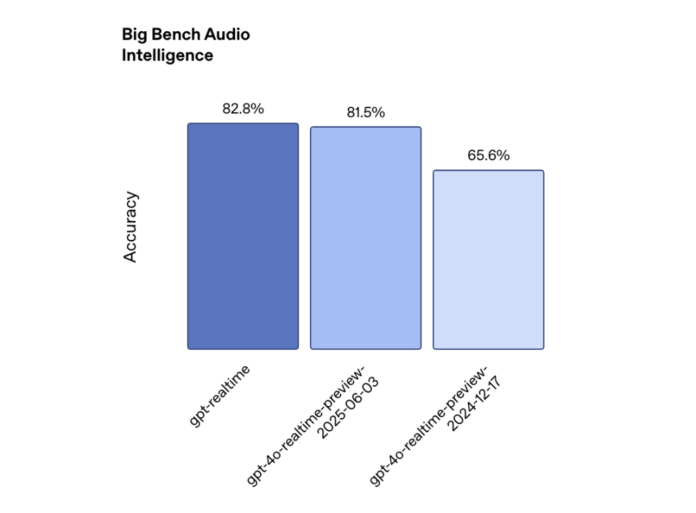
Performance metrics demonstrate measurable progress, though improvements remain moderate. For instance, on the Big Bench Audio benchmark assessing reasoning skills, GPT-Realtime achieves an accuracy rate of 82.8%, reflecting a solid but not revolutionary leap forward.
However, the model’s ability to follow complex instructions remains limited, with an instruction adherence score of just 30.5%, indicating that nearly 70% of intricate commands may still be misunderstood or improperly executed. This underscores the ongoing challenges in achieving truly reliable conversational AI.
Enterprise-Ready Capabilities Driving Practical Adoption
OpenAI has equipped the Realtime API with several features tailored for business environments. Notably, the integration of Session Initiation Protocol (SIP) enables seamless connectivity between AI voice agents and traditional telephony systems, including PBX networks, effectively bridging AI with established communication infrastructures.
Additionally, support for the Model Context Protocol (MCP) allows developers to effortlessly link external applications and services, eliminating the need for cumbersome manual integrations. The introduction of image input capabilities further enriches interactions by allowing the model to interpret and respond to visual content such as screenshots or photographs shared during conversations.
One of the most impactful enterprise features is asynchronous function calling, which permits the model to maintain conversational flow while awaiting the completion of time-consuming tasks like database queries or API responses. This advancement addresses a critical bottleneck that previously hindered the deployment of voice AI in complex, real-world business scenarios.
Competitive Market Dynamics and Pricing Strategy
OpenAI’s pricing model reflects a strategic effort to capture significant market share in the rapidly evolving speech AI sector. With competitive rates per input token, GPT-Realtime is positioned to rival emerging alternatives, including Google’s Gemini Live API, which reportedly offers similar functionalities at lower costs.
Recent industry reports highlight growing enterprise interest in voice AI solutions, with adoption rates accelerating across sectors such as customer support, virtual assistance, and educational technology, signaling a robust demand for advanced speech interfaces.
Ongoing Technical Obstacles and Real-World Limitations
Despite these advancements, several core challenges persist. Environmental noise, diverse accents, and specialized jargon continue to degrade recognition accuracy. The model also struggles with maintaining contextual coherence over extended dialogues, limiting its effectiveness in sustained conversational settings.
Independent evaluations confirm that even state-of-the-art speech recognition systems experience significant performance drops in noisy or acoustically complex environments. While GPT-Realtime’s unified audio processing helps preserve more vocal detail, it does not fully resolve these fundamental issues.
Latency improvements are evident but not yet sufficient for all real-time applications. Developers report difficulties in consistently achieving response times under 500 milliseconds when the system must execute complex logic or interact with external services. Although asynchronous function calling mitigates some delays, the inherent trade-off between processing depth and speed remains a challenge.
Conclusion: Progress with Caution
OpenAI’s Realtime API represents a meaningful, though incremental, advancement in speech AI technology. By introducing a unified processing architecture alongside enterprise-grade features such as SIP telephony integration and asynchronous function execution, it addresses several practical deployment hurdles. Coupled with a competitive pricing approach, these developments are poised to accelerate adoption in industries like customer service, education, and personal digital assistants.
Nevertheless, persistent issues related to accuracy, contextual understanding, and robustness in less-than-ideal conditions highlight that fully natural, production-ready voice AI remains an evolving frontier rather than a completed milestone.

