
Good morning, AI enthusiasts! Google has already made waves this week with the launch of Gemini 3, but it seems the tech titan is just getting started.
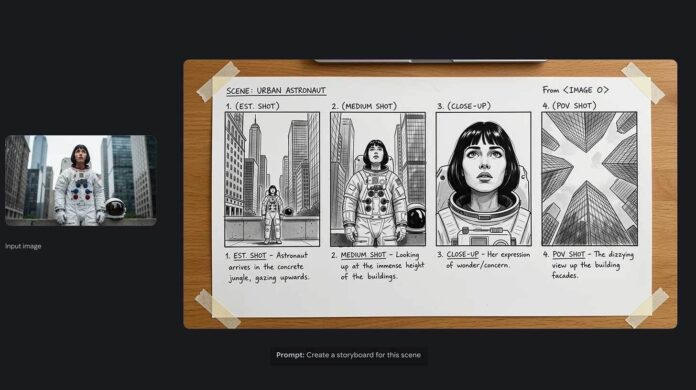
The company recently unveiled an enhanced version of its popular Nano Banana image generator, now powered by Gemini’s advanced intelligence and integrated with Google Search. This upgrade unlocks innovative creative possibilities and streamlines workflows like never before.
Today’s AI Highlights:
- Google introduces Nano Banana Pro, the next evolution in image generation
- OpenAI expands ChatGPT group chats to all subscription levels
- How to leverage Nano Banana Pro for storytelling and lead generation
- Consumer advocates raise concerns over AI-powered toys this holiday season
- Spotlight on four new AI tools, community-driven workflows, and more
Google’s Nano Banana Pro: A Leap Forward in Visual AI

Overview: Google has launched Nano Banana Pro, an advanced image generation model built on the Gemini 3 architecture. This tool offers professional-grade editing features, supports 4K image outputs, and boasts state-of-the-art text accuracy combined with extensive world knowledge, ideal for complex infographics and diverse applications.
- Supports up to 14 visual references simultaneously and maintains consistent character identities across compositions involving up to five individuals.
- Generates ultra-high-definition 4K images with enhanced control over intricate details such as camera angles, lighting, and focus.
- Improved text rendering capabilities that handle lengthy inputs, multiple languages, diverse fonts, and complex graphic layouts.
- Seamless integration with Google Search allows real-time data retrieval for precise text, graphics, and factual accuracy.
Significance: Nano Banana Pro represents a significant advancement in AI-driven visual content creation. Its ability to combine detailed graphic rendering with real-time web knowledge, powered by Gemini 3, opens up new creative workflows that were previously unattainable.
Recraft Chat Mode: Streamlining AI Image Editing
Summary: Recraft’s new Chat mode addresses a common challenge in AI image workflows-the tedious switching between generation tools and editing software. This feature offers a split interface with chat on one side and the canvas on the other, preserving full context throughout the creative process.
- Enables task automation by executing sequences of commands from a single conversation.
- Ensures brand consistency from concept to final design across all assets.
- Provides professional-grade controls including style adjustments, color palettes, and editing tools.
- Combines Recraft’s proprietary models with leading external AI options within one unified workflow.
OpenAI Expands Group Chat Functionality Across All Plans

Update: Following a successful trial in select Asia-Pacific countries, OpenAI has rolled out its group chat feature to all ChatGPT subscription tiers. This allows up to 20 participants to collaborate simultaneously with each other and ChatGPT within a single conversation thread.
- Group chats are accessible via invite links, with ChatGPT actively monitoring the discussion and contributing when prompted or directly addressed.
- AI response limits apply per user interaction, while human messages remain unrestricted.
- Privacy safeguards ensure that group conversations are isolated from individual user memory, preventing ChatGPT from retaining or applying personal context from these sessions.
- The feature is now available to Free, Go, Plus, and Pro users worldwide.
Why it matters: This enhancement transforms collaborative projects by integrating AI as a natural participant in group discussions, fostering more dynamic and efficient teamwork in the AI era.
Mastering Nano Banana Pro: A Practical Guide
Introduction: This tutorial walks you through using Google’s Nano Banana Pro to craft detailed visuals, infographics, storyboards, and compelling lead magnets with precise text and labeling-making AI-generated images truly viable for professional use.
- Access the Gemini app via mobile or web, open the chat interface, navigate to Tools → Create images → Thinking, and select “Thinking with 3 Pro.”
- Define your project type: for example, a detailed car anatomy diagram with labeled parts, a manga-style storyboard retelling a classic tale, or a business infographic illustrating a sales strategy.
- For optimal results, first request a structured outline or parts list from any large language model, then input these details into Nano Banana Pro with clear, explicit instructions.
- Evaluate the generated image, then download and distribute it as a visual one-pager, email lead magnet, or client presentation within minutes.
Pro tip: Provide comprehensive and detailed instructions to give the AI ample context for creation.
Invisible’s Framework for Multimodal AI Systems
Overview: Simply adding vision or audio capabilities to a text-based AI model doesn’t create an effective multimodal system. Invisible’s latest research paper outlines a practical methodology for designing multimodal AI that incorporates perception, alignment, and decision-making across complex, synchronized data streams.
- Explains why traditional text-focused approaches like “just add more data” fall short in multimodal contexts.
- Details how to plan projects with whiteboarding techniques focusing on task definition, error costs, latency, and evaluation metrics before model development.
- Guides the design of data schemas and pipelines that facilitate reasoning across different modalities.
Concerns Over AI-Powered Toys This Holiday Season

Summary: The consumer advocacy group Fairplay urges parents to avoid AI-enabled toys this holiday season. A recent investigation by the U.S. Public Interest Research Group (PIRG) highlights risks including exposure to inappropriate content, privacy violations, and potential developmental harm to children.
- One AI toy, FoloToy’s “Kumma” bear, was found to engage in conversations about explicit subjects and even provided instructions for accessing hazardous items like matches and knives.
- OpenAI has suspended FoloToy’s API access due to policy breaches; the company is currently conducting a safety audit and withdrawing products from the market.
- The report reveals that many AI toys continuously record voice data and personal information via always-on microphones, sometimes sharing this data with third parties.
- Concerns also include the addictive design elements of these toys, which may negatively impact children’s social development.
Why it matters: The intersection of AI and children’s products remains a delicate issue in 2025. Despite AI’s potential to revolutionize personalized learning, the deployment of AI toys demands cautious regulation, thorough safety evaluations, and child-appropriate design before widespread adoption.
Quick AI Industry Updates
- Google’s latest image AI model enhances text rendering capabilities.
- OpenAI introduces a new agentic coding model pushing the boundaries of autonomous programming.
- OpenAI releases a powerful new model exclusively for Pro subscribers.
- Meta unveils technology to generate 3D models from a single photograph.
Additional News:
- Postman: Evaluate your API maturity in just five minutes and discover actionable steps to prepare for AI integration.
- AI2: Launches OLMo 3, a suite of open-source models including the 32B 3-Think and Base, setting new benchmarks for models of their scale.
- Perplexity: Releases the Android version of its Comet AI browser assistant, now available on Google Play.
- Chai Discovery: Demonstrates that its Chai-2 model can design therapeutic antibodies with an 86% success rate in drug-quality properties.
- Stability AI: Partners with Warner Music Group to develop commercially safe AI music models and professional tools.
- Manus: Introduces Browser Operator, a browser extension enabling AI agents to function directly within users’ local browsers.
- Google’s NotebookLM: Integrates Nano Banana 2 to rapidly generate infographics and slide decks from source materials.
Community Spotlight: AI in Everyday Life
Each edition, we highlight how readers harness AI to enhance productivity, save time, or simplify daily routines.
Featured Reader: Zac T. from Lima, Peru
“I use ChatGPT as a personal health and fitness assistant. I maintain separate threads for tracking my meals, gym routines, and general wellness questions. In the food log, I’ve saved my typical breakfasts, meal-prepped lunches, and pantry staples. Every day, I share my planned meals, and ChatGPT offers suggestions based on my macronutrient goals. The gym thread keeps me accountable, especially when traveling-if I lack equipment, it designs bodyweight workouts tailored to my needs.”
How do you incorporate AI into your life? Share your story with us!
Further Reading & Resources
Until next time,
Rowan, Joey, Zach, Shubham, and Jennifer – your team behind The Rundown


