
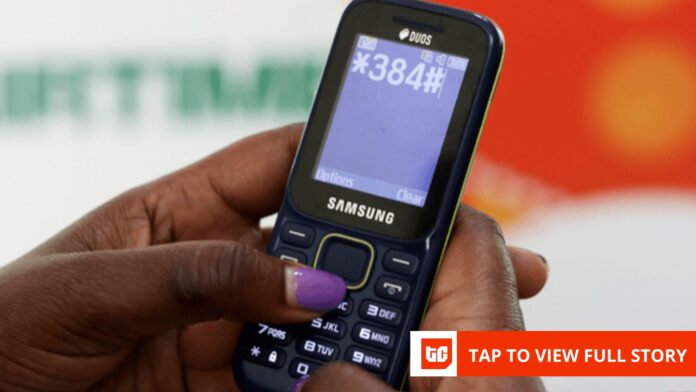
Nigerian telecommunication operators have officially started migrating banks onto a new billing method that allows customers make short code or Unstructured supplementary service data (USSD), transactions directly from their balance of airtime. In the past banks would deduct USSD fees directly from customer bank accounts, but they often failed to pay telecom providers. The new billing system was introduced after 13 banks paid a N180 billion debt to operators.
Gbenga Adebayo, President of the Association of Licensed Telecommunications Operators of Nigeria ALTON, said that three banks who are still in debt chose to pay in instalments which are close to completion.
Adebayo stated that “I would say that 95% of the USSD Debt has been paid before API”noting the repayment has allowed the gradual rollout end-user billing where customers will be charged after each successful USSD Session. The migration began with one bank. The rest will be migrated once a Service Level Agreement is signed.
Get the best African tech newsletters in your inbox
For over five years, telecom providers had extended USSD infrastructure to banks, enabling millions of Nigerians–especially in underserved regions–to perform simple banking transactions such as checking balances, transferring funds, and buying airtime using feature phones. The financial crisis began when banks stopped paying telecoms for their infrastructure, even though they were billing customers.
The debt ballooned by 2024 to more than N250 billion ($166.67 millions at N1,500 /$).
USSD services were initially priced at rates comparable to SMS rates. Adebayo says that banks used this to expand mobile financial access for millions. Within a year after the rollout, more than 20 million new users had been added to formal financial systems. As usage grew, the banks saw an opportunity. They lobbied regulators, the Central Bank of Nigeria (CBN), and Nigerian Communications Commission(NCC), to zero-rate USSD service in order to promote financial inclusion.
Customers continued to pay for transactions, creating a discrepancy: banks made money from a service that they claimed was “free,” but refused to reimburse telecoms for infrastructure they used.
Despite the 2020 joint public circular which mandates that banks pay N6.98 for each USSD session, there was low compliance. A bank executive in Abuja denied that his bank charged USSD charges, only for a demo to reveal that charges were deducted from the account of a user moments after a transaction.
End-user billing in action
In order to resolve this financial gridlock the CBN and NCC have introduced a new model. Instead of banks deducting USSD charges from customer accounts and remitting to telecoms, they will now charge customers via airtime. End-user billing relies on a system that aims to improve transparency, accountability and consistency when it comes to how USSD charges will be applied to subscribers.
A new prompt appears before each transaction to increase transparency. Customers will receive a clear notification informing them of N6.98 and asking their consent to proceed. This ensures that users are fully informed of the charges, and can decide whether or not they want to proceed with the transaction.
Accountability has been built into the process. Mobile Network Operators can only deduct fees after the bank of the customer confirms that it is ready to process a transaction. This safeguard reduces failed sessions and eliminates any risk of customers being billed for services they never received.
Consistency is achieved by a standardised message format, now adopted across all telecom providers. Customers will receive easy-to understand updates on their USSD transactions no matter which network they use, improving the overall experience for users and reducing confusion.
Linda Saint-Okafor is Chief Enterprise Business Office at MTN Nigeria. She says that airtime purchases and data topping-ups through USSD are free, but only if the customer uses specific “direct strings” instead of the root menu.
Saint-Okafor explained that there are three types of strings: the root string, the direct string and the long string. “For example, GTBank *737# is a root string. We charge you when you dial the code. When you go directly to the telecom operator to buy data, there will be no charge.”
This billing means for subscribers.
Practically, the USSD charge is nothing new. The charge has always been paid by the customer, whether they were aware of it or not. The main difference is that the charge is deducted from their airtime and not their bank account. This change is important for subscribers in many ways. It brings greater transparency and consent to the billing process. Users can now see the N6.98 charge in advance of any USSD transaction, eliminating the problem that deductions are hidden or unexpected. This transparency allows users to make informed choices and strengthens their control of mobile financial interactions. Second, the system results in fewer failed charges. Pre-transaction checks ensure that the bank of the user is ready to process any request before any deductions are made. This reduces the chance of being charged for unsuccessful or incomplete sessions.
The change also enhances the customer experience. Standardised messaging formats across all mobile networks allow users to better understand what is happening during transactions, and resolve issues faster. This consistency reduces confusion and improves the service delivery.
Finally, the policy change helps restore trust in mobile finance services. Years of unclear billing practices and other questionable practices had eroded the confidence of users. The new system, which places a high priority on transparency and consistency takes a significant step towards rebuilding trust. Mark your calendars
Moonshot by TechCabal will be back in Lagos, October 15-16! Join Africa’s leading founders, tech leaders, and creatives for 2 days of keynotes. Early bird tickets are now 20% off — don’t sleep! moonshot.techcabal.com

