
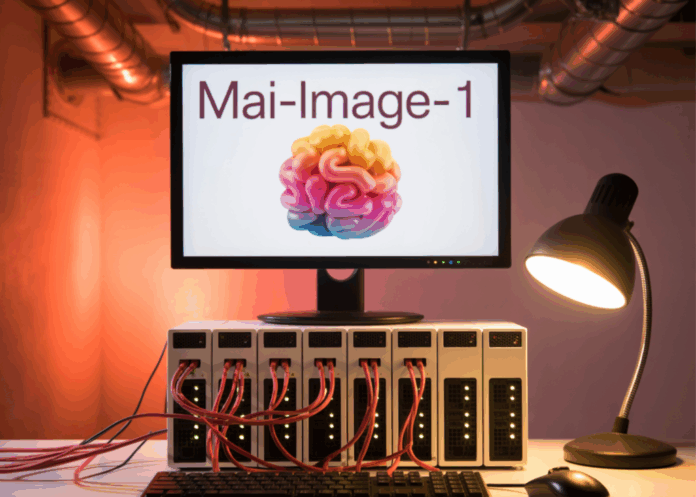
Microsoft Unveils MAI-Image-1: A Groundbreaking In-House AI Image Generator
Microsoft AI has launched MAI-Image-1, its first fully internally developed image generation model. Since its debut, the model has impressively secured a spot within the Top 10 rankings on the LMArena leaderboard as of October 13, 2025. Currently accessible for public testing through the LMArena platform, Microsoft is actively gathering user feedback to refine the system. The company plans to integrate MAI-Image-1 imminently into popular tools such as Copilot and the Bing Image Creator, enhancing creative workflows with advanced image synthesis capabilities.
Design Philosophy: Prioritizing Creators and Realism
MAI-Image-1 is engineered with a strong focus on creator-centric data curation and evaluation. Microsoft emphasizes the model’s ability to avoid producing redundant or overly generic visual styles, ensuring outputs remain fresh and distinctive. The model excels in generating photorealistic images, particularly excelling in rendering complex lighting phenomena such as bounce light and reflections, as well as detailed landscape scenes. Speed is another cornerstone of the design, with MAI-Image-1 optimized to deliver results faster than many larger, more resource-intensive competitors, facilitating rapid iteration and seamless integration with downstream creative applications.
Extending Microsoft’s AI Ecosystem with Generative Media
This release builds on Microsoft AI’s recent advancements in proprietary models, following the introduction of MAI-Voice-1 and MAI-1-preview earlier in August 2025. MAI-Image-1 marks a significant step into the generative media space, reinforcing Microsoft’s commitment to developing in-house AI technologies that power flagship products like Copilot and Bing Image Creator.
Technical Insights and Deployment Strategy
While Microsoft has yet to reveal detailed technical specifications such as the model’s architecture, parameter count, or training dataset composition, the highlighted features-such as high-fidelity lighting, photorealism, and landscape rendering-alongside a focus on low latency, suggest MAI-Image-1 is tailored for real-time, consumer-grade interactive use. This contrasts with traditional offline batch rendering approaches, aligning with its deployment within Copilot’s responsive environment.
Operationally, this implies a streamlined token-to-pixel processing pipeline, fortified with comprehensive safety mechanisms and strategies to prevent style collapse, ensuring output diversity even when prompts are reused extensively. Microsoft explicitly underscores its commitment to safe and responsible AI-generated content, leveraging LMArena’s testing framework to collect valuable insights before a full-scale rollout.
Market Position and Future Outlook
The AI image generation landscape has recently consolidated around a handful of dominant proprietary providers, alongside a dynamic open-source community. Microsoft’s entry into the Top 10 with a fully in-house model signals a strategic intent to compete directly on both image quality and processing speed, rather than relying solely on third-party partnerships.
If MAI-Image-1 maintains or improves its LMArena ranking as more votes are cast, and if the integration with Copilot and Bing Image Creator delivers the promised low-latency performance, this model could become the preferred choice for millions of Windows and Microsoft 365 users seeking fast, high-quality photorealistic image generation embedded within their existing productivity tools.
Key developments to monitor include the model’s long-term leaderboard stability, real-world throughput metrics in production environments, and any forthcoming technical disclosures detailing its architecture and safety protocols, which will shed light on how Microsoft balances speed with output quality and responsible AI use.

