
Apple’s Leadership Transformation: Steering Innovation Amidst Talent Shifts
As the music of Silicon Valley’s leadership reshuffle plays on, Apple finds itself at a pivotal crossroads. The company is witnessing a significant turnover among its top designers, engineers, and AI specialists, signaling a new era of innovation and strategic direction. With key executives stepping down and fresh talent stepping up, Apple is preparing for a future shaped by artificial intelligence, spatial computing, and next-generation hardware.
Leadership Changes and Emerging Faces at Apple
In Cupertino, the winds of change are palpable. Tim Cook, Apple’s CEO since 2011, is anticipated to retire soon, marking the end of an era defined by operational excellence and service expansion. Alongside him, Lisa Jackson, who has spearheaded Apple’s sustainability efforts since 2013, is also set to retire early next year.
Meanwhile, Apple’s design and engineering teams are undergoing a dynamic reshuffle. Molly Anderson, appointed Industrial Design Leader in 2024, is guiding a largely new team, bringing fresh perspectives to Apple’s product aesthetics and functionality. Alan Dye, the former vice president of human interface design, recently transitioned to lead a new Reality Labs studio, with Stephen Lemay stepping into Dye’s role. Lemay, a veteran Apple UI designer since 1999, is known for his deep expertise in interaction design and has been credited with hundreds of Apple patents.
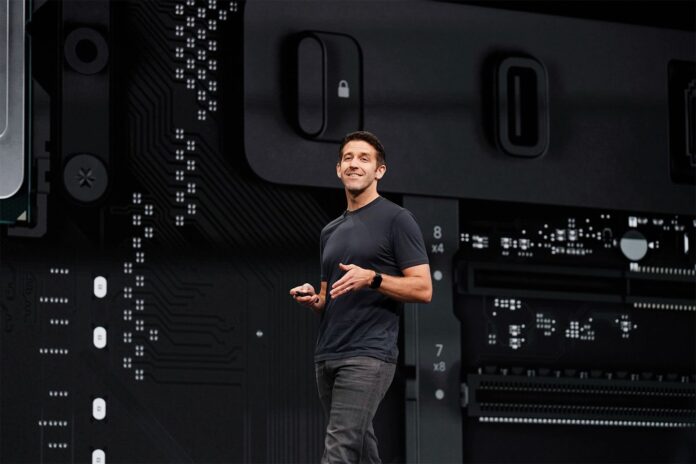
John Ternus, a hardware engineering veteran who joined Apple in 2001, has gained increased visibility since 2023. As Senior Vice President of Hardware Engineering, he has taken center stage at product launches, including the unveiling of the iPhone Air. Industry insiders speculate that Ternus could be a strong candidate to succeed Tim Cook as CEO, given his extensive experience and product-focused leadership style.
Key Innovators Behind Apple’s Cutting-Edge Technologies
Apple’s advancements in XR (extended reality) and AI are driven by a cadre of talented individuals. Bertrand Nepveu, who contributed to the Apple Vision Pro team from 2017 to 2021, played a crucial role in developing the device’s passthrough capabilities. The Vision Pro team expanded rapidly, growing from 300 to over 1,200 members, reflecting Apple’s commitment to spatial computing.
John Giannandrea, Apple’s former head of AI and Siri, recently stepped down, with Amar Subramanya-who brings 16 years of experience from Google’s DeepMind and Gemini projects-taking over the AI leadership role. Mike Rockwell, previously leading the Vision Pro group, now oversees Siri, highlighting the close integration of AI and XR technologies within Apple’s ecosystem.
Integrating AI and Spatial Computing: The Future of Apple Devices
Apple’s push into spatial computing demands a unique blend of technical expertise, including proficiency in 3D environments, spatial awareness, and game development platforms like Unity. According to recent reports, Apple is refining its smartglasses strategy, shifting from the lightweight “Vision Air” concept to designs inspired by Meta’s Ray-Ban and Orion prototypes, which have garnered positive feedback.
Industry insiders anticipate Apple will launch displayless smartglasses by 2026, followed by fully integrated display models in 2027. Key figures like Rothkopf, closely linked to the Industrial Design team, have been instrumental in addressing user experience challenges such as motion sickness and intuitive gesture controls. This collaborative approach underscores Apple’s focus on seamless hardware-software integration.
Shifts in User Interface and Industrial Design Leadership
The departure of Alan Dye to Meta signals a broader industry trend emphasizing hardware innovation. Dye’s influence on visionOS and the controversial Liquid Glass iOS interface highlighted Apple’s experimental design phase. His successor, Stephen Lemay, is expected to steer the UI team towards more cohesive and user-centric interaction models, addressing criticisms of fragmented experiences in competing ecosystems.
Molly Anderson’s leadership in Industrial Design has brought renewed energy to Apple’s product lineup. Known for her appreciation of traditional watchmaking aesthetics, Anderson has emphasized structural innovation and thermal management in devices like the M4 iPad Pro. Her approach blends analog craftsmanship with digital artistry, setting the stage for future categories such as smartglasses.
The Call for a Product-Centric Visionary
While Tim Cook excelled at optimizing Apple’s operations and expanding its services, many industry observers argue that the company now needs a leader with a stronger product innovation focus. John Ternus, with his deep engineering background and involvement in major transitions like the Apple silicon rollout, embodies this blend of technical and design sensibilities.
Experts like Karim Rashid, a renowned industrial designer with over four decades of experience collaborating with global brands, emphasize the importance of “aesthetic intellect” and risk-taking in leadership. Rashid warns that long-tenured employees may become risk-averse, favoring incremental improvements over bold innovation-a challenge Apple must overcome to maintain its competitive edge.
Apple vs. OpenAI: The Battle for AI and Hardware Talent
Apple faces stiff competition from OpenAI, which has attracted more than two dozen former Apple employees, including prominent designers and hardware experts. OpenAI is reportedly developing a range of AI-driven devices, from smartglasses to wearable pins, targeting a 2026-2027 launch window. Although OpenAI publicly denies working on smartglasses, industry insiders suggest otherwise, highlighting the intense race to define the future of AI hardware.
Apple’s approach remains focused on perfecting products before release, with insiders predicting a Humane AI Pin-style device infused with Jony Ive’s design philosophy. This cautious, quality-first mindset contrasts with OpenAI’s rapid innovation pace, underscoring differing corporate cultures in the AI era.
Reviving Apple’s Golden Era of Innovation
Apple’s historic success was driven by a unifying vision under Steve Jobs, who personally oversaw even the smallest design details. Today, industry voices question whether non-founder leaders can replicate that level of visionary creativity. While figures like Elon Musk and Mark Zuckerberg are recognized for their bold visions, Apple’s future may hinge on cultivating a similarly passionate and hands-on leader.
As Apple navigates this transformative period, the convergence of AI, XR, and hardware innovation will define its trajectory. The company’s ability to harness internal talent, embrace fresh perspectives, and rekindle its culture of daring creativity will determine whether it can sustain its position as a global technology pioneer.

