
When AI Meets Childhood Creativity: A New Frontier in Copyright Challenges
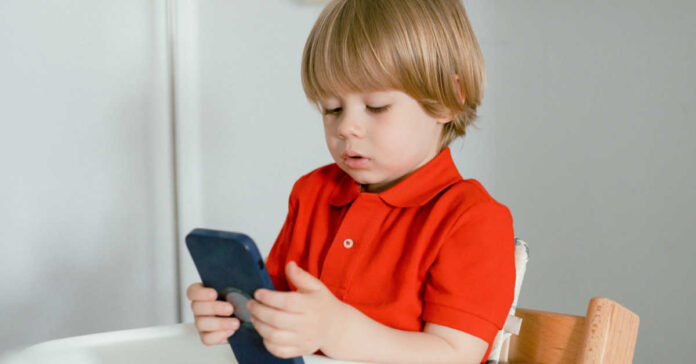
Artificial intelligence tools have become so accessible and user-friendly that even young children can harness their power to create content-sometimes crossing legal boundaries without realizing it. A recent example involves the six-year-old son of an intellectual property (IP) lawyer who, over a weekend, developed an interactive story generator that incorporated copyrighted characters without authorization.
A Child’s AI Experiment Sparks IP Concerns
Jonathan Menkes, a partner at Knobbe Martens and a seasoned U.S. IP attorney, shared this eye-opening experience. Using a few simple prompts, his son quickly built a website named “Bedtime Story Weaver” that could generate original stories. Initially, the tool produced a tale about a knight and a dragon-an imaginative but uncontroversial theme.
However, the situation escalated when the child asked the AI to create a story featuring Sonic the Hedgehog and Nintendo’s Mario embarking on a coin-collecting adventure. The AI-generated narrative, complete with images, directly used these iconic characters, highlighting how effortlessly copyrighted material can be replicated and combined by AI systems.
Implications for Intellectual Property in the Age of AI
For Menkes, witnessing this firsthand was startling. It underscored how unprepared many in the IP field are to address the complex challenges posed by AI-generated content. The incident illustrates that copyright infringement via AI is no longer a hypothetical risk but a tangible reality, accessible even to non-experts and children.
Recent studies and industry reports confirm that AI models often replicate the styles and content of well-known creators with alarming accuracy-sometimes outperforming human imitators. Meanwhile, researchers are exploring techniques to make neural networks “forget” copyrighted or sensitive data, but these solutions remain in early stages.
Current Legal Landscape and AI
- AI-generated works continue to raise questions about copyright ownership, with courts generally denying copyright protection to AI “authors.”
- Some AI companies appear to push the boundaries of copyright law, training models on copyrighted content without explicit permission.
- IP holders face mounting pressure to adapt their monitoring and enforcement strategies to detect AI-driven infringements effectively.
Strategies for IP Owners to Protect Their Rights
Menkes advises that traditional methods of policing copyright violations are insufficient in the AI era. For example, using generic search terms like “video game plumber” can still yield infringing images resembling famous characters, demonstrating how deeply embedded these issues are.
To counteract this, brand owners should proactively test emerging AI tools to evaluate whether they incorporate safeguards against unauthorized content generation. Establishing rapid-response systems to address detected infringements is also critical to minimizing damage.
Adapting to a Rapidly Evolving Environment
IP laws crafted in previous decades struggle to keep pace with the speed and scale of AI content creation. Menkes emphasizes that companies capable of balancing infringement prevention with fostering creative innovation will lead the way forward.
For instance, Disney has begun leveraging AI to both protect and monetize its intellectual property, allowing subscribers on Disney+ to generate AI-based content featuring beloved characters under controlled conditions. This approach exemplifies how rights holders can embrace AI while maintaining control.
The Road Ahead: Legal Evolution and Challenges
Looking forward, Menkes anticipates significant shifts in IP law, though the exact shape of these changes remains uncertain. Much of copyright jurisprudence develops through case-specific rulings, so courts will need time to navigate these novel issues.
He predicts that takedown procedures will require refinement to handle the sheer volume and velocity of AI-generated content. Additionally, intense legal disputes are expected as stakeholders negotiate the boundaries of AI creativity and copyright protection.
As AI tools become increasingly integrated into everyday creativity, the intersection of technology and intellectual property law will demand vigilant attention and innovative solutions from all parties involved.

