
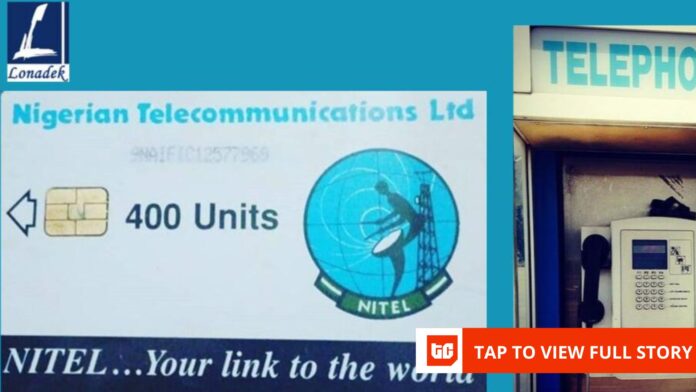
Tracing the Evolution of Nigeria’s Telecommunications Giant: From NITEL to ntel
Origins and Early Challenges
Nigerian Telecommunications Limited (NITEL) emerged in 1985 as a government initiative to unify the telecommunications services by merging the Post & Telegraph (P&T) and Nigerian External Communications. This merger, however, was fraught with structural imbalances and operational inefficiencies from the outset. At the time, P&T employed approximately 31,000 staff, while NET had only 1,500 employees. The consolidation mandated a drastic workforce reduction to around 17,000, resulting in widespread layoffs that severely impacted morale and productivity.
To facilitate the transition, the Nigerian government enlisted British Teleconsult, a subsidiary of British Telecom, to guide the commercialization and privatization efforts. Despite this, the first year was marked by confusion and disarray, as many employees struggled to adapt to the new corporate environment and business objectives.
Ambitious expansion goals set by the government further complicated matters. For instance, in 1975, the directive to increase telephone subscribers from 42,000 to 1 million within a year led to rushed contracts with international vendors like Ericsson. Unfortunately, infrastructure readiness lagged behind equipment delivery, forcing costly storage of sensitive hardware in temporary facilities that became permanent exchanges. Additionally, a $200 million investment in a balloon-based communication system from a U.S. contractor failed entirely, resulting in wasted resources and stolen equipment.
Monopoly Era and the Onset of Mobile Disruption
Throughout the late 1980s and 1990s, NITEL maintained a government-backed monopoly, offering local calls at rates as low as 2 Kobo-far below operational costs. The company’s survival hinged on restructuring efforts led by the Technical Committee on Privatization and Commercialization (TCPC), established in 1988, which later evolved into the Bureau of Public Enterprises in 1993. Despite attempts to modernize and expand services, including international calls, telex, and fax, infrastructure development consistently lagged behind growing demand.
The telecommunications landscape shifted dramatically in 2001 with the introduction of Global System for Mobile Communications (GSM) technology. The Nigerian government licensed several private operators-MTN, Econet, Globacom, and NITEL-to provide mobile services. While private companies invested heavily, often exceeding $400 million annually in network infrastructure, NITEL struggled to match this capital infusion. The high costs of building and maintaining cell towers-each costing upwards of $120,000 plus ongoing expenses for fuel and security-were underestimated by government stakeholders, leaving NITEL unable to compete effectively.
Privatization Attempts and Management Turmoil
The early 2000s saw multiple failed attempts to privatize NITEL. In 2001, Investors International London Limited secured a majority stake but failed to raise the $1.3 billion needed to finalize the acquisition, leading to deal cancellation. Subsequently, in 2003, the Dutch firm Pentascope, lacking telecom experience, was appointed to manage NITEL. This decision, influenced by key government officials, resulted in significant financial losses-over N19 billion within two years-and a halving of company revenues. Pentascope’s management fees drained resources while the company’s assets deteriorated.
Later efforts included a brief bid by Egypt’s Orascom Telecom in 2005, which was revoked, and a $750 million acquisition attempt by Transcorp that collapsed due to internal conflicts and funding shortages. Transcorp’s leadership appointed Funke Opeke, who later co-founded MainOne, a major broadband provider. Disputes among stakeholders and poor governance further destabilized NITEL, prompting British Telecom to withdraw and leaving Etisalat as the primary technical partner and largest shareholder by 2007.
Additional consortium bids, such as those from New Generation and Omen International, also failed, deepening NITEL’s decline while private operators solidified their market dominance.
Leveraging SAT-3: A Double-Edged Sword
Amidst the turmoil, NITEL retained control of the SAT-3 submarine cable, a critical international bandwidth link connecting Africa to Europe. Commissioned in the late 1990s by a consortium of countries and companies, SAT-3 provided NITEL with a lucrative monopoly on international data transmission for years. However, this financial cushion arguably bred complacency, as the company neglected its GSM network and retail services. The emergence of MainOne in 2010, co-founded by former NITEL executive Funke Opeke, broke this monopoly and intensified competition.
Rebirth as ntel and Recent Developments
After numerous unsuccessful privatization attempts, NITEL was finally acquired in 2015 by the NATCOM Consortium, led by Olatunde Ayeni, for $252 million and rebranded as ntel. Initial enthusiasm was high, especially with the appointment of Adrian Wood-former MTN Nigeria CEO-as ntel’s CEO in January 2024. Under his leadership, ntel launched Nigeria’s first 4G/LTE network, delivering impressive data speeds and receiving positive user feedback for its modems.
Despite these technical achievements, ntel faced persistent challenges including limited voice service coverage, insufficient capital for network expansion, and mounting debts to banks, vendors, and infrastructure partners like IHS. To manage financial pressures, ntel sold off some assets and currently operates over 600 towers.
AMCON’s Intervention and Strategic Restructuring
By mid-2023, ntel’s financial situation had become critical, prompting the Asset Management Corporation of Nigeria (AMCON) to intervene. Rather than liquidate, AMCON opted to restructure the company, acquiring equity to stabilize operations. Olatunde Ayeni transitioned to a minority shareholder role, while new investors were sought.
Following the failure to secure $500 million in new funding, Adrian Wood was replaced in 2025 by Soji Maurice Diya, who was tasked with attracting fresh investment or orchestrating a divestment. Under Diya’s leadership, 105 employees were laid off starting July 2025, with plans to onboard younger talent and shift away from the entrenched bureaucratic culture toward innovation in network optimization and specialized services.
Lessons from NITEL’s Journey and Future Outlook
Reflecting on NITEL’s trajectory, industry veterans highlight foundational flaws that doomed the company from inception: inadequate transmission infrastructure, outdated equipment, and disconnected premises created operational chaos. The company’s downfall underscores broader themes in Nigeria’s political economy, including chronic underestimation of telecom capital requirements and politicized privatization processes riddled with insider dealings.
While SAT-3 provided a temporary financial lifeline, it also fostered complacency that hindered innovation. Conversely, ntel’s pioneering LTE network demonstrated technical prowess but lacked the scale and investment to challenge dominant private players like MTN and Globacom, which each invest over $200 million annually in network expansion.
The future of ntel hinges on its ability to reinvent itself within Nigeria’s increasingly data-centric market. Current management envisions growth through strategic partnerships, network optimization, and niche connectivity solutions rather than competing solely on network size. As of mid-2024, AMCON’s priority remains repositioning ntel as a viable business rather than pursuing immediate divestment.

