All the products on WIRED have been selected by our editors. We may receive compensation if you purchase products via these links.
Anyone who has ever inserted a cotton swab into your ear canal knows that it’s a filthy and disgusting place. It’s impossible to avoid that hearing aids will also become gross if you wear them for long periods of time. This is not just an aesthetically unpleasant situation. Dirty hearing devices will not work well, if at all. Even a small amount of earwax on the electronics can cause them to fail to transmit sound correctly. There is no universally accepted recommendation for how often to clean your hearing aids. However, most professionals recommend cleaning them at least once a week. If you notice that the audio quality of your hearing aids is beginning to decline, cleaning them thoroughly, no matter how many years have passed since your last cleaning, should be your first action.
How to clean hearing aids. This advice applies to most behind the ear hearing aids. The same process can be used to clean in-the-ear devices, but some steps may not apply as they lack the necessary components.
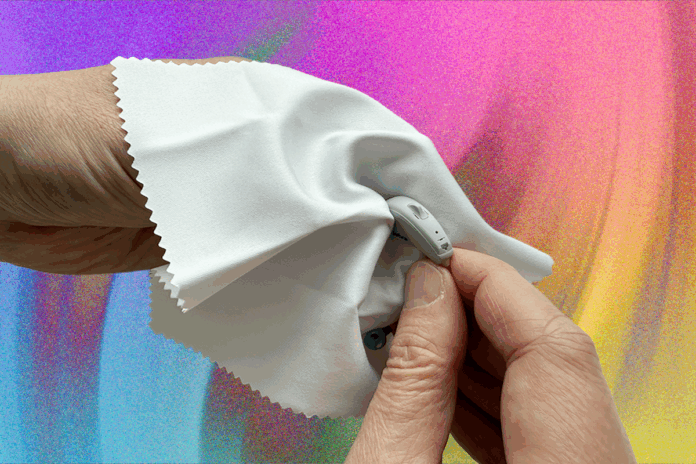
1. Wipe them Clean
Photo: Chris Null.
Begin cleaning with the obvious. You can remove any wax or grime from the outside surface of the aids with a standard rag. Microfiber cloth or eyeglass cleaning clothIf your eartips are clean, you can rub off any larger bits of wax. It doesn’t matter what you use to clean your hearing aids. The important thing is that you remove any visible or larger debris, especially before you place them in your ears the first time every day. Do NOT use liquid or water to clean your hearing aids. These devices are sensitive to moisture and water.
2. Grab a Brush
Photo: Chris Null.
Certain hearing aid models come with a small brush. ( Thisis what you want. Use it to gently clean the microphone ports of each hearing aid. These are usually located at the backside. If you were not provided with a brush, a similar one, such as that included with an electric hair trimmer or shaver, or a toothbrush should work.
Use this tool to gently brush each eartip’s tip dome, where wax is likely to accumulate. Use the wire loop on reverse of the brush if any stubborn wax is stuck at the tip of the dome. Next, brush the back of receiver where the wire is attached. Use a microfiber towel to remove any debris that may have been dislodged. Some very old hearing devices have a long vent running through them. The vent can be cleaned using the special wire included in the package (as well the wire loop at the back of the hearing-aid brush). Modern hearing aids do not have vents like this.
3. Change the Wax Guard (19459030)
Photo: Chris Null.
Photo: Chris Null.
You will find a small, white cylinder under your eartips. This is known as a ‘wax guard’, a ‘wax filter’, or a wax trap. Its purpose is to prevent wax from clogging up the hearing aid mechanism. These guards will eventually become too clogged for a brush to clean, and should be replaced. This could be once a week, depending on how much earwax is in your ears.
Your hearing aid probably comes with an eight-piece kit of replacement guards. Open the case and carefully remove one of the plastic tool sleeves. The replacement guard is located on the opposite side of the tool. It is easy to accidentally remove when you remove the tool from the case.
Remove the eartip from the hearing aid and insert the bare side (black) of the tool into the wax guard. Then remove it. This will remove the old wax guard from the hearing aid.
Flip the tool over to the other side. The white tip will be on the opposite side. Your new, clean, wax guard is now ready to use. Insert the white tip carefully into the hole made by removing the wax guard. Remove the tool. The new wax guard will be snugly in position. You can now replace the eartips and discard the used tool.
4. Change the Eartips.
Photo: Chris Null.
Over time, eartips can wear out, break or become too dirty to clean. Solution: Replace the eartips with new ones. If you have run out of the eartips that came with your hearing aids, you can buy more directly from them (alongside additional wax guard tools if necessary). There are third-party eartips available for most models of hearing aids. However, the quality can vary greatly.
Wipe everything down with the microfiber cloth once you are done. When not in use, keep your hearing aids in their case and never in a pocket.
Get unlimited access to Wiredfor just $2.50 $1 per month for 1 year.Get the best-in class reporting that is too important to ignore at just2.501 per month for a year. Includes unlimited digital access as well as exclusive subscriber-only material. Subscribe Now